salakhalimunmountain.com – When you walk through the ancient gates of the Halimun Salak National Park, the first thing that hits you is the overwhelming wall of green. But if you slow your pace and look closely at the moss covered rocks and the gnarled bark of the old-growth trees, you will notice jewels of every color imaginable. These are the tropical orchids of Mount Salak you must see, the delicate masterpieces of the Javanese rainforest. For centuries, these mountains have served as a natural greenhouse, where the heavy rainforest air and the constant mist provide the perfect cradle for some of the world’s rarest and most beautiful flora. As a guide who has spent a lifetime wandering these misty ridges, I can tell you that finding an orchid in bloom is like finding a secret message from the mountain itself. It requires a keen eye and a deep respect for the dense canopy light filtering through leaves that protects these fragile beauties from the harsh tropical sun.
The Elegance of the Vanda Tricolor
Among the tropical orchids of Mount Salak you must see, the Vanda tricolor holds a place of high honor. Known for its striking contrast of white petals speckled with deep reddish-purple spots and a vibrant magenta lip, this orchid is a true icon of West Javanese biodiversity. It is a large, robust orchid that often makes its home high in the canopy, clinging to the branches of massive rainforest giants. The fragrance it releases into the heavy rainforest air is sweet and intoxicating, often reaching your nose before your eyes even spot the bloom. Finding a wild Vanda tricolor is a highlight of any botanical trek, as it represents the untamed elegance of the Salak wilderness.
The Vanda tricolor thrives in areas where there is a balance of high humidity and good air circulation, which the volcanic slopes of Mount Salak provide in abundance. When we lead orchid-focused expeditions, we often head toward the less-traveled ridges where the primary forest remains untouched. These orchids are epiphytes, meaning they grow on other plants for physical support without taking any nutrients from them. This symbiotic existence is a beautiful metaphor for the interconnectedness of the entire national park. Seeing these blooms swaying in the mountain breeze, far above the soft mud trails, is a reminder that the most beautiful things in life often require us to look up and appreciate the world from a different perspective.
The Rare Beauty of the Phalaenopsis javanica
If you are searching for the truly rare, then the Phalaenopsis javanica is one of the tropical orchids of Mount Salak you must see. This species is endemic to Java and is unfortunately becoming increasingly difficult to find in the wild due to habitat loss and over-collection. It is a smaller, more modest orchid compared to the Vanda, but its beauty is no less profound. Its flowers are creamy white with delicate brown or purplish stripes, resembling a tiny work of hand-painted art hidden among the ferns. It prefers the damp, shaded environments near rushing rivers, where the moss covered rocks stay moist year-round.
Because the Phalaenopsis javanica grows closer to the forest floor, it is highly sensitive to changes in its microclimate. This is why we always emphasize responsible trekking and ecological respect. Stepping off the path to get a closer look can inadvertently damage the delicate root systems or the surrounding fungi that these orchids rely on for survival. When we encounter this rare orchid, we do so with a quiet reverence. It is a living treasure of Mount Salak, a species that tells the story of the island’s unique evolutionary history. Protecting its home in the Halimun Salak National Park is not just about saving a flower; it is about preserving the soul of the Javanese rainforest for future generations.
The Mysterious Ghost Orchids and Bulbophyllum
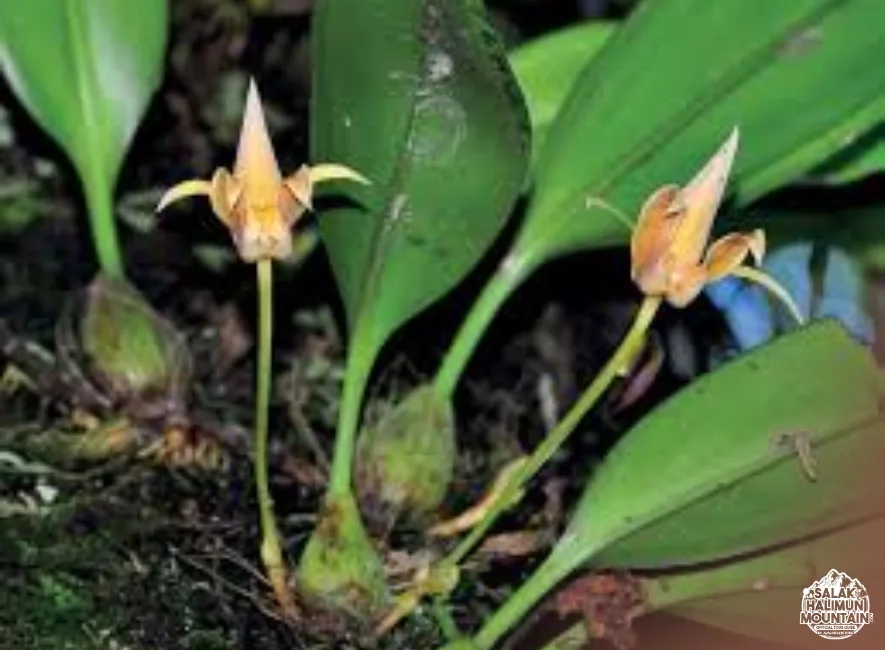
The world of tropical orchids of Mount Salak you must see also includes the strange and the wonderful, such as the various species of Bulbophyllum and the elusive “ghostly” saprophytic orchids. Bulbophyllum orchids are known for their bizarre shapes and unique pollination strategies. Some have long, dangling “tongues” that move with the slightest puff of wind, while others produce scents that mimic decaying organic matter to attract specific forest flies. These orchids are masters of adaptation, often found clinging to the undersides of branches where the dense canopy light is at its dimmest. They may not have the traditional beauty of a rose, but their architectural complexity is fascinating to anyone interested in the wonders of nature.
Then there are the orchids that don’t have leaves at all. These rare saprophytes live in a complex relationship with soil fungi, emerging from the leaf litter only when it is time to bloom. Finding one is a matter of incredible timing and luck. They appear like pale, translucent spirits among the dark, decaying leaves of the forest floor. In the heavy rainforest air of Mount Salak, these orchids represent the cycle of life and death, turning the nutrients of the old forest into new, ethereal beauty. Exploring the diversity of Bulbophyllum and other specialized orchids provides a deeper understanding of why Halimun Salak is recognized as a global biodiversity hotspot. Every niche in the forest, from the highest branch to the deepest shadow, is occupied by a unique life form.
The Vibrant Dendrobium Species of the Highlands
No list of tropical orchids of Mount Salak you must see would be complete without mentioning the Dendrobium genus. These are some of the most prolific and varied orchids in the park, with species ranging from tiny, star-shaped flowers to long, cascading sprays of yellow, white, and pink. Dendrobiums are incredibly resilient, often found growing in the more exposed areas of the mountain, such as the edges of old lava flows or near the ridges where the wind is stronger. Their bright colors serve as a beacon for pollinators, standing out against the deep green backdrop of the rainforest canopy.
One of the joys of trekking in Salak Halimun is the sheer variety of Dendrobiums you can encounter in a single day. Some bloom only for twenty-four hours, while others stay in flower for weeks. This constant change means that no two visits to the mountain are ever the same. We often see the Javan Sunbirds darting among these blooms, their iridescent feathers matching the vibrancy of the orchids. This relationship between the birds and the tropical orchids of Mount Salak you must see is a vital part of the forest’s reproductive cycle. As the birds feed on the nectar, they carry the pollen from one orchid to another, ensuring the continued survival of these stunning highland residents.
The Best Trails for Orchid Spotting
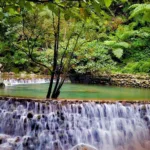
If you are wondering where to find the tropical orchids of Mount Salak you must see, the answer lies in the diversity of the park’s trails. For those who enjoy a mix of waterfalls and flora, the Gunung Bunder area offers numerous paths where orchids can be seen clinging to the trees near the spray of the falls. The high humidity in these areas creates a perfect micro-environment for moisture-loving species. For a more challenging trek that yields rare highland species, the path toward the summit of Mount Salak II takes you through various forest zones, each with its own unique orchid population. As you ascend, you will notice the orchid species changing as the temperature drops and the mist becomes more frequent.
The Cikaniki to Citalahab trail in the Halimun sector is another legendary route for orchid enthusiasts. This trail passes through some of the best-preserved primary forest in Java, where the ancient trees have had hundreds of years to host massive orchid colonies. We recommend a slow, deliberate pace on these trails. Instead of focusing only on the destination, keep your eyes on the “crooks” of the tree branches and the vertical surfaces of the rocks. A local guide is invaluable here, as we know exactly which trees have historically hosted specific rare blooms. We can help you spot a tiny orchid that might be no larger than a fingernail, but which holds a world of beauty within its petals.
Seasonal Timing for Peak Orchid Blooms
While some tropical orchids of Mount Salak you must see can be found in bloom throughout the year, there are certain seasons when the forest truly puts on a show. Generally, the transition periods between the wet and dry seasons (around March to May and September to November) are the best times for orchid hunting. The change in rainfall and temperature often triggers a mass flowering event across many different species. During these months, the heavy rainforest air is filled with a variety of scents, and the canopy is dotted with bursts of color that are absent during the height of the monsoon.
However, the beauty of the Salak Halimun rainforest is its unpredictability. Some of the most interesting species are “opportunistic” bloomers that react to specific weather patterns, such as a sudden cold snap followed by a warm, sunny day. This is why we always tell our guests that every day is a good day for an orchid trek. Even if the “famous” species aren’t in bloom, there is always something else waking up. The dense canopy light ensures that there is always enough energy for something to grow, and the constant moisture means the forest never truly goes dormant. Part of the magic is the surprise—turning a corner on a soft mud trail and coming face-to-face with a flower you have never seen before.
The Importance of Orchid Conservation
The tropical orchids of Mount Salak you must see are under constant threat from the outside world. The biggest challenges are illegal poaching and the destruction of the old-growth trees they depend on. Many orchids are so specialized that they cannot survive outside their specific mountain environment. When an orchid is taken from the wild, it often dies, and the forest loses a vital part of its genetic diversity. This is why the Halimun Salak National Park is so critical; it provides a safe haven where these plants can exist without the threat of human interference. As an eco-tourism provider, we are committed to the “look but don’t touch” philosophy.
We believe that photography is the best way to “collect” orchids. A high-quality photo allows you to keep the memory and share the beauty with others without harming the plant. During our tours, we educate our guests on how to identify different species and explain the ecological roles they play. By fostering a sense of ownership and pride in our local flora, we help create a community of protectors. The tropical orchids of Mount Salak you must see are a source of pride for the local people who live near the park, and their survival is linked to our own cultural heritage. Every bloom we protect is a victory for the biodiversity of Java.
Essential Gear for Your Orchid Trek
To fully enjoy the search for tropical orchids of Mount Salak you must see, you need the right gear. A camera with a good macro lens is highly recommended, as many of the most beautiful details on an orchid are too small to see with the naked eye. A pair of binoculars is also useful for spotting epiphytic orchids that are located high in the canopy. Because you will be spending a lot of time looking up and standing still to observe, comfortable and stable footwear is a must for navigating the soft mud trails and moss covered rocks. Don’t forget a waterproof bag for your electronics, as the mountain mist can turn into a downpour very quickly.
We also suggest bringing a field guide or using an identification app to help you learn the names of what you find. Of course, your guide will be there to provide the local names and the traditional stories associated with the flowers. Most importantly, bring a heart full of patience and a spirit of wonder. The forest doesn’t always reveal its treasures immediately. You might walk for an hour seeing only green, and then suddenly, in the right patch of dense canopy light, a spectacular orchid will appear. It is this hunt, this slow immersion into the heavy rainforest air, that makes orchid spotting on Mount Salak such a rewarding and soul-stirring experience.
Conclusion: The Floral Soul of the Volcano
As our journey through the world of tropical orchids of Mount Salak you must see comes to an end, I hope you feel the pull of the mountain. These flowers are more than just plants; they are the vibrant, delicate heart of the Javanese wild. They remind us that nature’s greatest beauty is often found in the small, the quiet, and the hidden. Whether you are a dedicated botanist or simply someone who appreciates a beautiful flower, the orchids of Salak Halimun will leave a lasting impression on your soul. We invite you to come and walk with us, to breathe the heavy rainforest air, and to discover these treasures for yourself. The mountain is blooming, and it is waiting for you.
So, if you’re ready to explore the wonders of Mount Salak Halimun, head over to our ONLINE BOOKING PAGE and let’s start planning your adventure. Or simply CLICK THIS LINK to chat with us on WhatsApp.
With our team, you’re not just getting a guide; you’re gaining a local friend who will ensure your trip is nothing short of extraordinary.