
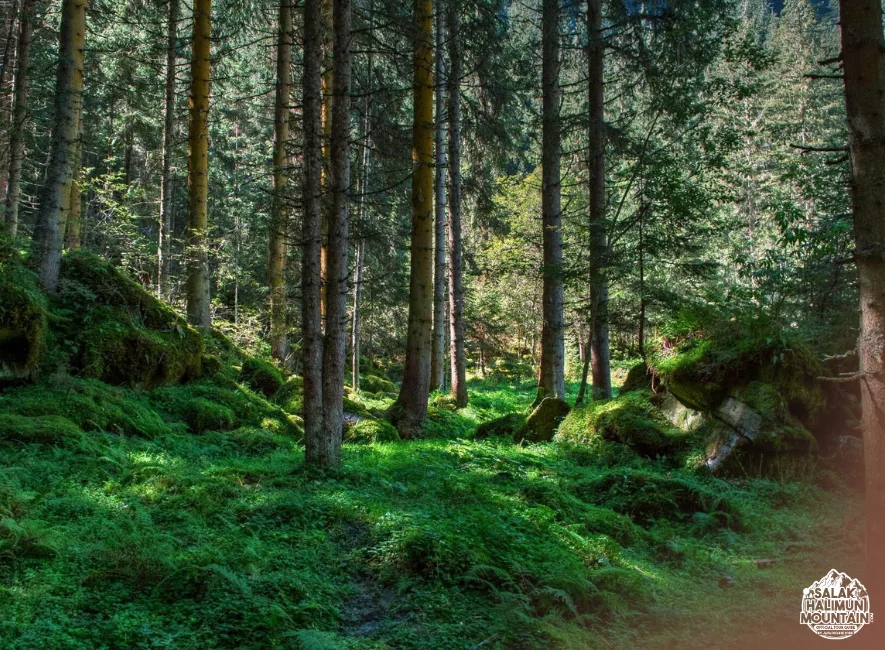
salakhalimunmountain.com – Step into the deep rainforests of Halimun–Salak National Park, and you’ll quickly realize that these forests are more than just a sea of green. They are living systems quietly working day and night to regulate our climate and protect our water. As a local guide here in Mount Salak, I often say the forest is like an unseen guardian — cooling the air, shaping rainfall, and ensuring rivers continue to flow long after the rain has stopped.
Forests as Natural Climate Regulators
Carbon Sinks That Absorb Greenhouse Gases
One of the most powerful ways forests help control climate is through their role as carbon sinks. Trees absorb carbon dioxide (CO2) during photosynthesis and store it in their trunks, roots, and surrounding soil. In the dense rainforests of Salak–Halimun, centuries-old trees lock away enormous amounts of carbon, significantly reducing the concentration of heat-trapping gases in the atmosphere above.
Cooling the Earth Through Transpiration
Forests don’t just store carbon — they cool the air naturally. Through a process called transpiration, trees release water vapor from their leaves. This moisture increases humidity, encourages cloud formation, and reflects sunlight, lowering surface temperatures. Walk beneath the canopy on a hot day, and you’ll feel this cooling effect instantly.
Influencing Rainfall and Weather Patterns
Large forest systems can even influence regional weather. Moisture released from forests contributes to cloud formation and rainfall, sometimes far beyond the forest itself. Scientists often call this phenomenon “rivers in the sky.” While the Amazon is the most famous example, tropical forests like Halimun–Salak play a similar role on a regional scale across Java.
How Forests Regulate Water Systems
Natural Water Filtration
Forest soils act as natural water filters. As rain passes through layers of leaves, roots, and soil, sediments and pollutants are trapped before the water reaches streams and rivers. This is why forested watersheds around Mount Salak supply some of the cleanest freshwater used by nearby communities.
Rainfall Absorption and Flood Prevention
Rather than allowing rain to rush straight into rivers, forest floors absorb and store water like a giant sponge. This slows surface runoff, reducing the risk of floods during heavy rains — a crucial service in Indonesia’s monsoon climate.
Steady Water Supply During Dry Seasons
Because forests release water slowly into streams and groundwater, they help maintain river flow during dry periods. This steady supply supports agriculture, wildlife, and cities downstream. In fact, most of the world’s accessible freshwater originates from healthy forested watersheds.
Where Climate and Water Work Together
At the heart of this system is evapotranspiration — the combined process of evaporation from soil and transpiration from plants. This cycle drives cloud formation, rainfall, and groundwater recharge. Without forest cover, this delicate balance collapses, leading to hotter temperatures, erratic rainfall, and water shortages.
Protecting forests like those in Halimun–Salak National Park means protecting climate stability and water security — not just for wildlife, but for millions of people who depend on these ecosystems every day.
Why Responsible Travel Matters
Exploring these rainforests with respect is part of conservation. That’s why Java Private Tour is not a generalist, but a specialist — deeply focused on nature-based experiences, conservation awareness, and authentic local knowledge. Every journey is designed to educate, protect, and inspire.
So, if you’re ready to explore the wonders of forest climate and water systems, head over to our REQUEST PAGE and let’s start planning your adventure. Or you can simply CLICK THIS LINK to chat with us on WhatsApp. With Java Private Tour, you’re not just getting a guide; you’re gaining a friend who will ensure your trip is nothing short of extraordinary. See you in Java!


