salakhalimunmountain.com – When you embark on a journey toward the misty peaks of Mount Salak, your footsteps carry a weight far greater than just a trekker on a trail. Beyond the breathtaking views of the rainforest and the cooling spray of hidden waterfalls, there is a human story unfolding in every village you pass. How tourism supports rural economies near Salak is a transformative tale of empowerment and preservation. In the quiet corners of the Sundanese highlands, a new kind of economy is blooming—one that doesn’t rely on extracting resources from the earth, but rather on protecting the natural beauty that makes this region so special. Every bowl of steaming rice you eat in a local homestay and every trail guided by a village expert ripples through the community, creating a sustainable future for the families who act as the guardians of the mountain.
The Rise of the Community-Based Economy
For decades, the rural villages surrounding the Salak Halimun National Park relied almost entirely on traditional agriculture. While farming is the soul of the region, it is often subject to the whims of weather and fluctuating market prices. The introduction of sustainable tourism has provided a vital secondary pillar for these rural economies. Instead of young people leaving their ancestral homes to find work in the crowded streets of Bogor or Jakarta, tourism offers a way for them to thrive right where they were born. By turning their intimate knowledge of the forest into a professional service, they are able to sustain their families while staying connected to their roots. This shift from extraction to appreciation is the cornerstone of a modern, resilient mountain economy.
The Local Guide: A New Professional Class
One of the most direct ways tourism supports rural economies near Salak is through the training and employment of local guides. These men and women are no longer just villagers; they are certified experts in biodiversity, safety, and cultural history. When you hire a guide from a nearby village, you are directly investing in their education and their livelihood. This income allows them to invest in better equipment, further training, and the education of their children. Moreover, because they live on the mountain, they have a vested interest in its protection. A standing forest is their office and their future, creating a powerful economic incentive to prevent illegal logging and poaching within the protected park boundaries.
Homestays: Opening Doors to Authentic Life
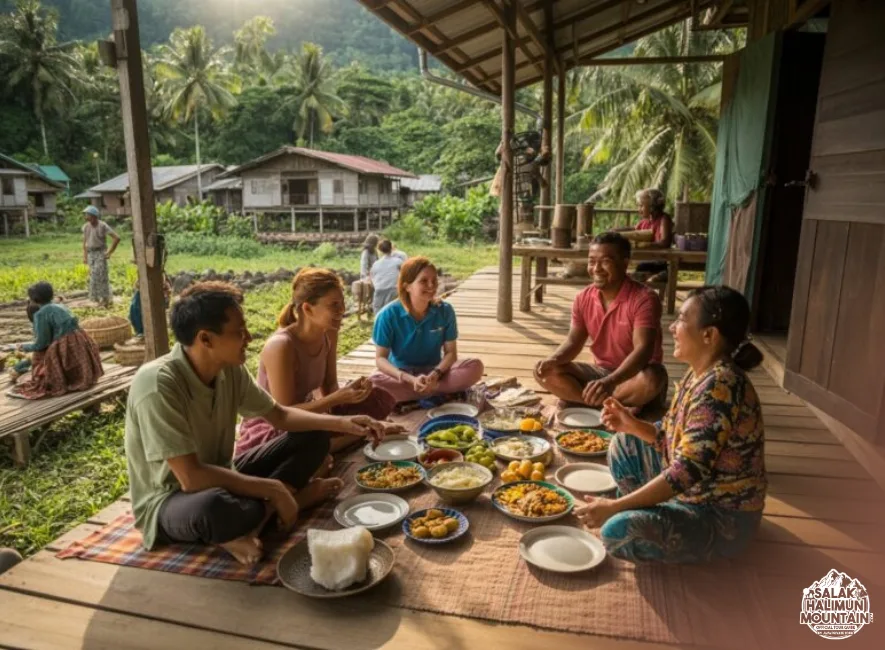
The traditional “homestay” model has revolutionized the hospitality landscape around Mount Salak. Instead of staying in large, foreign-owned resorts, travelers are increasingly choosing to stay in the homes of the villagers themselves. This creates a direct flow of capital into the pockets of local families. A homestay isn’t just a bed; it is an economic engine. It involves the mother who prepares the traditional Sundanese meals, the father who maintains the guest rooms, and the local shops where the family buys fresh ingredients. This distributed income ensures that the benefits of tourism are felt across the entire neighborhood, rather than being concentrated in the hands of a few distant investors.
Spreading the Wealth Through the Village Kitchen
Food is perhaps the most delicious way tourism supports rural economies near Salak. When a trekking group stops for lunch in a mountain village, the economic impact is immediate. The rice comes from the nearby terraces, the vegetables from the forest gardens, and the coffee from the slopes above. Tourism creates a “premium” market for these local products. Farmers who might struggle to compete with large-scale industrial farms find a loyal customer base in travelers who value organic, locally grown ingredients. This synergy between the plate and the park ensures that the agricultural heritage of the region remains profitable and respected in the modern age.
Revitalizing Traditional Arts and Crafts
As visitors seek out authentic experiences, there has been a resurgence in traditional Sundanese crafts. In many villages, the art of weaving bamboo “boboko” or carving wooden “centong” was slowly fading away. However, the curiosity of travelers has breathed new life into these ancient skills. Tourism provides a marketplace for these artisans to sell their work at a fair price, directly from their workshops. This not only provides an income for the elderly who may no longer be able to farm, but it also inspires the younger generation to learn these crafts. The preservation of cultural identity becomes an economic asset, proving that staying true to one’s heritage can be a path to prosperity.
Transport and Logistics: Moving the Economy
The ripple effect of tourism extends to the transportation sector within the rural foothills. Local drivers, motorcycle taxi (ojek) operators, and small-scale transport coordinators all see increased demand as more people explore the Salak Halimun region. This creates jobs for mechanics, fuel sellers, and infrastructure workers. Often, the improvements made to roads to facilitate tourism also benefit the farmers, making it easier for them to bring their crops to market. It is a cycle of improvement where the needs of the traveler and the needs of the resident align, leading to better connectivity for everyone living in the shadow of the volcano.
Tourism as an Alternative to Deforestation
The most profound impact of how tourism supports rural economies near Salak is its role as a conservation tool. In the past, the lack of economic options sometimes led to encroachment on the national park for timber or land. Today, tourism provides a viable alternative. When a village sees that visitors will pay to see a rare Javan gibbon or a pristine waterfall, those natural assets become more valuable than the wood they are made of. Tourism creates “conservation jobs” in the form of park rangers, reforestation workers, and eco-guides. The economic survival of the village becomes tied to the survival of the forest, creating a protective buffer zone around one of Java’s last great wildernesses.
Investing in Community Infrastructure
In many cases, a portion of the income generated from tourism is funneled back into community projects. Whether it’s building a small library, improving a village water system, or supporting the local school, tourism acts as a catalyst for development. Some communities have formed cooperatives to manage tourism revenue, ensuring that funds are used for the collective good. This builds a sense of pride and ownership among the residents. They see that tourism isn’t something that happens “to” them, but something they lead and benefit from. This collective empowerment is essential for the long-term health of any rural mountain society.
Building Cross-Cultural Friendships
Beyond the numbers and the coins, there is the intangible economy of human connection. Tourism near Salak allows for a meaningful exchange of ideas and perspectives. Travelers bring news and stories from the outside world, while the villagers share the deep wisdom of the rainforest. This mutual respect builds a bridge between the urban and the rural, the modern and the traditional. When a traveler leaves a village as a friend rather than just a customer, they become advocates for the region. They share their experiences, bringing more conscious travelers back to the mountain. This word-of-mouth reputation is the most powerful marketing tool a rural community can have.
The Responsibility of the Conscious Traveler
As a visitor, you have a vital role to play in this economic story. By choosing to eat at a local warung, buying a handmade souvenir, or hiring a guide from the community, you are casting a vote for a sustainable future. At Salak Halimun Mountain, we are committed to ensuring that every trek we lead follows these principles of economic justice. We believe that tourism should always be a force for good, a way to lift up the people who have called these slopes home for a thousand years. When the rural economy is strong, the mountain is safe. When the people thrive, the forest flourishes.
Experience the Heart of the Mountain
We invite you to come and meet the people who make this landscape so vibrant. Our tours are designed to take you off the beaten path and into the heart of village life. You will see firsthand how your visit makes a difference, from the smiling faces of the homestay hosts to the pride in a guide’s eyes as they show you a rare orchid. It is a journey that enriches your soul while supporting the backbone of the Indonesian highlands. Come and discover the beauty of Mount Salak, not just as a destination, but as a community where nature and people work together to build a bright and green tomorrow.
So, if you’re ready to explore the wonders of Mount Salak Halimun, head over to our ONLINE BOOKING PAGE and let’s start planning your adventure. Or simply CLICK THIS LINK to chat with us on WhatsApp.
With our team, you’re not just getting a guide; you’re gaining a local friend who will ensure your trip is nothing short of extraordinary.