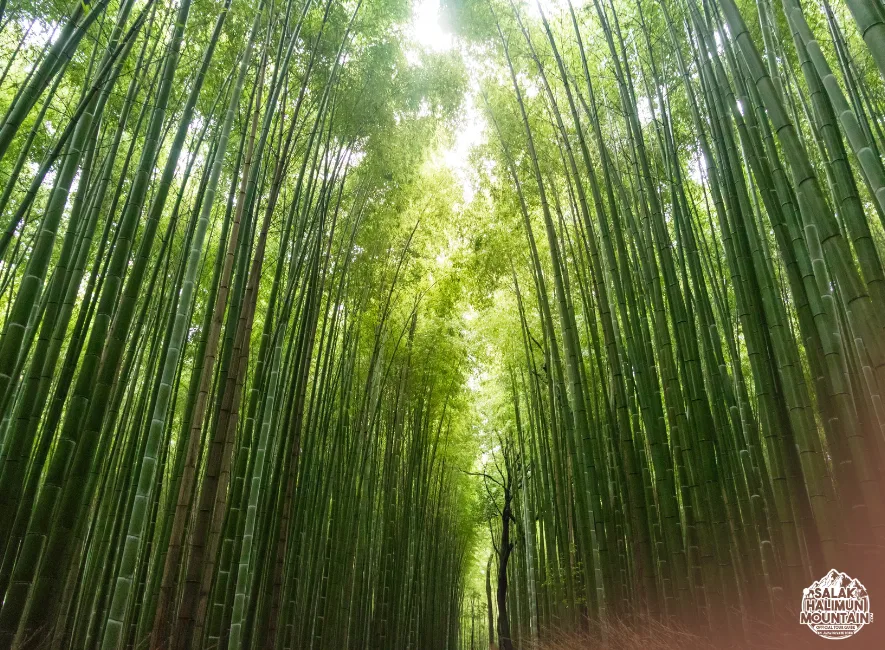
salakhalimunmountain.com – If you have ever stood at the base of Mount Salak and looked toward the mist-covered ridges, you have likely noticed a vibrant, swaying sea of green that seems to guard the entrance to the deep forest. This is the realm of bamboo. While the higher elevations are dominated by ancient Rasamala trees and dense oak-laurel forests, the foothills are the undisputed territory of this remarkable grass. Why bamboo thrives in the foothills of Mount Salak is a story of perfect geological timing, a unique tropical climate, and a deep cultural connection that has existed for centuries. As a guide who has spent many afternoons resting in the shade of a bamboo grove, I can tell you that these plants are more than just part of the landscape; they are the flexible, resilient backbone of our mountain ecosystem.
The Perfect Volcanic Cradle
Mineral Rich Soil and Drainage
The primary reason bamboo finds such a happy home here is the soil itself. Mount Salak is a massive stratovolcano, and its history of eruptions has blessed the surrounding foothills with andosol soil. This volcanic earth is incredibly fertile, packed with minerals like silica, which bamboo uses to strengthen its culms or stalks. Furthermore, bamboo requires well-draining soil to prevent its root systems from rotting during the heavy tropical downpours. The sloping terrain of the Salak foothills provides the perfect natural drainage. Water moves quickly down the ridges, keeping the earth moist but never stagnant, allowing the bamboo rhizomes to spread rapidly and securely through the volcanic substrate.
The Humidity of the Cloud Forest Fringe
Bamboo is a thirsty plant, and the foothills of Mount Salak receive an abundance of rainfall throughout the year. The mountain acts as a giant rain catcher, drawing moisture from the clouds that roll in from the Java Sea. This constant humidity creates a greenhouse-like environment in the lower elevations. The air is often thick with mist, providing the atmospheric moisture that bamboo leaves soak up. In this warm, damp cradle, some species of bamboo can grow several centimeters in a single day. When you walk through a grove after a morning rain, you can almost hear the forest expanding as the stalks creak and stretch toward the canopy light.
A Masterpiece of Biological Adaptation
The Strength of the Rhizome Network
One of the secrets to why bamboo thrives in the foothills of Mount Salak lies beneath your feet. Unlike many trees that grow from a single trunk, bamboo grows as a colony connected by an intricate underground network of rhizomes. This makes them incredibly resilient to the landslides that occasionally occur on steep volcanic slopes. The root systems act like a natural rebar, stitching the soil together and preventing erosion. In the foothills, where the earth can be unstable after a monsoon, bamboo is often the first plant to stabilize a ridge, creating a safe foundation for other rainforest species to eventually take root.
Efficient Light Harvesting
In the competitive world of the Indonesian rainforest, sunlight is the ultimate currency. Bamboo has evolved to be an expert at light harvesting. By growing in dense clumps with high, arching canopies, bamboo creates its own microclimate. It grows tall very quickly to reach the light before it is shaded out by larger hardwood trees. In the foothills, where the forest canopy is slightly more open than in the primary deep jungle, bamboo takes full advantage of the dappled sunlight. This allows it to form vast, pure stands where few other plants can compete, creating the beautiful “bamboo tunnels” that our trekkers love to photograph.
Diversity of Species in Salak Halimun
From Giant Timber to Delicate Reeds
The foothills are home to a staggering variety of species, each filling a specific niche in the ecosystem. You will find the massive “Bambu Betung” (Dendrocalamus asper), with stalks as thick as a man’s thigh, alongside the more delicate and flexible “Bambu Tali.” Each species has adapted to specific elevations and moisture levels within the park. The diversity of bamboo in the Halimun Salak region is a testament to the health of the park’s transition zones. These different types of bamboo provide various habitats for wildlife, from the rare insects that live inside the hollow segments to the birds that nest in the dense, thorny branches of the climbing bamboo species.
Bamboo as a Wildlife Sanctuary
It is a common misconception that bamboo forests are quiet. In the Salak foothills, a bamboo grove is a bustling apartment complex. The hollow spaces between the nodes provide nesting sites for specialized species of bats and even tiny forest frogs. Many birds prefer the dense foliage of bamboo for protection against predators like the Javan Hawk Eagle. During our treks, we often pause near bamboo thickets to listen for the rustle of small mammals or the unique calls of birds that specifically thrive in this edge-of-the-forest habitat. The bamboo is not just growing; it is providing a vital service to the biodiversity of the national park.
The Cultural Bond with Mount Salak Communities
Local Wisdom and Sustainable Harvest
The thriving bamboo in the foothills is also a result of the harmonious relationship between the plant and the local Kasepuhan and Sundanese communities. For generations, locals have understood the value of bamboo. They use it for everything from building traditional homes and musical instruments like the Angklung to crafting irrigation pipes for their rice terraces. Because the local people view the forest with deep respect, they practice sustainable harvesting methods. They know that cutting only the mature stalks allows the younger ones to grow stronger, ensuring the grove remains healthy. This “cultural ecology” is a key reason why the foothills remain so lush and green.
An Icon of Sundanese Heritage
In the villages surrounding Mount Salak, bamboo is more than a resource; it is a symbol of Sundanese identity. Its flexibility represents the ability to bend but not break in the face of life’s challenges. When you visit these communities with us, you will see how integrated bamboo is into every aspect of daily life. The sight of a bamboo grove swaying in the mountain breeze is a source of comfort and pride for the local people. By supporting nature-based tourism, you are helping to preserve this traditional knowledge and the landscapes that sustain it.
Ecological Respect and the Future
Preventing Erosion and Protecting Watersheds
As we face a changing climate, the bamboo in the Salak foothills is more important than ever. Its ability to absorb carbon dioxide and release high amounts of oxygen makes it a vital “green lung” for West Java. More importantly, its role in watershed protection cannot be overstated. By slowing down the flow of rainwater and allowing it to seep into the underground aquifers, bamboo helps maintain the springs that provide water to the entire region. When we encourage responsible trekking, we are also teaching our guests to respect these bamboo zones as critical infrastructure for the environment.
Walking Through the Swaying Giants
There is a unique peace to be found in a bamboo forest. The sound of the wind through the leaves is like a soft hiss of falling water, and the clashing of the stalks creates a natural percussion that is incredibly grounding. Whether you are at the beginning of a long trek toward the Salak craters or just enjoying a morning walk near the park entrance, the bamboo groves offer a moment of stillness. They remind us of the power of resilience and the beauty of growing in harmony with the land. We invite you to come and stand among these swaying giants and feel the energy of the mountain for yourself.
So, if you’re ready to explore the wonders of Mount Salak Halimun, head over to our ONLINE BOOKING PAGE and let’s start planning your adventure. Or simply CLICK THIS LINK to chat with us on WhatsApp.
With our team, you’re not just getting a guide; you’re gaining a local friend who will ensure your trip is nothing short of extraordinary.