salakhalimunmountain.com – To the casual observer, the towering rainforest of the Mount Salak Halimun National Park and the neatly terraced farms on its lower slopes might seem like two different worlds. One is a wild sanctuary of ancient trees and rare wildlife, while the other is a carefully managed landscape of human survival. However, to the local people who have lived here for generations, these two environments are inseparable parts of a single, living machine. The connection between forest protection and agriculture is the golden thread that maintains the life of West Java. Without the deep canopy of the mountain to guard the water and the soil, the vibrant green rice fields and coffee groves would quickly wither into a barren landscape. In the shadow of Salak and Halimun, a healthy forest is the primary insurance policy for every farmer in the valley.
The Forest as a Natural Water Tower
The most vital link in the connection between forest protection and agriculture is the management of water. Mount Salak and Mount Halimun act as massive water towers for the surrounding regions. Up in the high elevations, the dense primary forest captures moisture from the clouds that constantly drift across the peaks. The thick moss on the trees and the deep layer of organic mulch on the forest floor act like a giant sponge, absorbing the heavy tropical rains. Instead of the water rushing down the slopes in a destructive flood, the forest holds it, allowing it to seep slowly into the underground volcanic aquifers. This steady, regulated release ensures that the rivers and irrigation channels remain full even during the long dry season, providing a constant lifeblood for the rice terraces below.
Maintaining the Pulse of the Irrigation Channels
When the forest is protected, the headwaters remain clear and consistent. Farmers miles away from the park boundary depend on this stability. If the forest were to be cleared, the mountain would lose its ability to store water. The result would be a cycle of flash floods during the rain that wash away the crops, followed by bone-dry riverbeds when the sun comes out. By protecting the core of the National Park, we are protecting the steady pulse of the irrigation channels. The ancient Sundanese wisdom of the green mountain being a guarantee that the cooking pots in the village will never be empty perfectly captures this reality. It is a relationship built on the simple truth that the health of the high peaks determines the prosperity of the lowlands.
The Shield Against Soil Erosion
Farming on the steep slopes of a volcano is a delicate balancing act, and the forest serves as the essential stabilizer. The connection between forest protection and agriculture is visible in the very structure of the mountain. The massive root systems of the Rasamala and Jamuju trees form a subterranean web that anchors the volcanic soil in place. This prevents landslides that could bury entire villages and destroy years of hard work in the terraces. Furthermore, the forest canopy acts as a buffer, breaking the fall of the heavy monsoon raindrops. Instead of hitting the ground with full force and stripping away the fertile topsoil, the rain is transformed into a gentle mist by the leaves, protecting the nutrients that the crops need to thrive.
Natural Fertilizer from the Canopy
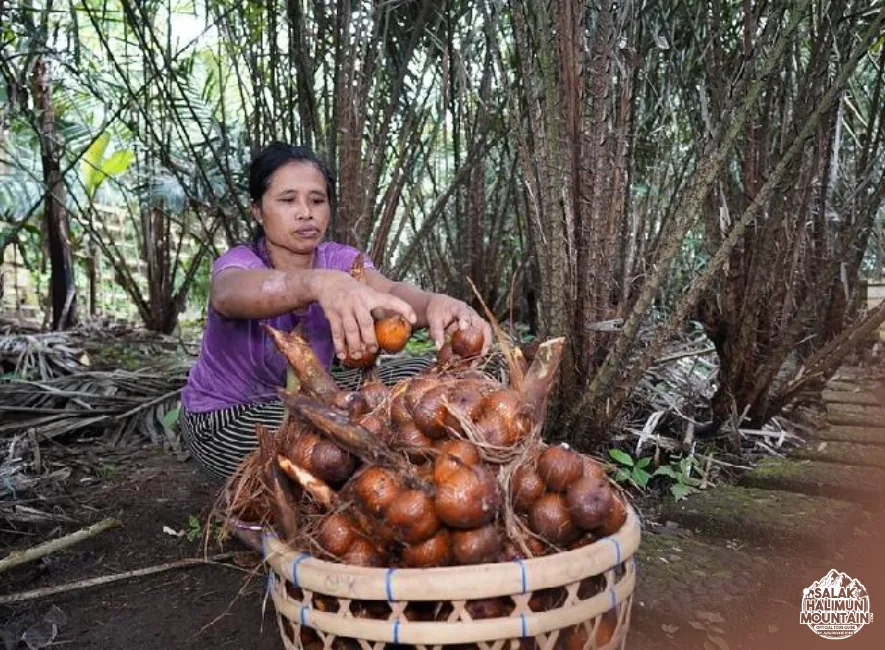
The forest does more than just hold the soil; it actively enriches it. Every year, tons of organic matter in the form of leaves, twigs, and fruits fall from the forest trees and are washed down into the farming zones by the mountain streams. This forest tea is a natural, mineral-rich fertilizer that replenishes the fields without the need for chemical inputs. The volcanic minerals found in the deep jungle are carried to the coffee groves and rice paddies, contributing to the strong flavors and high nutritional value of the local produce. In this way, the protected wilderness acts as a perpetual nutrient factory, feeding the agriculture that sits at its feet and ensuring the soil remains alive and vibrant.
The Biodiversity Guard: Natural Pest Control
Within the heart of the Salak Halimun forest lives a complex army of predators that play a crucial role in modern agriculture. The connection between forest protection and agriculture extends to the birds, bats, and insects that call the National Park home. A healthy forest supports a vast population of owls, eagles, and insect-eating birds that venture into the nearby farms to hunt. These natural guardians keep the populations of rodents and crop-destroying insects in check. When the forest is degraded, these predators disappear, and the farmers are forced to rely on expensive and harmful chemical pesticides. By keeping the jungle wild, we maintain a free, ecological pest-management service that works around the clock to protect the village harvest.
The Role of Pollinators in the Harvest
We must also look at the smaller inhabitants of the forest such as the bees, butterflies, and bats. Many of the most valuable crops around Mount Salak, such as durian, coffee, and various local fruits, depend on these forest-dwelling pollinators. These creatures require the deep jungle for nesting and for alternative food sources when the crops are not in bloom. Without the protection of the National Park, these pollinators would lose their habitat, and the yields of the surrounding farms would plummet. The forest and the farm are part of a shared reproductive cycle; the health of the wild trees directly influences the abundance of the village harvest, creating a bond that cannot be broken without consequence.
Climate Regulation and the Cooling Effect
Agriculture in the tropics is a battle against heat and evaporation, and the vast forest of Salak Halimun acts as a natural air conditioner for the entire region. The process of transpiration, where trees release moisture into the air, creates a localized cooling effect and increases the frequency of afternoon rains. This microclimate is essential for high-altitude crops like coffee and certain vegetables that cannot tolerate extreme heat. When large areas of forest are cleared, the local temperature rises, the soil dries out faster, and the crops become stressed. Protecting the forest ensures that the misty mountain character of the region remains intact, providing the perfect temperate environment for high-quality farming regardless of the season.
Carbon Sequestration for a Stable Future
On a larger scale, the connection between forest protection and agriculture is about global stability. The rainforests of Mount Salak and Mount Halimun are massive carbon sinks, locking away gases that contribute to climate change. As global weather patterns become more erratic, these forests act as a stabilizer, reducing the severity of local droughts and storms. For the farmer, climate change is a direct threat to their livelihood. Every hectare of forest we protect within the park is a blow against the unpredictability of the weather, helping to ensure that the seasons remain reliable enough for the traditional agricultural calendar to function as it has for centuries.
Traditional Knowledge as the Bridge
The local Sundanese communities have always understood this synergy. Their traditional Kasepuhan and village laws often dictate that the highest parts of the mountain must remain untouched. They recognize the forbidden forest as a sacred space that must be protected at all costs because it is the source of their water and the guardian of their air. This traditional knowledge is the bridge between the wild and the cultivated. It fosters a culture of stewardship where a farmer doesn’t just look at their own plot, but looks up at the mountain summit with a sense of gratitude. They know that their success in the field is a direct reflection of the health of the high jungle canopy.
A Shared Mission of Conservation
At Salak Halimun Mountain, we see our mission as part of this essential connection. By promoting sustainable tourism and eco-friendly trekking, we provide an economic alternative to forest exploitation. When local communities see that a standing forest is more valuable than timber, the connection between forest protection and agriculture is strengthened. We work to support the farmers who use sustainable methods and the guides who act as the eyes and ears of the National Park. Every visitor who walks these trails with us becomes a part of this protective circle, helping to ensure that the mountain remains a source of life for the plants, the animals, and the people alike.
Experience the Harmony of the Heights
To truly understand this relationship, you have to see it for yourself. We invite you to join us on a journey that takes you from the bustling village markets and fertile terraces right into the heart of the primary rainforest. You will see the clear springs emerging from the moss, feel the cooling breath of the trees, and see the wildlife that protects the crops. It is a powerful lesson in how nature works when we treat it with respect. Walking the border between the wild and the farmed, you will realize that there is no separation when it comes to nature; there is only one shared system, powered by the incredible energy of the volcanic mountain peaks.
Protecting the Source, Feeding the Soul
The next time you enjoy a meal made with ingredients from the Mount Salak region, take a moment to think about the giant trees and the hidden wildlife that made it possible. The flavor of the coffee, the sweetness of the rice, and the vibrancy of the vegetables are all gifts from a protected forest. Our commitment is to ensure that this gift continues for generations to come. We invite you to be a part of this story to trek with purpose, to explore with respect, and to help us guard the magnificent forest that sustains the agriculture of the Indonesian highlands. The mountain is calling, and its message is one of perfect, beautiful balance between the forest and the field.
So, if you’re ready to explore the wonders of Mount Salak Halimun, head over to our ONLINE BOOKING PAGE and let’s start planning your adventure. Or simply CLICK THIS LINK to chat with us on WhatsApp.
With our team, you’re not just getting a guide; you’re gaining a local friend who will ensure your trip is nothing short of extraordinary.