salakhalimunmountain.com – To understand the true complexity of the Javanese wilderness, one must look upward, away from the soft mud trails and into the towering architecture of the canopy. Exploring the vertical garden of Java rainforests reveals a world where life is stacked in layers, defying gravity to reach for the sun. In the Halimun Salak region, the ancient trees act as living skyscrapers, their trunks and branches draped in a lush tapestry of epiphytes, orchids, and ferns that never touch the ground. The heavy rainforest air provides the perfect moisture for these aerial inhabitants, creating a “garden in the sky” that is often invisible to the casual observer. As your guide, I want to show you how this vertical dimension is the secret engine of the forest’s biodiversity, where every branch is a miniature ecosystem and the dense canopy light creates a theater of emerald shadows and vibrant blooms.
The Architecture of the Canopy Skyscrapers
The foundation for exploring the vertical garden of Java rainforests is the massive Altingia excelsa, or Rasamala tree. These giants can soar over 60 meters into the air, providing miles of “vertical real estate” for other species. Unlike a garden on the ground, the vertical garden is divided into distinct climate zones. At the base, the air is still and humid, home to shade-loving mosses and large-leafed climbers. As you move higher, the temperature fluctuates more, and the wind increases, requiring the plants to have specialized adaptations to cling to the bark. This layering ensures that no space in the rainforest goes to waste, turning a single tree into a home for hundreds of different organisms.
When you stand at the base of these giants and look up, you are seeing a masterpiece of natural engineering. The “gardeners” of this space are often birds and primates who disperse seeds into the high branches. For example, the seeds of certain figs or orchids find purchase in a small pocket of decaying leaves caught in a branch crook. Over decades, this small seed grows into a massive aerial colony. Exploring the vertical garden of Java rainforests is a lesson in patience and resourcefulness, showing how life finds a way to thrive in the most precarious of places, high above the forest floor.
The Rare Orchids: Jewels of the High Branches
One of the most spectacular sights while exploring the vertical garden of Java rainforests is the incredible variety of wild orchids. Halimun Salak is home to over 200 species of orchids, many of which are epiphytes that live exclusively in the upper canopy. From the large, fragrant blooms of the Coelogyne to the tiny, intricate flowers of the Bulbophyllum, these plants add splashes of color to the monochromatic green of the jungle. They have evolved specialized “velamen” roots that act like sponges, absorbing moisture and nutrients directly from the heavy rainforest air and the morning mountain mist.
Finding these orchids requires a keen eye and often a pair of binoculars, as they frequently bloom high out of reach. In the sub-montane zones of Mount Salak, you might spot the legendary “Tiger Orchid” or the delicate “Spider Orchid” clinging to the moss covered rocks and branches. These flowers are not just beautiful; they are critical for the forest’s insect populations. Each orchid has often evolved a specific relationship with a particular pollinator, making them key players in the delicate web of life. Their presence is a sign of a primary forest that has remained undisturbed for centuries, a true treasure of the vertical world.
The Ferns and Mosses of the Aerial World
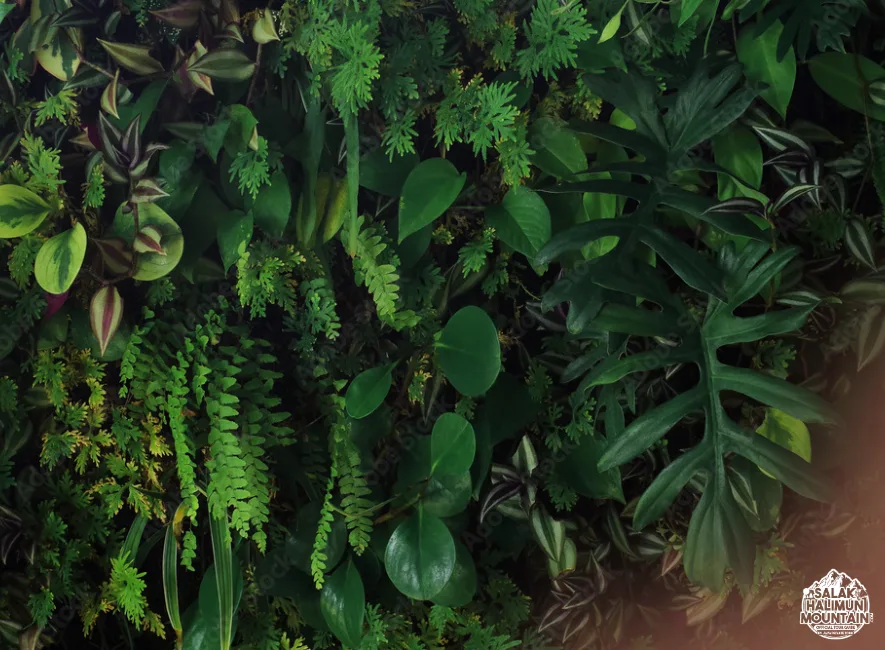
While orchids provide the color, the ferns and mosses provide the texture when exploring the vertical garden of Java rainforests. Giant Bird’s Nest Ferns (Asplenium nidus) are a common sight, looking like massive green shuttles perched in the forks of ancient trees. These ferns act as natural trash cans, catching falling leaves and debris from the branches above. This material eventually rots down into a rich, aerial soil, allowing the fern to grow even larger and providing a habitat for small reptiles and invertebrates. Some of these ferns can weigh hundreds of kilograms, becoming their own self-contained “islands” in the sky.
Accompanying the ferns are thick carpets of epiphytic moss that wrap around the branches like green velvet. In the misty Halimun sector, this moss layer is so thick it can hold gallons of water, acting as a vertical reservoir. This moisture is essential for the survival of the garden during dry spells. When exploring the vertical garden of Java rainforests, you begin to see that these “hitchhikers” are actually the protectors of the trees, helping to regulate temperature and humidity within the canopy. The way the dense canopy light catches the dew on a mossy branch at sunrise is one of the most magical sights the mountain has to offer.
Canopy Highways: Primate Life in the Vertical Garden
The vertical garden is not just a botanical wonder; it is a vital transportation network. For the Javan Gibbon (Owa Jawa) and the Javan Surili, exploring the vertical garden of Java rainforests is a daily necessity for survival. These primates use the “canopy highways”—the interconnected branches and lianas—to move through the forest without ever touching the ground. The presence of a healthy vertical garden, with its thick lianas and sturdy epiphytes, allows them to travel safely and efficiently to find their favorite seasonal fruits. The gibbons, in particular, are the masters of this world, using their long arms to swing through the “gardens” with breathtaking speed.
Observing these animals from the ground gives you a perspective on just how high and complex this world is. We often hear the rustle of leaves high above before we see the flash of silver fur. The vertical garden provides them with cover from predators and a bounty of food that doesn’t exist on the forest floor. By protecting the ancient trees and their aerial companions, we are directly protecting the home of Java’s most endangered primates. The vertical garden is their kitchen, their bedroom, and their highway, all rolled into one spectacular green tapestry.
The Secret Role of Lianas and Climbers
No exploration of the vertical garden of Java rainforests would be complete without mentioning the lianas. These woody vines act as the “staircases” of the forest, starting as small shoots on the soft mud trails and climbing their way to the sun. Once they reach the top, they spread across the canopy, stitching the trees together and adding structural stability to the entire garden. Some lianas are so old and thick they resemble gnarled trees themselves, twisting through the heavy rainforest air in fantastic shapes. They provide essential grips for climbing mammals and nesting sites for various forest birds.
In addition to lianas, various species of wild peppers and climbing figs add to the vertical density. These climbers often produce fruits that are a staple for the forest’s biodiversity. The interaction between the climbers and their host trees is a fascinating study in coexistence; while they compete for light, they also provide each other with support and nutrients. When we trek through the primary forest, we often pause to admire these “living ropes” that connect the earth to the sky. They are the visible threads of the forest’s interconnectedness, proving that every layer of the jungle is tied to the next.
Micro-Wildlife of the Sky Gardens
Exploring the vertical garden of Java rainforests also reveals a hidden world of micro-wildlife. Within the water-filled centers of bromeliads or the damp roots of bird’s nest ferns, you can find unique species of frogs, insects, and even small forest crabs that spend their entire lives high above the ground. These “arboreal pools” are critical for the reproduction of certain amphibians in the Halimun Salak area. Because the water is high up, it is often safer from ground-dwelling predators, though it requires the parents to make a long journey to reach them.
This micro-world is highly sensitive to the humidity of the heavy rainforest air. If the canopy is opened up too much by human activity, these sky-high nurseries can dry out, leading to a silent loss of biodiversity. When we take guests on “canopy-focused” treks, we use binoculars to peer into these high-altitude habitats. It is a reminder that nature’s creativity knows no bounds; there is as much life in a single mossy branch 30 meters up as there is on an entire hectare of farmland. Every square inch of the vertical garden is a precious piece of the Javanese natural heritage.
Ethical Observation of the Vertical World
Because the vertical garden of Java rainforests is so high and fragile, the best way to explore it is with a “look but don’t touch” philosophy. Climbing the trees or pulling on lianas can damage centuries-old epiphytic communities that take decades to recover. We advocate for the use of high-quality optics and patient observation from the ground. By staying on the designated soft mud trails, we prevent soil compaction around the roots of the giant trees, ensuring they remain strong enough to support their massive vertical gardens for another hundred years.
We also emphasize the importance of silence. The animals that inhabit the vertical garden are highly attuned to sound. By moving quietly, you are more likely to see a gibbon feeding on a high fig or a rare bird nesting among the ferns. Our mission is to share the wonder of the vertical world without disrupting its delicate balance. We believe that when you see the majesty of an ancient tree draped in orchids, you become a partner in its protection. The vertical garden is a gift from the past that we must guard for the future.
Photography Tips for the Canopy Gardens
Capturing the vertical garden of Java rainforests on camera can be challenging due to the high contrast between the dark forest floor and the bright sky. We recommend focusing on the details of the trunks and lower branches where the dense canopy light is more even. A telephoto lens is your best friend for capturing the high-altitude orchids and ferns. Try to frame your shots to show the scale of the epiphytes against the massive trunks of the Rasamala trees. This helps viewers understand the sheer volume of life that exists in the vertical dimension.
Don’t forget to look for the “under-view”—the patterns of the fern fronds and orchid leaves as they appear against the light from below. These silhouettes can be incredibly artistic and tell a story of the plant’s struggle for sunshine. Using a tripod is helpful for the low-light conditions often found beneath the canopy. By taking the time to set up your shot, you can capture the intricate textures of the moss and bark that make the vertical garden so unique. Your photos will serve as a window into a world that many people never take the time to look up and see.
Conclusion: The Reaching Heart of Java
As we conclude our journey of exploring the vertical garden of Java rainforests, I hope you feel a sense of awe for the world above your head. The Halimun Salak forest is not just a collection of trees; it is a multi-layered masterpiece of life that reaches toward the heavens. From the smallest moss to the largest gibbon, every resident of the sky garden plays a part in the harmony of the mountain. We invite you to come and stand beneath the giants, to breathe the heavy rainforest air, and to look up into the emerald infinity. The garden is in bloom, and the view is spectacular.
So, if you’re ready to explore the wonders of Mount Salak Halimun, head over to our ONLINE BOOKING PAGE and let’s start planning your adventure. Or simply CLICK THIS LINK to chat with us on WhatsApp.
With our team, you’re not just getting a guide; you’re gaining a local friend who will ensure your trip is nothing short of extraordinary.