salakhalimunmountain.com – When you enter the deep, verdant corridors of the Halimun Salak National Park, you are stepping into one of the last true fortresses for Java’s most vulnerable inhabitants. The list of endangered animals protected in Mount Salak Halimun is a testament to the park’s role as a biological lifeboat in an ever-changing world. Amidst the heavy rainforest air and the ancient trees, species that have vanished from the rest of the island find a sanctuary where they can still thrive. For those of us who walk these soft mud trails every day, these animals are not just statistics in a conservation report; they are the living, breathing soul of the mountain. Protecting them is a mission that requires constant vigilance, deep local knowledge, and a profound respect for the delicate balance that exists between the volcanic peaks and the life that calls them home.
The Shadow of the Jungle: The Javan Leopard
The most iconic of the endangered animals protected in Mount Salak Halimun is undoubtedly the Javan Leopard (Panthera pardus melas). As the apex predator of the island, this majestic cat represents the ultimate success of the national park’s conservation efforts. With its striking spotted coat—and the rare, all-black “melanistic” variant—the leopard is a master of stealth, moving silently across the moss covered rocks of the high ridges. Estimations suggest that only a few hundred remain in the wild, making every sighting a momentous event for conservationists. Their presence is a vital indicator of a healthy ecosystem, as they regulate the populations of other forest dwellers.
The rugged terrain of Mount Salak provides the perfect habitat for the leopard, offering plenty of cover and a rich supply of prey. However, the survival of the leopard depends entirely on the preservation of large, connected tracts of primary forest. This is why the corridors between the Salak and Halimun sectors are so critical. When we lead expeditions, we often see signs of their passage—territorial markings on the bark of a Rasamala tree or tracks in the damp soil. Protecting the Javan Leopard is about more than just saving a single species; it is about maintaining the wild heart of Java so that the “Great Chain” of the rainforest remains unbroken for generations to come.
The Song of the Forest: The Javan Gibbon
If the leopard is the shadow of the forest, the Javan Gibbon (Hylobates moloch), or Owa Jawa, is its voice. These silver-furred primates are among the most charismatic endangered animals protected in Mount Salak Halimun. Known for their haunting, melodic calls that echo through the dense canopy light of the early morning, the Owa Jawa is completely arboreal, rarely ever touching the ground. They are famous for their “monogamous” lifestyle, living in small family groups that defend their territory with vocal duets. Seeing a family of gibbons swinging effortlessly through the high branches is a highlight of any trek in the Citalahab or Cikaniki regions.
Unfortunately, the Javan Gibbon is critically endangered due to habitat loss and the illegal pet trade. Mount Salak Halimun serves as one of their most important strongholds, providing the high-quality primary forest they need to find fruit and mates. Conservation programs within the park focus on habitat restoration and community education to ensure these “singing primates” are never silenced. When you hear their call while breathing the heavy rainforest air, you are hearing a sound that has existed for millennia. Supporting eco-tourism in the park directly contributes to the protection of these beautiful creatures, ensuring that their song continues to define the Javanese highlands.
The Living Garuda: The Javan Hawk-Eagle
High above the volcanic craters, another of the endangered animals protected in Mount Salak Halimun keeps watch. The Javan Hawk-Eagle (Nisaetus bartelsi) is a bird of legendary status, believed to be the inspiration for the Garuda, the national symbol of Indonesia. With its prominent crest and fierce, golden eyes, this raptor is a specialist of the primary montane forest. It requires massive, old-growth trees for nesting and a large territory for hunting. Because of its specific habitat requirements and low reproductive rate, it is one of the rarest birds of prey in the world.
Mount Salak’s steep ridges and deep valleys offer the thermal updrafts and secluded nesting sites that the hawk-eagle depends on. Conservationists frequently monitor known nesting pairs within the park to ensure they are not disturbed during the breeding season. Seeing a Javan Hawk-Eagle soar against the backdrop of a mountain mist is a powerful reminder of what we stand to lose. As a protected species, it serves as an “umbrella species”—by protecting the vast forest it needs to survive, we inherently protect thousands of other smaller plants and animals that share its home. It is the majestic guardian of the Halimun Salak sky.
The Elusive Scaled Sentinel: The Sunda Pangolin
One of the most unique and highly threatened endangered animals protected in Mount Salak Halimun is the Sunda Pangolin (Manis javanica). Often called a “living pinecone” because of its protective scales, the pangolin is a shy, nocturnal mammal that feeds on ants and termites. It plays a crucial role in the forest ecosystem by controlling insect populations and aerating the soil with its powerful digging claws. Tragically, the pangolin is the most trafficked mammal in the world, making the protected boundaries of the national park a vital line of defense for their survival.
In the quiet of the night, the pangolin moves among the moss covered rocks and fallen logs of the Halimun forest. Because they are so secretive, they are rarely seen by casual visitors, but their presence is confirmed by the distinct burrows they leave behind. The park authorities and local communities work together to patrol for poachers and to educate people on the importance of this gentle creature. The Sunda Pangolin is a reminder that biodiversity includes even the strangest and most hidden forms of life. Protecting them is an ethical imperative, ensuring that this ancient lineage of mammals does not disappear on our watch.
The Primate Diversity: Surili and Langurs
Beyond the gibbons, the list of endangered animals protected in Mount Salak Halimun includes several other rare primates. The Javan Surili (Presbytis comata), with its distinctive “mohawk” of fur and white belly, is a leaf-eating specialist found only on this island. They are often seen in the mid-canopy, moving in larger groups than the gibbons. Alongside them, you might spot the Javan Lutung or the Grizzled Langur. Each of these species has adapted to different niches within the rainforest, from the lowland valleys to the sub-montane ridges, contributing to the incredible primate biomass of the park.
The heavy rainforest air provides the lush vegetation these primates need to thrive. However, like their neighbors, they are vulnerable to the fragmentation of the forest. Protecting the “canopy highways”—the continuous lines of ancient trees—is essential for their movement and genetic health. Observing these primates in the wild is a lesson in social complexity and natural grace. Their playful antics and vocalizations add a layer of life and energy to the forest, making the Halimun Salak area one of the best places in the world for primate watching. Every encounter is a reminder of our own connection to the natural world and our responsibility to protect our closest relatives.
The Hidden World of Rare Amphibians and Birds
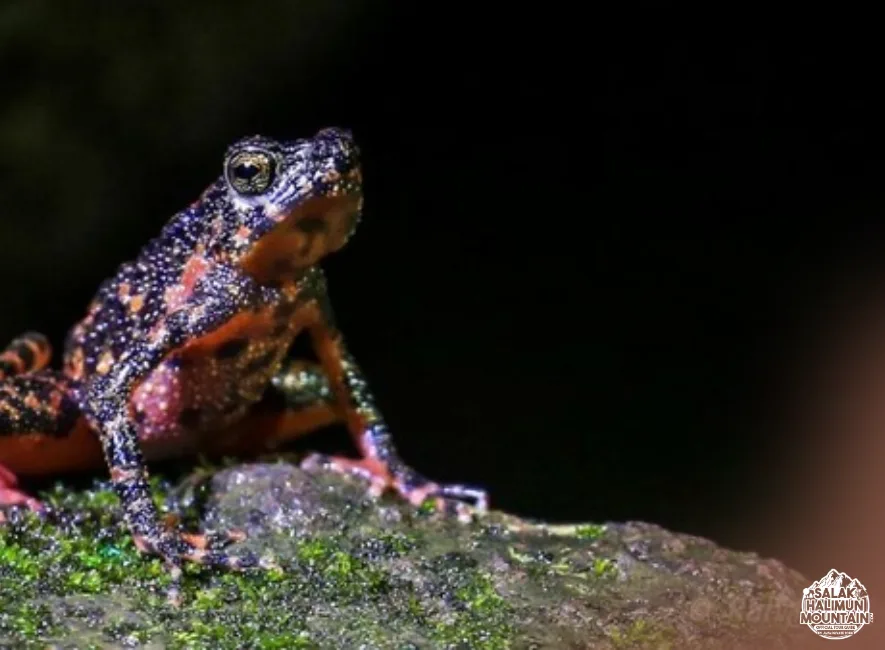
While the large mammals often get the most attention, the endangered animals protected in Mount Salak Halimun also include a vast array of smaller species. The Javan Torrent Frog and several rare species of tree frogs rely on the pristine, unpolluted waters of the mountain streams. These amphibians are “bio-indicators,” meaning their health reflects the health of the entire watershed. Additionally, the park is a sanctuary for rare birds like the Javan Cochoa and the Blue-banded Kingfisher. These smaller residents are the intricate details in the forest’s tapestry, each playing a specific role in pollination, seed dispersal, and insect control.
Exploring the soft mud trails near the Cikaniki River allows you to see this diversity firsthand. The dense canopy light creates a world of shadows where these small, rare creatures hide. Conservation in the park is holistic, aiming to protect the entire habitat from the highest branch to the deepest pool. By ensuring the water stays clean and the forest stays thick, we provide a future for these “micro-endemics” that might not exist anywhere else on Earth. It is this incredible richness, from the leopard to the torrent frog, that makes the Mount Salak Halimun area a global priority for nature lovers and scientists alike.
The Role of Local Communities in Protection
The survival of the endangered animals protected in Mount Salak Halimun is inextricably linked to the people who live on the park’s edges. The Kasepuhan and other local communities have a deep, ancestral connection to the forest, often viewing the animals as fellow residents of the mountain. In recent years, many former hunters have become forest protectors and eco-tourism guides, using their knowledge of the terrain to help monitor wildlife and prevent poaching. This “community-based conservation” is the most effective way to ensure long-term protection for the animals.
When you visit the park with a local guide, you are supporting this sustainable model. Your presence provides an economic incentive for the forest to be kept standing and its inhabitants to be kept safe. We believe that education is the strongest weapon against extinction. By showing visitors the beauty of a Javan Gibbon or the tracks of a leopard, we create a global network of advocates for our mountain. The endangered animals protected in Mount Salak Halimun are a shared heritage of all humanity, and together with the local guardians, we can ensure they have a safe place to roam for centuries to come.
How You Can Help During Your Visit
If you want to support the endangered animals protected in Mount Salak Halimun during your trek, there are several simple but impactful steps you can take. First and foremost, follow the “Leave No Trace” principles—never leave trash and stay on the designated soft mud trails to avoid disturbing habitats. Secondly, keep your noise levels low; loud sounds can stress animals and disrupt their feeding or mating patterns. Most importantly, never attempt to feed or touch the wildlife. The best way to “capture” an animal is with a camera and a long lens, leaving the creature exactly as you found it.
By being a responsible traveler, you become part of the conservation solution. We also encourage guests to learn about the specific challenges facing the Javanese wilderness and to share their experiences with others. Word of mouth is a powerful tool for raising awareness about the importance of Halimun Salak. Every person who leaves the mountain with a deeper respect for the leopard or the eagle is a victory for the park. The future of these incredible animals is in our hands, and your visit is a vital part of the story of their survival. Let’s ensure the mountain remains a sanctuary for all.
Conclusion: A Sanctuary Under the Stars
As the sun sets and the heavy rainforest air cools, the endangered animals protected in Mount Salak Halimun continue their ancient rhythms. The leopard begins its hunt, the gibbons settle into their high nests, and the hawk-eagle finds its roost. This mountain is more than just a destination; it is a sacred trust. It is a place where we can witness the majesty of life in its rarest forms and understand our place within the natural world. We invite you to join us in this fortress of green, to see the wonders for yourself, and to help us protect the incredible animals that make Halimun Salak a true wonder of the world.
So, if you’re ready to explore the wonders of Mount Salak Halimun, head over to our ONLINE BOOKING PAGE and let’s start planning your adventure. Or simply CLICK THIS LINK to chat with us on WhatsApp.
With our team, you’re not just getting a guide; you’re gaining a local friend who will ensure your trip is nothing short of extraordinary.