salakhalimunmountain.com – Walking beneath the ancient, moss-draped canopy of Halimun Salak National Park brings an overwhelming sense of stepping back into a pristine, primordial world. Beyond the physical challenge of the vertical ridges and the technical navigation required on the soft mud trails, there exists an invisible, sacred order governing these lands. Long before modern conservation laws or zoning boundaries were drawn, the indigenous highland communities possessed a complete, deeply reverent system for managing the land. For the mindful explorer seeking to understand the deep spiritual heritage of the region, uncovering the ancient Sundanese farming ethics in Halimun Salak forest is a profound revelation of how humanity can harvest the gifts of nature without ever breaking its delicate ecological balance.
For centuries, the traditional Sundanese communities living on the borders of the Mount Halimun forest—most notably the Kasepuhan communities—have practiced an agricultural lifestyle rooted in ancestral cosmo-ecological mandates. To these highland farmers, agriculture is not a commercial enterprise or an extraction of resources; it is a sacred, ritualistic dialogue between human survival, spiritual duty, and environmental guardianship. By exploring their traditional land zoning, the spiritual cycle of rice cultivation, and the philosophy of sustainable consumption, we discover a timeless blueprint for conservation that has kept Java’s premier mountain kingdom lush, vibrant, and alive across generations.
The Cosmo-Ecological Zoning of the Sacred Forest
The foundation of ancient Sundanese farming ethics lies in a highly structured, spiritually mandated system of land zoning. The Kasepuhan traditionalists view the entire landscape of Mount Halimun not as empty space to be cleared, but as a living canvas divided into distinct zones based on ecological vulnerability and spiritual sanctity. Under ancestral law, the forest is divided into three primary categories: Leuweung Titipan (The Entrusted Forest), Leuweung Tutupan (The Forbidden/Prohibited Forest), and Leuweung Garapan (The Cultivated Forest).
The Leuweung Titipan is the most sacred, untouchable realm, resting on the high volcanic ridges and primary watersheds. Humans are forbidden from entering this zone without direct ancestral visions or spiritual permission, and absolutely no hunting, gathering, or clearing is allowed. The community recognizes that this high forest belongs to the spirits and future generations, acting as a natural shield that prevents devastating landslides and ensures clean water flows uninterrupted to the valleys below. By placing this zone completely out of human reach, traditional law creates an accidental, yet incredibly effective biosphere reserve that modern science heavily applauds.
The Buffer Zones of Preservation and Managed Use
Surrounding the sacred core is the Leuweung Tutupan, which functions as a strict conservation buffer zone. While community members may occasionally enter this forest with deep respect to gather fallen timber for a traditional stilt house, gather wild medicinal plants, or collect non-timber forest products, no commercial logging or agricultural clearing is ever tolerated. The forest canopy must remain completely intact to preserve the dynamic habitats of the endangered Javan leopard and the vocal silvery gibbons.
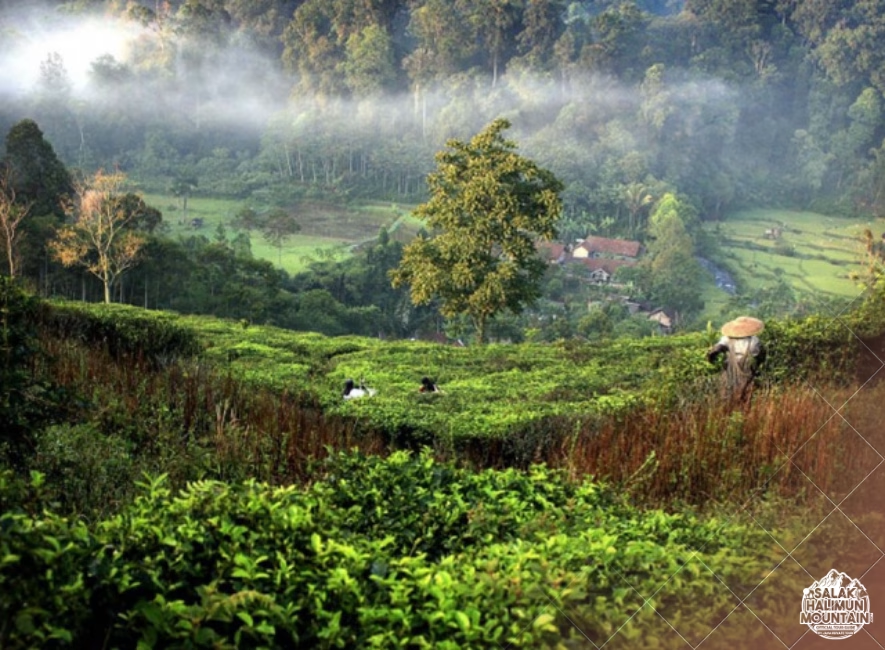
Agriculture is confined strictly to the Leuweung Garapan. This is the designated zone where families are permitted to build their terraces, cultivate mountain rice, and plant home gardens. However, even within this designated farming zone, an ethic of extreme mindfulness prevails. The size of a family’s plot is determined not by personal greed or market ambition, but by active household need. This strict spatial containment ensures that human development never expands outward to swallow the primary wilderness, creating an enduring boundary of mutual respect between human civilization and the wild.
The Spiritual Rhythm of the Huma and Sawah
At the beating heart of ancient Sundanese agricultural ethics is the cultivation of traditional rice, which is viewed as a sacred entity rather than a mere food commodity. The highlanders practice two forms of cultivation: huma (dry, rain-fed hillside farming) and sawah (irrigated terraced paddies). Unlike modern agricultural operations that prioritize speed, chemical interventions, and multiple harvests a year, traditional farming follows an unhurried, single-harvest annual cycle synchronized entirely with astronomical positions and seasonal mists.
The entire agricultural year is guided by the rising of specific constellation patterns, such as Bentang Orion (The Orion Constellation) and Bentang Kerti (The Pleiades). These celestial markers dictate the exact days for preparing the soil, planting the seeds, and initiating the harvest. By bowing to the natural clock of the universe rather than forcing the land to match human speed, the soil is allowed to naturally rest, recover its organic nutrients, and maintain its long-term volcanic fertility without ever relying on harmful chemical fertilizers or synthetic pesticides.
Honoring Nyi Pohaci Sanghyang Asri
Every single step of the rice cycle—from breaking the ground to locking the granary door—is accompanied by delicate communal rituals and offerings dedicated to Nyi Pohaci Sanghyang Asri, the Sundanese goddess of rice, fertility, and agricultural harmony. When entering the fields, farmers speak in hushed, respectful tones and avoid using harsh tools or loud words that might disrupt the spiritual peace of the crop. The planting is seen as a beautiful, gentle partnership with the divine nature of the plant.
During the harvest, the rice stalks are not chopped violently with large modern scythes. Instead, farmers use a small, hidden finger-held blade known as an ani-ani. This traditional tool allows the farmer to cut each individual stalk of rice one by one with utmost care and gentleness. This slow, meditative technique is an ultimate expression of Tepo Seliro (mutual empathy) applied to the plant kingdom, ensuring the spirit of the rice is never frightened or insulted, and guaranteeing a bountiful, spiritually blessed yield for the village.
The Philosophy of the Leuit: Banking for Collective Security
The ethical circle of Sundanese farming is only complete once the harvest is brought in from the hillsides. The collected rice is never taken directly to commercial markets to be sold for personal financial gain. Doing so is considered a severe violation of traditional taboo (buyut), as selling the sacred grain is viewed as trading away the very life force of the community. Instead, the entire harvest is transported to the village center and stored inside iconic communal granaries known as leuit.
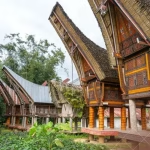
The leuit is a beautiful timber and bamboo stilt structure designed with a high, thatched roof and a unique, flaring body structure that naturally prevents mountain rodents from climbing up into the storage chamber. Inside these dark, well-ventilated wooden vaults, the traditional heirloom rice can remain perfectly preserved, dry, and edible for up to several decades. The grain stored within the leuit belongs to the collective, serving as an absolute insurance policy against unexpected crop failures, changing weather conditions, or volcanic disruptions.
A Zero-Waste Cultivation Legacy
The architectural and systemic design of the leuit reflects a profound zero-waste ethics that modern sustainability experts deeply admire. When the rice is processed, nothing is thrown away or left to pollute the local streams. The leftover rice straw (jarami) is carefully plowed back into the mud trails of the fields to decompose naturally into organic compost, or it is used as a natural mulch to protect young vegetable beds from heavy rain splashing.
The tough outer rice husks (huut) are collected and utilized to feed domestic livestock housed in the shaded spaces beneath traditional stilt homes, or they are burned slowly to create nutrient-rich biochar that sweetens the acidic volcanic soil. This complete loop of reuse ensures that the agricultural footprint remains completely pristine, leaving no chemical residues or waste streams behind. The ancient highlanders proved that true abundance comes not from exploiting more land, but from utilizing what you take with total efficiency and profound gratitude.
Lessons for Modern Seekers: Cultivating a Mindful Footprint
For the modern traveler, backpacker, or researcher journeying through the steep ridges of Halimun Salak, encountering the ancient Sundanese farming ethics is a transformative experience. In an era dominated by rapid resource consumption and global ecological anxiety, the quiet villages surrounding Mount Halimun stand as living proof that humanity can thrive for hundreds of years in perfect equilibrium with a fragile primary rainforest. The ancestral wisdom of the mountains reminds us that we are not masters of the wild, but humble extensions of its ecosystem.
When we step onto the trails, we can actively practice these ancient ethics by walking with a humble spirit and an open heart. We can show our respect by adhering strictly to Leave No Trace principles, ensuring our presence leaves absolutely no waste or disruption behind. By choosing to stay in community-run eco-lodges, supporting local agricultural guides, and learning the deep stories behind the terraced slopes, we honor the living heritage of the mountain guardians and help protect this sacred wilderness for generations to come. Walk softly, listen to the wisdom of the canopy, and let the harmony of Halimun guide your stride.
So, if you’re ready to explore the wonders of Mount Salak Halimun, head over to our ONLINE BOOKING PAGE and let’s start planning your adventure. Or simply CLICK THIS LINK to chat with us on WhatsApp.
With our team, you’re not just getting a guide; you’re gaining a local friend who will ensure your trip is nothing short of extraordinary.