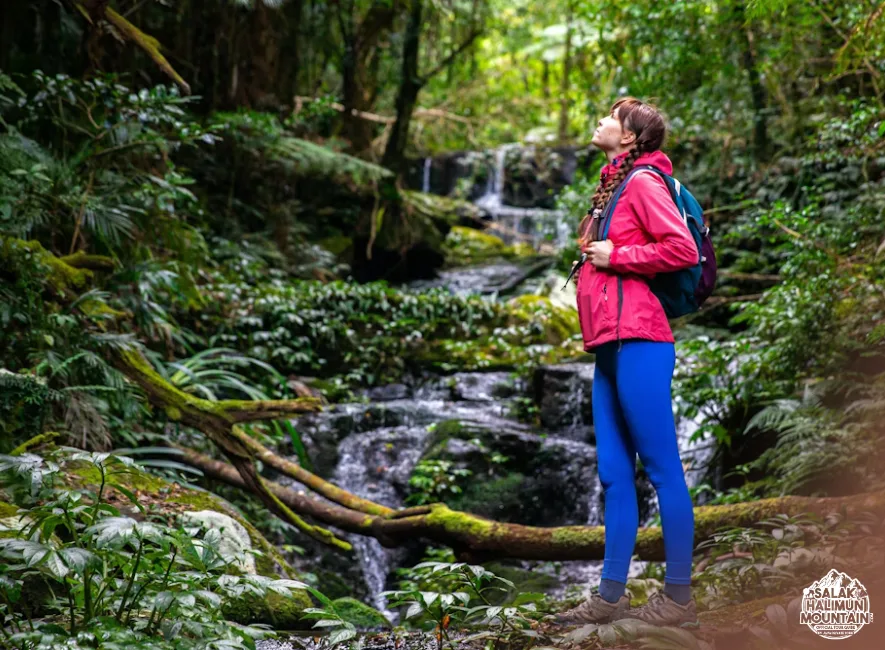
salakhalimunmountain.com – stepping into the rainforest of Mount Salak Halimun is not just about what you see. It is about what you hear when you finally slow down. Before your eyes adjust to the dim green light under the canopy, your ears are already busy. Cicadas pulse like distant engines. Water trickles over mossy stones. Leaves rustle as unseen creatures move through the undergrowth. This is where nature travel truly begins, not with footsteps, but with listening.
Listening as the First Skill of a Forest Traveler
In modern travel, we are trained to look first. We photograph landscapes, search for viewpoints, and chase visual highlights. But in the deep rainforest of Halimun–Salak National Park, vision is often limited. The forest is dense. Mist drifts between tree trunks. Trails curve and disappear behind walls of foliage.
Here, listening becomes your primary guide. The sound of a river tells you how close water is. The sudden silence of insects can signal movement nearby. The rhythm of the forest reveals its mood, calm in the early morning, intense at midday, and mysterious as dusk approaches.
Local guides in Salak Halimun often pause without explanation. They are listening. To outsiders it may seem like rest, but in truth, it is awareness. Listening allows travelers to enter the forest respectfully, not as intruders, but as guests.
The Rainforest Soundscape of Mount Salak Halimun
The rainforest here is alive with layers of sound. High above, birds call across the canopy, their voices echoing through branches soaked in humidity. Below, insects hum, click, and vibrate in complex patterns that change with temperature and time of day.
After rainfall, which is frequent in Salak Halimun, the forest grows louder. Streams swell and rush. Droplets fall from leaves long after the rain stops. Mud trails squelch softly underfoot, reminding you to slow down and feel each step.
At night, listening becomes even more important. Vision fades, but sound sharpens. Frogs announce themselves from hidden pools. Night insects form a constant background chorus. Occasionally, a branch snaps in the distance, and your heart beats faster as you wonder what moved there.
Listening Builds a Deeper Connection with Nature
Nature travel is not only about reaching destinations like waterfalls or mountain ridges. It is about relationship. Listening is how that relationship forms. When you listen, you stop trying to control the experience. You allow the forest to speak first.
In Salak Halimun, listening teaches patience. Wildlife rarely reveals itself immediately. A rustle may lead to a glimpse of a bird. A repeated call may guide you to a hidden stream. The forest rewards those who wait.
This practice changes travelers. Many visitors arrive restless, minds full of schedules and notifications. After a few hours of walking and listening, their breathing slows. Their steps soften. They begin to move in harmony with the trail.
Learning from Local Knowledge Through Listening
The communities living around Mount Salak and Mount Halimun have listened to this forest for generations. Farmers, foragers, and guides understand seasonal changes not by calendars alone, but by sound.
Certain bird calls signal weather shifts. The volume of insects hints at humidity changes. The sound of water determines when rivers are safe to cross. This knowledge is not written in books. It is learned through years of attentive listening.
When traveling with local guides, paying attention to their pauses, gestures, and quiet observations is part of the journey. They may point out a sound before pointing out a sight. This is how the forest teaches, gently and patiently.
Listening Encourages Responsible Nature Travel
Responsible trekking begins with awareness. Loud voices, music, and careless movement disrupt wildlife and disturb the delicate balance of the rainforest. Listening naturally leads to quieter behavior.
In Halimun–Salak National Park, silence is not emptiness. It is respect. By listening, travelers reduce their impact. Animals are less stressed. Other visitors enjoy a more authentic experience. The forest remains what it is meant to be.
Listening also helps with safety. Changes in river sounds warn of rising water. Wind through the canopy may signal approaching storms. These cues are subtle, but vital.
Listening as a Form of Mindful Travel
Many visitors describe trekking in Salak Halimun as meditative. This is no accident. Listening anchors you in the present moment. It pulls attention away from worries and expectations.
The repetitive rhythm of footsteps on soft mud, combined with the steady background of forest sounds, creates a natural mindfulness practice. You are not rushing. You are not distracted. You are simply there.
This mindful approach makes nature travel more meaningful. Instead of collecting places, you collect moments. The memory of a quiet morning in the rainforest often lasts longer than any photograph.
Waterfalls Teach the Art of Listening
Waterfalls are among the most visited features in Mount Salak Halimun, but their true beauty is not only visual. Long before you see falling water, you hear it.
The sound grows gradually, guiding your steps through thick vegetation. Near the falls, the air cools. The roar fills your chest. Smaller cascades whisper nearby, creating layers of sound that feel almost musical.
Sitting near a waterfall and simply listening can be grounding. The constant flow reminds travelers of time passing without urgency. It is a lesson the forest offers freely.
Listening Reveals Wildlife Without Chasing It
Wildlife encounters in Salak Halimun are often subtle. Animals here are cautious. They sense movement and sound quickly. Listening allows observation without intrusion.
A distant call may reveal a bird species long before it appears. The soft movement of leaves can signal monkeys moving through the canopy. Even insects tell stories about the forest’s health.
By listening instead of chasing sightings, travelers experience wildlife on its own terms. This approach is more ethical and often more rewarding.
Teaching Children and New Travelers to Listen
For families and first time nature travelers, listening is an accessible skill. You do not need special equipment or physical strength. You only need curiosity.
Guides often encourage children to close their eyes for a moment and identify sounds. This simple exercise builds respect and excitement. The forest becomes a classroom without walls.
Teaching listening early helps shape future travelers who value conservation and responsibility.
Listening Changes the Way You Leave the Forest
When the trek ends and you return to villages or roads, the silence feels different. Your ears remain tuned. Urban noise becomes sharper. Many travelers notice how rare true listening has become.
Salak Halimun leaves a quiet imprint. It reminds visitors that nature speaks constantly, but only to those who listen.
That lesson often travels home with them, influencing how they move through other natural spaces and even daily life.
A Final Walk Through Sound and Stillness
Nature travel in Mount Salak Halimun is not about conquering trails or collecting destinations. It is about presence. Listening transforms a simple walk into a deep experience.
The rainforest does not demand attention. It offers it. Through sound, it shares stories of water, wind, life, and time. All you need to do is slow down enough to hear them.
So, if you’re ready to explore the wonders of Mount Salak Halimun, head over to our ONLINE BOOKING PAGE and let’s start planning your adventure. Or simply CLICK THIS LINK to chat with us on WhatsApp.
With our team, you’re not just getting a guide; you’re gaining a local friend who will ensure your trip is nothing short of extraordinary.