salakhalimunmountain.com – Spending a night under the stars in Halimun Salak National Park is an extraordinary experience that connects you deeply to the rhythmic heartbeat of Java’s ancient wilderness. As darkness falls, the magnificent canopy light filtering through leaves fades into a velvet sky, and the legendary symphony of cicada calls echoes through the misty valleys. However, any local guide will tell you that the weather here demands serious respect. The high humidity and sudden, torrential downpours mean that choosing the best lightweight tents for camping in Halimun Salak Park is a critical decision. Your shelter must balance weight savings with the rugged, waterproof construction required to keep you completely dry on the soft mud trails.
When you are grinding up steep volcanic ridges, a heavy backpack is your greatest enemy, sapping your energy and straining your joints. Traditional camping tents are often bulky and cumbersome, adding unnecessary stress to your climb. Switching to a high-performance, lightweight shelter allows you to move with maximum agility and speed across the technical terrain. Let let us take a deep look into the specific features, advanced materials, and architectural designs you must prioritize to select the perfect lightweight home away from home for your next rainforest expedition.
Double-Wall Versus Single-Wall Lightweight Designs
When evaluating the best lightweight tents for camping in Halimun Salak Park, the primary structural decision is choosing between a double-wall or a single-wall design. Single-wall tents combine the canopy and rainfly into a single layer of fabric, making them incredibly light and exceptionally fast to set up in a sudden storm. However, single-wall designs perform poorly in the high-humidity environments of West Java. The moisture from your breath collects on the interior walls, creating a heavy condensation that drips onto your sleeping bag, leaving you damp and uncomfortable by morning.
For the tropical climate of Halimun Salak, a double-wall tent remains the superior choice. This design features a separate breathable mesh inner tent covered by a completely waterproof outer rainfly. The physical gap between the two layers allows fresh air to circulate freely, channel moisture away, and drastically reduce interior condensation. This breathability ensures that even during a sustained midnight downpour, your living space remains perfectly dry and ventilated, allowing you to sleep deeply and wake up refreshed for the next day’s climb.
The Role of Premium Mesh Interior Canopies
The inner tent of a high-quality double-wall shelter is predominantly constructed from ultra-fine noseeum mesh fabric. This specialized mesh is a vital asset when camping in a primary rainforest, acting as an impenetrable barrier against tiny biting insects, leeches, and mosquitoes while maximizing airflow. On warm, humid evenings on the lower slopes, the excellent ventilation keeps the tent’s interior cool and comfortable.
Furthermore, look for inner tents that feature a high waterproof bathtub floor. The fabric should wrap several inches up the sides of the tent body before meeting the mesh canopy. This durable, waterproof basin prevents ground water, running mud, and splashing rain from seeping into your sleeping area from below. A deep bathtub floor combined with a tightly woven mesh canopy guarantees complete protection from both the damp earth and the industrious insect life of the jungle floor.
Advanced Waterproof Fabrics and Silicone Coatings
The fabric used to construct your rainfly is your primary defense against the legendary downpours of Mount Salak. Standard budget tents use heavy polyester fabrics coated with cheap polyurethane, which can crack and degrade rapidly when exposed to persistent tropical moisture and UV rays. The best lightweight tents for camping in Halimun Salak Park utilize advanced, high-tensile materials like silicone-coated nylon, commonly known as Silnylon, or cutting-edge Dyneema Composite Fabrics.
Silnylon is highly favored because it is exceptionally lightweight, incredibly strong, and naturally packs down to the size of a small loaf of bread. The silicone treatment penetrates deep into the nylon fibers, creating a slick, hydrophobic surface that forces heavy rain to bead up and slide off effortlessly rather than saturating the fabric. When selecting a Silnylon tent, look for a hydrostatic head rating of at least two thousand to three thousand millimeters, which ensures the fabric can withstand the intense pressure of a driving tropical storm without leaking a single drop.
The Importance of Factory Sealed Seams
Even the most advanced waterproof fabric will fail if the seams are not properly constructed. Every place where panels of fabric are stitched together creates thousands of tiny needle holes that invite water to slowly seep inside. To prevent this, ensure your chosen lightweight tent features factory-taped or factory-sealed seams. Polyurethane-coated tents use a clear waterproof tape applied under high heat to seal the stitching completely.
For Silnylon shelters, seams are often sealed using a specialized liquid silicone adhesive that bonds molecularly with the fabric, creating a permanently flexible, completely watertight joint. Before setting out on your trek into the national park, it is always a wise practice to pitch your new tent in your backyard and inspect the seams thoroughly. Taking the time to manually apply a backup seam sealer if necessary guarantees absolute peace of mind when the heavy afternoon mists turn into a relentless downpour over your campsite.
Pole Architecture and Wind Stability on High Ridges
Lightweight tents achieve their weight savings not only through advanced fabrics but also through innovative pole designs. Modern shelters feature high-strength hubbed aluminum pole systems, often made from premium DAC alloys, which offer an exceptional strength-to-weight ratio. These poles are flexible enough to bend dynamically under high stress without snapping, and they create steep interior walls that maximize your livable headspace without adding extra bulk to your backpack.
If you are planning to camp on the high, exposed ridges of Halimun Salak where strong mountain winds can buffet your campsite, a sturdy freestanding pole structure is highly recommended. Freestanding tents maintain their shape entirely through their pole architecture, making them incredibly easy to pitch on hard volcanic rock or wooden camping platforms where driving stakes into the ground is difficult. A stable, rigid pole geometry ensures your tent will not collapse inward when subjected to sudden gusts of wind during a midnight storm.
Trekking Pole Supported Shelters for Ultimate Weight Savings
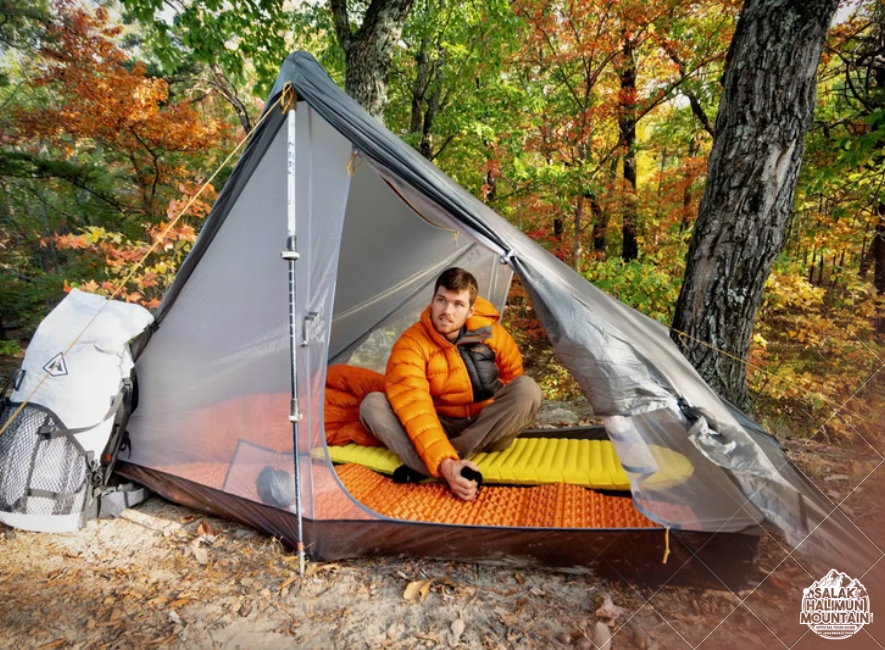
For the dedicated ultralight backpacker looking to trim every possible gram from their pack, a trekking pole-supported tent is an incredible alternative. These minimalist shelters eliminate traditional tent poles entirely, relying instead on your adjustable trekking poles to prop up the canopy. By utilizing gear you are already carrying on the trail, you can reduce your shelter’s total packed weight to well under one kilogram.
However, trekking pole tents are non-freestanding, meaning they rely completely on tight, secure stake placement and precise tensioning to stay upright. Pitching these shelters requires a bit of practice and a firm ground surface. If you choose this style for your journey, ensure you pack heavy-duty, Y-beam aluminum stakes that can bite securely into the soft mud trails and loose volcanic soil, providing a rock-solid anchor that will hold fast through changing weather conditions.
Vestibule Space and Gear Organization
When you are trapped inside your tent during a heavy rainforest downpour, your living space can quickly become cramped if your gear is poorly organized. The best lightweight tents for camping in Halimun Salak Park feature spacious external vestibules. A vestibule is an extension of the rainfly that reaches past the inner tent door, creating a shielded, covered porch area outside your clean sleeping compartment.
This external space is invaluable for storing your muddy trail running shoes, wet trekking poles, and soaked waterproof backpacks, keeping the abrasive grit and moisture out of your clean inner tent. A large vestibule also provides a protected area to operate your backpacking stove safely, allowing you to boil water for a comforting warm drink or prepare a hot meal without exposing yourself or your delicate electronics to the elements outside. Dual-door tents with dual vestibules offer the ultimate convenience for pair trekking, giving each hiker private storage and easy entry.
Internal Pockets and Gear Lofts
Inside the tent, smart organization features make a massive difference in your comfort levels. Look for shelters equipped with overhead gear lofts or strategically placed mesh pockets along the walls. These small pockets allow you to store critical items like your map, compass, safety whistle, and emergency headlamp within arm’s reach at a moment’s notice.
Storing your headlamp in an overhead mesh pocket or a dedicated light-diffusing pouch can instantly illuminate the entire tent with a soft, ambient glow, turning your shelter into a cozy, welcoming sanctuary after a long day of physical exertion. Keeping your personal items organized and off the floor ensures you can transition quickly and smoothly from resting to moving if a situation changes or you need to break camp early in the morning fog.
A Commitment to Sustainable and Mindful Camping
As passionate adventurers and dedicated guardians of the wild, our equipment choices should always harmonize with strong conservation ethics. When choosing the best lightweight tents for camping in Halimun Salak Park, look for manufacturers that prioritize eco-friendly production methods. Seek out tents that utilize solvent-free silicone coatings, recycled fabrics, and aluminum poles manufactured without harmful acids or toxic chemicals.
By selecting sustainably produced gear, we actively minimize our environmental footprint and help preserve this vital, pristine sanctuary for the rare Javan leopards, vocal silvery gibbons, and future generations of explorers. When you step onto the trail with a reliable, lightweight shelter resting securely in your pack, your relationship with the mountain shifts. You move across the land with a profound sense of freedom and confidence, completely prepared to immerse yourself in the timeless magic, the rushing rivers, and the breathtaking beauty of Java’s premier mountain kingdom. Pack light, camp mindfully, and let the journey unfold.
So, if you’re ready to explore the wonders of Mount Salak Halimun, head over to our ONLINE BOOKING PAGE and let’s start planning your adventure. Or simply CLICK THIS LINK to chat with us on WhatsApp.
With our team, you’re not just getting a guide; you’re gaining a local friend who will ensure your trip is nothing short of extraordinary.