salakhalimunmountain.com – There is an undeniable magic that settles over Halimun Salak National Park during a rain-kissed morning, where the heavy rainforest air carries the crisp aroma of damp moss and wet volcanic earth. The magnificent sight of dense canopy light filtering through leaves illuminates a landscape that feels completely untouched by time. However, for the adventurer stepping onto these paths, that very same moisture presents a formidable challenge. The soft mud trails of Halimun Park are legendary, capable of turning a brisk mountain walk into a slick, unpredictable test of balance. Learning the art of navigating the muddy trails of Halimun Park safely today is the defining skill that separates an exhausted, slipping hiker from a confident explorer moving in perfect harmony with the jungle.
Rainforest mud is not uniform dirt; it is a complex, living mixture of decayed organic matter, smooth volcanic silt, and slick clay that acts like grease underfoot. When a sudden afternoon cloudburst opens up over the ridges, paths can transform into rushing streams of mud within minutes, hiding dangerous tree roots and sharp volcanic stones beneath a murky surface. Navigating these conditions requires a shift in your hiking mindset, specialized physical movement, and a deep reliance on targeted equipment. By mastering the rhythm of the muddy trail, you protect your joints from injury, conserve your physical stamina, and ensure your journey through Java’s premier wilderness remains a joyful, inspiring success.
The Footwork and Mechanics of Mud Navigation
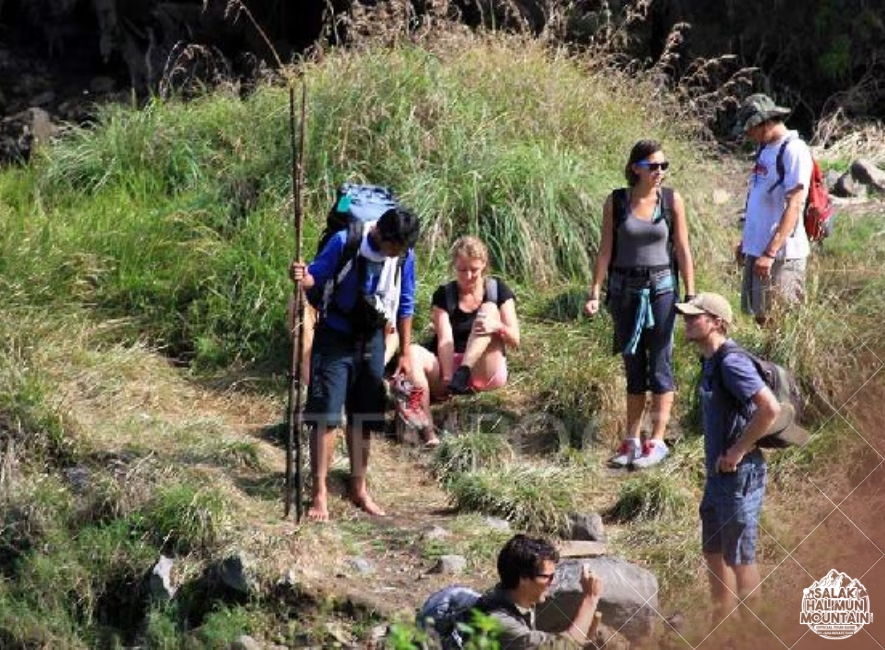
When you encounter a deep, wide pool of thick mud stretching across the path, your natural instinct might be to try and leap over it or skirt along the extreme edges of the trail to keep your footwear clean. However, this is often where the most dangerous slips occur. The edges of a rainforest trail are typically sloped, unstable, and lined with hidden, slick roots covered by loose leaves. Stepping on these off-camber edges frequently results in an unexpected ankle rollover or a sudden slide down into the ravine. The safest technical route is almost always straight through the middle of the mud pool.
By stepping directly into the center of the track, you place your feet on the most packed and uniform surface available, minimizing lateral slips. When moving through deep mire, alter your stride by keeping your steps short, deliberate, and directly underneath your center of gravity. Avoid taking long, reaching steps, as extending your foot too far forward dramatically reduces your traction and increases the likelihood of your support leg sliding out from under you. Maintain a slight forward lean from your hips, keeping your knees loose and bent to absorb sudden shifts in the shifting earth beneath your feet.
The Whole-Foot Landing Technique
On normal, dry terrain, hikers naturally utilize a heel-to-toe stride. On slick, muddy inclines, however, landing heel-first is a recipe for a sudden fall because it concentrates your weight on a tiny, rounded surface area that easily shears through the top layer of grease. Instead, practice the whole-foot landing technique. Try to plant your entire foot flat against the surface of the mud simultaneously, maximizing the contact area between your shoe’s aggressive outsole lugs and the ground.
Landing flat-footed engages every single rubber tooth on your sole at once, distributing your downward force evenly and allowing the shoe’s tread design to bite deep into the firmer volcanic crust hidden beneath the silt. When ascending steep, muddy banks, press your heels down firmly rather than climbing on your tiptoes; this adjustment keeps your calf muscles from premature cramping and ensures your heel counter retains its secure, locked-down stability. Deliberate, flat plants provide the anchor points your body needs to push upward safely.
Leveraging Dual Trekking Poles for Multi-Point Traction
Navigating an active primary rainforest in the wet season without a high-quality pair of trekking poles is an unnecessary risk. On a dry trail, poles are excellent for rhythm and joint relief; on a muddy ridge, they function as an invaluable extra set of limbs that provide vital points of contact. When your foot inevitably slips on a patches of slick volcanic clay, having two sturdy poles firmly anchored into the ground can instantly arrest your fall, converting a dangerous tumble into a simple, easily managed misstep.
For optimal mud tactics, equip your poles with wide, circular mud baskets. Standard trail baskets are small and narrow, causing the pole to plunge deep into the soft mire until the locking joints are completely submerged, which wastes your energy as you yank them back out with every stride. Mud baskets act like miniature snowshoes, distributing the downward force across a wider surface area and providing a firm, buoyant platform to push off from. Plant your poles slightly wide of your body to create a broad, incredibly stable tripod base of support as you step forward.
Choking Up on Poles for Vertical Mud Scrambles
The topography of Halimun Park is famously undulating, featuring sudden, steep drop-offs and vertical scrambles over massive root systems. As you transition from a flat, boggy valley to a steep, muddy incline, the length of your poles needs to adapt to the changing angle. If your poles feature extended EVA foam grips that reach down the upper shaft, you can quickly choke up on the handles, placing your hands lower down the shaft without needing to stop and manually adjust the mechanical flip-locks.
Holding the poles lower down gives you immediate leverage and greater control when pushing your body up a steep, greasy mud bank. Alternatively, if you are negotiating a steep descent into a muddy ravine, place the palms of your hands directly over the rounded rubber tops of the grips. This positioning allows you to plant the poles down ahead of you, taking the punishing braking force off your knees and lower back while keeping your body upright and perfectly balanced above the slick descent. Smart pole management is a masterclass in trail efficiency.
Footwear Preparation and Handling the Mud Suction
Your ability to stay upright on the muddy paths depends entirely on the design of the rubber beneath your feet. Standard athletic shoes or hybrid trail shoes with shallow, tightly packed treads are completely unsuited for Halimun’s terrain, as the sticky clay will instantly pack into the small gaps, turning your sole into a completely flat, slippery surface. The best footwear for these conditions features specialized outsoles with aggressive, widely spaced directional lugs measuring at least five to eight millimeters in depth.
The wide spacing is a critical feature because it allows the shoe to naturally flex and shed accumulated mud with every stride you take, ensuring that your treads are completely clean and ready to bite deep into the earth with the very next step. Additionally, ensure your lacing is exceptionally secure through the midfoot and heel. Deep rainforest mud can exert an incredible amount of vacuum suction; a loosely fitting shoe can easily be pulled clean off your foot when lifting your leg out of a deep wallow, leaving you off-balance and vulnerable to a fall.
The Myth of Waterproofing in Deep Jungles
Many hikers incorrectly assume that heavy, waterproof boots lined with breathable membranes are the ultimate choice for wet rainforest trekking. However, in the high humidity and heavy downpours of West Java, water will inevitably spill over the ankle collar during deep mud plunges or river crossings. Once water enters a fully waterproof boot, the membrane prevents the liquid from escaping, leaving your feet sloshing inside a heavy, dark puddle that softens your skin and causes severe blisters.
A far superior strategy is to wear highly breathable, fast-draining trail running shoes or lightweight synthetic boots that do not feature a waterproof lining. These shoes allow water to actively squeeze out through the mesh fabric with every step you take, drying rapidly in the mountain breeze. Pair your free-draining footwear with premium, synthetic or merino wool socks that retain their insulation properties even when completely drenched, keeping your feet comfortable and skin intact despite the persistent jungle moisture.
Reading the Mud and Environmental Awareness
A seasoned nature guide can read a muddy trail like an open book, identifying where it is safe to step and where hazards lie hidden just beneath the surface. As you walk through Halimun Park, pay close attention to the color and texture of the mud ahead of you. Dark, watery mud that shimmers under the canopy light is typically highly fluid and deep, offering almost no structural support. Look for lighter, firmer patches of volcanic soil mixed with leaf litter, as these areas provide significantly better traction and stability.
Be extremely cautious when stepping on exposed tree roots that cross the muddy path. When coated in a thin layer of wet clay, these smooth roots become as slick as ice. If you must step on a root, try to place your foot in a notch or a rough section where the wood bark is still intact, and avoid planting your foot on a downward-sloping curve. The same caution applies to smooth, moss-covered volcanic boulders near rivers; always test the rock with the tip of your trekking pole to evaluate its slickness before committing your full body weight to the step.
The Principle of Continuous Three-Point Contact
When the trail worsens and you find yourself traversing a narrow, muddy ridge line with steep drop-offs on either side, implement the rock-climbing principle of three-point contact. At any given moment during your movement, ensure you have three secure points of contact with the mountain—such as both feet and one trekking pole, or one foot and two poles—firmly established before moving your remaining limb forward.
This deliberate, cautious approach guarantees that if one point of support unexpectedly slips on a hidden patch of clay, your remaining two anchors will keep your body stabilized and upright. Never rush through highly technical, wet sections of the forest. Cultivate a sense of calm, focused patience, treating each step as a deliberate movement. Slowing your pace down minimizes your heart rate, prevents clumsy steps caused by physical fatigue, and allows you to read the terrain with total clarity.
Conservation Ethics and Walking Mindfully Today
As responsible adventurers and passionate defenders of Halimun Salak National Park, our safety techniques should always reflect a profound commitment to environmental conservation. When faced with a massive, intimidating mud wallow on the path, the temptation to carve a new trail around the obstacle through pristine vegetation is high. However, this practice leads to rapid trail braiding and severe environmental erosion, destroying delicate tropical flora and widening the human footprint across this fragile sanctuary.
By choosing to walk directly through the mud, you protect the surrounding jungle from damage and help preserve the vital habitats of the rare Javan leopards and vocal silvery gibbons that call this ancient forest home. Pack a small, lightweight change of dry clothes and clean sandals inside a waterproof dry bag within your backpack, allowing you to transition into comfortable gear once you reach your campsite or the trailhead. Embrace the mud as a badge of true wilderness exploration, understanding that the challenges of the path are what make the ultimate rewards so deeply unforgettable.
So, if you’re ready to explore the wonders of Mount Salak Halimun, head over to our ONLINE BOOKING PAGE and let’s start planning your adventure. Or simply CLICK THIS LINK to chat with us on WhatsApp.
With our team, you’re not just getting a guide; you’re gaining a local friend who will ensure your trip is nothing short of extraordinary.