salakhalimunmountain.com – Not every journey around Mount Salak needs to end at the summit. In fact, some of the most meaningful experiences happen along its lower forest trails, beside its rivers, and within the quiet villages that live in harmony with its slopes. A two day nature loop around Mount Salak without a summit climb offers something different. It offers immersion instead of conquest. It offers connection instead of altitude. Over the course of two slow days, you will move through waterfalls, rainforest paths, tea gardens, and forest edge communities, feeling the mountain’s presence without ever standing on its peak.
Why Choose a Nature Loop Instead of a Summit
Mount Salak is known for its challenging summit routes. Steep ascents, thick forest, unpredictable weather, and strong mountain winds make the climb rewarding but demanding. Not every traveler seeks that kind of intensity. Some prefer to feel the rainforest under their feet, to hear water cascading over volcanic rock, and to sit quietly beneath the canopy without rushing upward.
A two day loop allows you to experience multiple ecosystems around the mountain. You will encounter dense lowland rainforest, secondary forest edges, agricultural tea landscapes, and cool river valleys. This journey is balanced. It gives your body time to adjust to the humidity and your mind space to absorb the atmosphere.
Day One Morning Forest and Waterfall Trails
The first morning begins on the western side of Mount Salak, near the Gunung Salak Endah area in Pamijahan. The air here is heavy with moisture, especially in the early hours. Mist lingers between tree trunks, and sunlight filters through layers of leaves high above.
Start with a gentle forest walk toward one of the accessible waterfalls such as Curug Cigamea or Curug Pangeran. The trails are shaded and alive with sound. Cicadas create a steady rhythm. Water trickles beneath wooden bridges. Moss spreads across rocks in thick green carpets. The soil is soft in places, especially after rain, so steady steps and proper footwear are important.
As you approach the waterfall, the temperature drops slightly. The sound grows louder. You feel the spray before you fully see the cascade. Water falls over dark volcanic rock formed from Mount Salak’s ancient eruptions. The surrounding vegetation thrives on this constant moisture. Ferns curl outward. Vines hang low. Small insects move in and out of sunlight beams.
Spend time here without rushing. Sit on a stable rock and listen. The mountain is speaking through water.
Midday Village Rhythm and Local Lunch
After your morning waterfall exploration, return toward the forest edge villages. Small warungs serve simple local meals that restore energy. Rice, sautéed vegetables, tofu, tempeh, fresh sambal, and hot tea are common choices. The flavors are grounded and honest.
Observe daily life around you. Farmers move between fields. Children walk home from school. The forest rises quietly behind the houses, a constant presence that shapes livelihoods and culture. This relationship between community and mountain has existed for generations. Respect is essential. Dispose of waste properly and remain mindful of water usage. These streams are not only scenic. They are sources of life.
Afternoon Tea Gardens and Open Views
In the afternoon, shift landscapes from dense rainforest to rolling tea plantations along the foothills. The contrast feels refreshing. After hours under thick canopy, the open sky seems wide and bright.
Rows of tea bushes curve across gentle slopes in repeating patterns. The wind moves softly across the leaves, creating subtle waves of green. From certain viewpoints, Mount Salak stands behind you, partially wrapped in clouds. The peak may not always be visible, but its presence is felt in the cool breeze and rich volcanic soil beneath the plantations.
Walk along permitted paths and avoid disturbing workers harvesting tea shoots. Late afternoon light is especially beautiful here. The sun lowers slowly, casting warm tones across the hills. This is a perfect time for photography, reflection, or simply standing quietly with the mountain in view.
Evening Rest Near the Forest Edge
Rather than descending back to the city, spend the night in a simple homestay or eco lodge near the forest perimeter. Night in this region is different from urban darkness. Crickets replace traffic. The air cools gradually. If the sky clears, stars appear above the silhouette of trees.
Rest well. The second day continues the loop through another side of Mount Salak’s landscape.
Day Two River Valleys and Hidden Trails
Wake early to the sound of roosters and distant water. Morning fog often settles low across fields and forest edges. After breakfast, begin the second leg of your nature loop, heading toward river valleys and lesser known forest paths on another flank of the mountain.
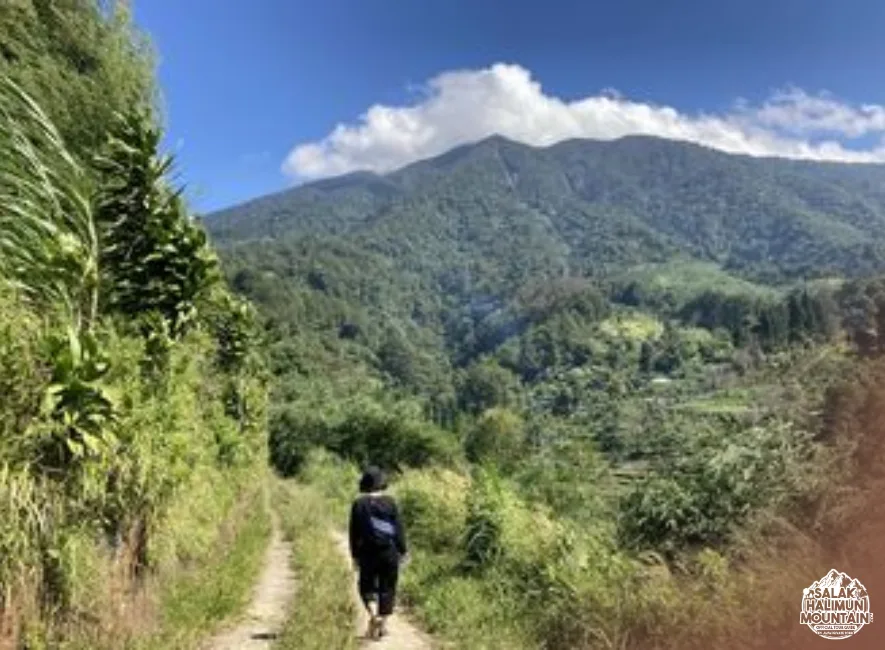
This area feels quieter. Fewer visitors come here compared to popular waterfall spots. The trail may pass through bamboo groves where tall stems sway gently overhead. You may cross shallow streams where clear water runs over smooth stones. Each step reveals subtle changes in vegetation. Some sections are shaded by tall hardwood trees, while others open briefly to small cultivated plots.
Because this is not a summit climb, the pace remains steady and manageable. The goal is not altitude. The goal is immersion. Notice the smell of wet leaves. Listen to birds calling from unseen branches. Observe how tree roots grip the soil, preventing erosion during heavy rains.
Understanding the Mountain’s Ecology
Mount Salak and the broader Halimun Salak National Park form one of the richest biodiversity zones in West Java. Even without climbing high, you move through habitats that support rare birds, primates, and countless plant species. Guides often share stories of Javan gibbons calling in distant valleys or hornbills flying across canopy gaps.
This ecosystem depends on intact forest corridors. Staying on designated trails and avoiding litter helps preserve these delicate systems. Responsible trekking is not only about personal safety. It is about protecting a living rainforest that sustains both wildlife and surrounding communities.
Water Sources and Natural Pools
On the second day, you may encounter smaller waterfalls or calm river pools suitable for resting. The water here is refreshingly cool, flowing directly from higher elevations of Mount Salak. Always avoid using soap or chemicals in natural water. These streams flow downstream to villages and agricultural land.
Sitting beside a river, you begin to understand why a summit is not required to feel the mountain. The steady flow of water, the shade of trees, and the rhythm of insects create a complete experience on their own.
Completing the Loop With Perspective
By the afternoon of the second day, your loop gradually brings you back toward your starting region. The landscape may look familiar, yet your perception has changed. After two days immersed in forest, rivers, tea gardens, and village life, Mount Salak feels less like a distant peak and more like a living presence surrounding you.
You have walked through its lower arteries where water begins its journey. You have stood among tea fields rooted in its volcanic soil. You have slept near its forest edge and woken to its morning mist. The summit remains above, often hidden in cloud, but you no longer feel the need to conquer it.
Who This Journey Is Perfect For
A two day nature loop around Mount Salak without a summit climb is ideal for travelers who value experience over elevation. Families, photographers, slow travelers, and those new to rainforest trekking often find this route deeply satisfying. It offers manageable distances, varied scenery, and meaningful cultural interaction.
Most importantly, it encourages patience. It invites you to slow your breathing, match your steps to the forest floor, and appreciate small details like dew on leaves or light shifting through branches.
So, if you’re ready to explore the wonders of Mount Salak Halimun, head over to our ONLINE BOOKING PAGE and let’s start planning your adventure. Or simply CLICK THIS LINK to chat with us on WhatsApp.
With our team, you’re not just getting a guide; you’re gaining a local friend who will ensure your trip is nothing short of extraordinary.