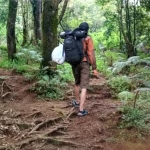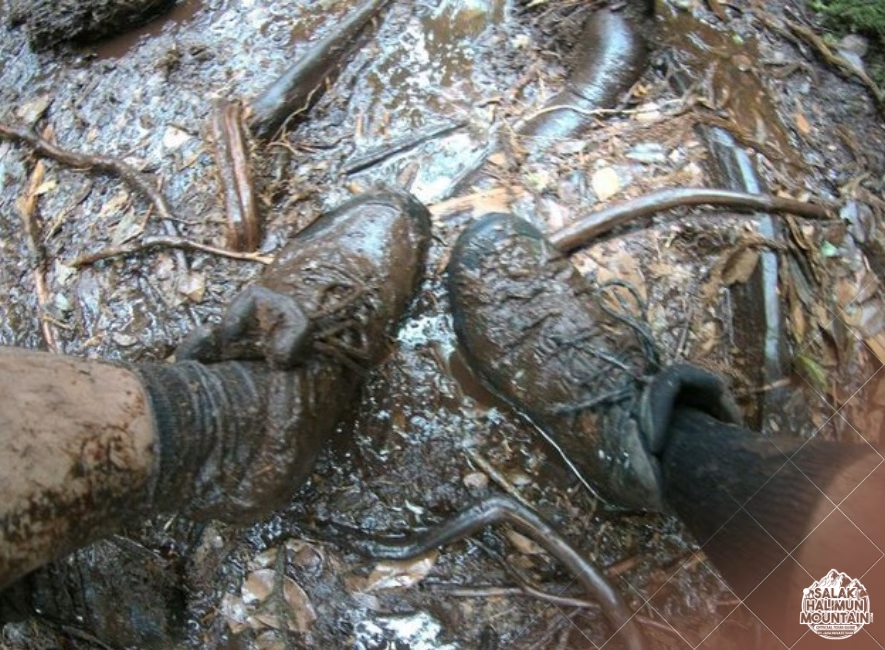
salakhalimunmountain.com – Anyone who has spent even a couple of hours deep inside the high-canopy jungle of Mount Halimun knows that the forest floor has a personality of its own. As the light dims beneath giant tree ferns and heavy rainforest air settles around your shoulders, the trail underfoot changes rapidly. What starts as a slick dirt path can suddenly carve down into narrow, knee-deep channels of soft, dark earth. These are the deep mud trenches of Halimun forest, formed over years by flowing rainwater, falling leaves, and the steady tread of trekkers and local villagers. Navigating them is an essential skill for anyone looking to explore the wild heart of Halimun Salak National Park.
To an unprepared hiker, encountering a long stretch of deep mud trench can feel intimidating or exhausting. Your boots sink, your balance wobbles, and every step requires twice the energy as you lift heavy, wet earth with every stride. But if you watch a local guide move through these exact same sections, you will notice something surprising. They do not fight the mud. They move with a relaxed rhythm, picking high edges, stepping on hidden stones, and using the contours of the trench to their advantage. Learning how to read and navigate these muddy channels will transform your trekking experience from a frustrating slog into a fun, rewarding jungle adventure.
Understanding How Halimun’s Mud Trenches Form
To move efficiently through deep mud, it helps to understand why these trenches exist in the first place. The primary forest of Mount Halimun receives heavy rainfall throughout the year, nourishing one of the richest ecosystems in Java. As water collects on high ridges, it naturally channels downhill along established single-track paths. Over time, running water strips away the loose topsoil, carving narrow gullies directly into the volcanic clay beneath.
Because the dense rainforest canopy blocks direct sunlight, moisture trapped in these low channels stays wet long after the rain has stopped. Fallen leaves, decaying plant matter, and volcanic soil mix together to create thick, suction-heavy mud that can easily swallow a shoe or trap a boot heel. Recognizing the depth and texture of the mud before you plunge your weight forward is the secret to keeping your footing secure and your socks dry.
Distinguishing Fresh Slime from Deep Clay
Not all mud in Halimun is created equal, and learning to spot the difference will save your legs a lot of strain. Bright brown, watery mud at the bottom of a trench is often shallow and soft, meaning your boot will hit firm, packed soil or gravel just an inch or two below the surface. This type of mud looks intimidating, but it actually provides decent footing as long as you keep your weight centered.
On the other hand, dark grey or black clay that looks smooth and still is a sign of deep, standing suction mud. This heavy clay acts like glue around your footwear. If you step squarely into the middle of a dark clay pocket without testing it first, the vacuum seal can easily pull your boot right off your foot as you attempt your next step. Look for tiny air bubbles or standing water rings, which usually indicate deep, unstable pockets.
Stepping Techniques for High-Wall Trenches
When a trench carves deep into the slope, the walls on either side often rise up to your knees or waist. Instinct might tell you to jump directly into the middle and stomp through, but that quickly drains your endurance. Instead, mastering a few specific foot placement techniques will allow you to glide past these obstacles without getting stuck.
The first technique is edge-walking, or straddling the high lips of the trench. The soil along the top edges of a mud channel is reinforced by the tangled root networks of nearby plants and trees. By keeping your feet wide and planting your boots on the firm bank rather than inside the ditch, you bypass the softest mud entirely. This requires good balance, but it keeps your boots clean and saves your leg muscles from working against suction power.
Using Wall Wedges and Root Anchors
When a trench becomes too wide to comfortably straddle, look at the sides of the mud walls rather than the floor beneath you. The walls of a trench often feature firm clay ledges or exposed tree roots that act as natural foot pegs. Instead of stepping flat into the bottom, turn the side of your boot outward and wedge the edge of your sole horizontally into the firm wall embankment.
This technique, known as wall wedging, elevates your boot above the deep suction zone while giving your tread something solid to push off from. Always look for small roots poking through the clay walls. Even a thin root embedded in the embankment can support your weight long enough for you to step forward onto stable ground. Just remember to test any root with a light touch before committing your full body weight to it.
Gear and Clothing Strategies for Sloggy Conditions
Having the right equipment makes a world of difference when tackling the wet, muddy terrain of Mount Halimun. Standard running shoes or low-cut sneakers simply are not built for deep mud channels; the suction will pull them off your feet in short order, and water will quickly soak through the mesh. Preparing your gear properly beforehand keeps you comfortable and safe throughout the trek.
Choose high-cut or mid-cut trekking boots with deep, aggressive lug patterns that can dig through surface mud to find traction on underlying clay. Boots with quick-lacing hooks allow you to tie your laces tightly around the ankle, creating a firm hold that prevents your heel from slipping out when walking through heavy mud. Pairing your boots with durable, waterproof trail gaiters is another smart move. Gaiters wrap securely around your lower legs and footwear, preventing mud, water, and tiny pebbles from working their way inside your socks.
Lacing Tight and Packing Lightweight
Before you step into a known mud section, take a moment to pause and tighten your shoe laces. A snug knot around the arch and ankle ensures that your boot moves as an extension of your foot rather than twisting loosely inside. Loose footwear in deep mud is one of the leading causes of ankle rolls and lost shoes on jungle trails.
Additionally, keep your overall backpack weight manageable. Carrying a top-heavy or overloaded pack shifts your center of gravity upward, making it much harder to regain balance if your foot slips sideways on a wet clay bank. Pack light, secure all loose gear inside your bag with dry sacks, and keep your hands free to grab nearby saplings or balance points whenever necessary.
The Role of Trekking Poles in Mud Navigation
Trekking poles are invaluable tools when navigating the unpredictable terrain of Halimun Salak National Park, especially inside narrow mud channels. They act as two additional legs, giving you stability, leverage, and a simple way to test ground depth before stepping into questionable puddles.
As you approach a dark mud trench, use your trekking pole to probe the center of the ditch. Pushing the tip down through the mud tells you instantly how deep the soft layer goes and whether there is solid rock or slick clay waiting at the bottom. This simple check takes only a second, but it prevents you from making a blind step into a knee-deep mud hole.
Maintaining Three Points of Contact
When moving through slick, uneven trenches, practice maintaining three points of contact at all times. This means having two feet and one pole, or two poles and one foot, firmly planted before moving forward. If your foot begins to slide on a wet clay wall, your trekking poles provide instant support, allowing you to catch your balance without falling backward into the mud.
Plant your poles slightly wider than the trench walls on solid ground whenever possible. Avoid planting rubber pole tips directly into deep mud, as the suction can easily pull the rubber feet off your poles, leaving them buried in the dark earth. Plastic mud baskets attached near the tip of your poles will prevent them from sinking too deep into soft soil.
Mindset and Respect for the Rainforest Trail
Trekking through the deep mud trenches of Mount Halimun requires patience and a good sense of humor. Getting a little muddy is an unavoidable and memorable part of exploring a real, wild tropical rainforest. Trying to rush through wet sections usually leads to slips, falls, and extra fatigue, whereas embracing the slow, deliberate pace of jungle navigation allows you to enjoy every moment on the trail.
Pay attention to the sounds around you as you pick your way through the trenches. The calls of silvery gibbons echoing through the high canopy, the rustle of wind through palm fronds, and the refreshing scent of damp soil after a afternoon shower are reminders of how special this preserved wilderness truly is. By moving mindfully and respecting the terrain underfoot, you protect yourself while leaving minimal impact on the fragile forest environment.
So, if you’re ready to explore the wonders of Mount Salak Halimun, head over to our ONLINE BOOKING PAGE and let’s start planning your adventure. Or simply CLICK THIS LINK to chat with us on WhatsApp.
With our team, you’re not just getting a guide; you’re gaining a local friend who will ensure your trip is nothing short of extraordinary.