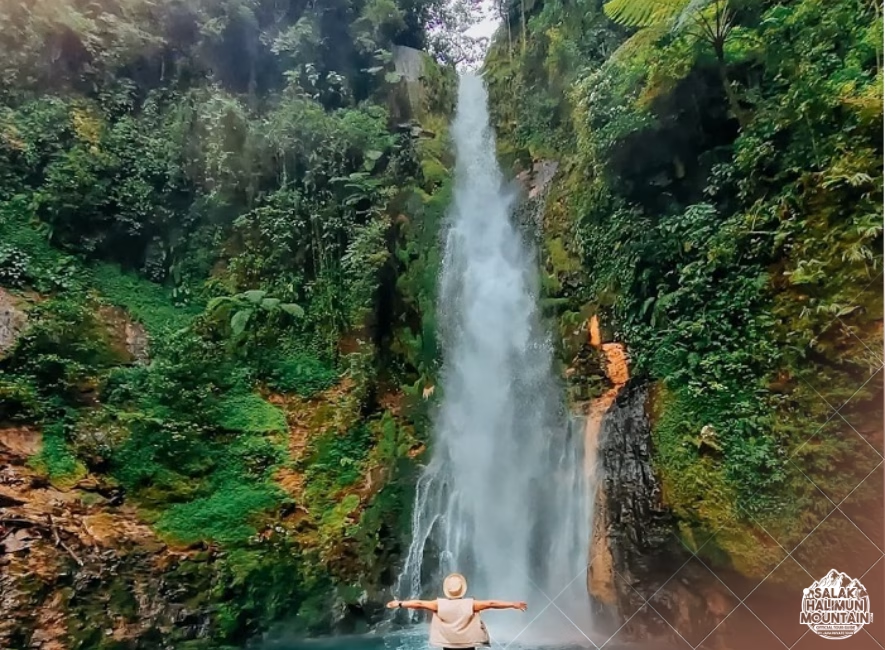
salakhalimunmountain.com – Trekking through the pristine, moss-covered paths of Halimun Salak National Park brings an intense connection to the raw elemental forces of Java. Beneath the magnificent canopy light filtering through leaves and along the challenging soft mud trails, the air is thick with the soothing drone of cicada calls. But if you stop and listen closely, you will hear another sound weaving through the mountain’s ancient valleys: the constant, melodic rush of crystal-clear water. Mount Salak is a living water tower, its porous volcanic slopes feeding thousands of natural springs that give life to West Java. For the local communities, these waters are not a resource to be commercialized. Discovering how local villages protect the sacred Mount Salak springs reveals a beautiful intersection of spiritual heritage, social ethics, and active environmental guardianship.
In the high-humidity environment of the Halimun Salak ridges, water is viewed as a physical manifestation of divine blessing. Long before modern water conservation frameworks were introduced, the highland villages possessed a complete, unwritten system of water stewardship. Rooted deeply in ancestral traditions, this management relies heavily on cultural values like Tepo Seliro (mutual empathy) to ensure that the water flowing down from the high volcanic crags remains pure and undisturbed. By exploring their sacred zoning laws, communal maintenance rituals, and strict trail ethics, we learn how these mountain communities serve as the ultimate frontline guardians of Java’s premier wilderness ecosystem.
The Customary Laws of Hulu: Safeguarding the Headwaters
The foundation of water conservation in the Salak villages lies in a strict, spiritually enforced system of traditional zoning that governs the mountain’s water sources, or hulu. Following ancient Sundanese and Javanese cosmo-ecological principles, the forests surrounding the primary springs are designated as completely untouchable zones. Local customary law mandates that the immediate vegetation encircling a spring must never be cleared, logged, or disturbed for agriculture, preserving a natural, deep-root canopy that keeps the water table stable and prevents soil erosion.
These springs are often designated as sacred spaces, protected by ancestral taboos (buyut) that deter exploitation or disrespectful behavior. Humans are permitted to approach the headwaters only for spiritual contemplation or to gather water for essential domestic needs. Commercial extraction or diverting the primary flow for personal financial gain is strictly forbidden. By elevating the springs to a sacred status, traditional village laws establish an incredibly efficient system of micro-conservation zones, protecting critical water purity right at the source.
Upstream-Downstream Empathy and Social Responsibility
The protection of these volcanic springs is heavily fueled by the philosophical practice of Tepo Seliro—the Javanese art of active, mutual empathy. Within the highland community structure, villagers understand that their daily actions on the upper slopes have immediate, tangible consequences for the families living further down the mountain. Contaminating a stream or mismanaging a spring area is viewed as a direct act of social disrespect and a violation of communal harmony.
Therefore, the villages practice a strict code of environmental etiquette. Any domestic washing, livestock management, or agricultural runoff is strictly funneled into separate, designated channels constructed far away from the primary drinking springs. This continuous exercise in looking outward ensures that the water remains pristine as it journeys down the ridges to feed the valley rice paddies, creating an enduring bond of mutual trust and shared survival between the upper and lower settlements.
Communal Maintenance and the Rituals of Water Cleansing
Water conservation in the Salak villages is not a passive sentiment; it is an active, highly organized communal responsibility. Throughout the year, especially during seasonal transitions, the communities organize traditional water-cleansing rituals and clean-up days. These events are driven by the spirit of Gotong Royong (communal mutual aid), where men, women, and youth gather together with hand tools to maintain the physical infrastructure of their shared water systems.
During these communal gatherings, the villagers clean out accumulated autumn leaves, debris, and sediment from the natural spring basins, reinforce the retaining walls with local river stones (tatapakan), and repair the bamboo or PVC conduits that distribute water to the village centers. The work is executed with a collective sense of pride and reverence, treating the physical labor as a direct offering of gratitude to the mountain for its endless liquid bounty. These rituals ensure that the community remains intimately connected to and responsible for the health of their lifelines.
Zero-Waste Water Infrastructure
The structural designs used by the villages to distribute spring water are traditionally constructed to achieve a zero-waste, low-impact footprint. Rather than installing heavy concrete dams or metallic pipes that scar the landscape, traditional communities utilize local, sustainable materials like harvested bamboo poles. The bamboo is hollowed out and connected using precise, flexible joinery methods wrapped in tough palm fibers (ijuk).
This natural piping system coexists seamlessly with the rainforest, channeling water across steep ravines and vertical slopes without disrupting the surrounding topsoil or introducing toxic synthetic chemicals to the environment. Furthermore, any overflow water from the village collection basins is never wasted or left to stagnate; it is carefully routed to irrigate nearby terraced fish ponds or channeled back into the soft mud trails of the agricultural fields, completing a perfect, sustainable loop of reuse.
Lessons for the Trail: Entering the Circle of Cleanliness
For the modern backpacker, trail runner, or eco-tourist arriving to explore the high, misty peaks of Mount Salak, the pristine state of these volcanic springs is a profound privilege to witness. As we step into this ancient landscape, we are entering a circle of cleanliness that has been meticulously guarded by generations of local hands. It is our ultimate responsibility as mindful travelers to align our backcountry behavior with these local conservation ethics and practice a strict code of water respect.
When camping or trekking near a water source, hikers must practice flawless Leave No Trace principles. This means never dumping food waste, synthetic soaps, or trash anywhere near a stream or spring basin, and ensuring all washing is done at least sixty meters away from the water edge using biodegradable products. By securing our waste inside our waterproof backpacks, sticking strictly to established single-tracks to prevent mud runoff into the streams, and honoring local water taboos, we actively participate in the living preservation of the mountain.
A Shared Legacy to Carry Forward
When you eventually step off the volcano and return to your daily routine, the true value of your expedition is measured by the mindfulness you carry forward. The ancient water stewardship of the Salak communities reminds us that clean water is not an infinite commodity to be taken for granted, but a fragile, sacred treasure that requires constant vigilance, collective empathy, and personal sacrifice to protect.
By sharing the inspiring stories of these highland guardians, supporting local community-led water initiatives, and choosing responsible travel providers who honor indigenous customs, we help ensure that the sacred springs of Mount Salak continue to bubble out pure, cold, and free for generations to come. Walk softly across the ridges, respect the headwaters, and let the clean spirit of the mountain transform your journey.
So, if you’re ready to explore the wonders of Mount Salak Halimun, head over to our ONLINE BOOKING PAGE and let’s start planning your adventure. Or simply CLICK THIS LINK to chat with us on WhatsApp.
With our team, you’re not just getting a guide; you’re gaining a local friend who will ensure your trip is nothing short of extraordinary.