salakhalimunmountain.com – Long before the first light of dawn touches the jagged peaks of Mount Salak, a different kind of energy begins to stir in the valleys below. The narrow mountain roads, still draped in a thick morning mist, come alive with the sound of small engines and the rhythmic footsteps of villagers carrying heavy baskets. They are all heading toward a singular destination: the traditional village market. Exploring the village markets near Salak is like stepping into a living, breathing map of the mountain’s bounty. These are not merely places of commerce; they are the social and cultural hearts of the Sundanese highlands, where the fresh air of the National Park meets the vibrant colors, scents, and sounds of local life. To wander through these stalls is to find the very essence of Salak Halimun, gathered and displayed in a glorious, organized chaos.
The Dawn Chorus of the Mountain Trade
If you want to experience the true soul of a Salak village market, you must be a friend of the early morning. By 5:00 AM, the market is already in full swing. The air is crisp and cool, filled with the intoxicating aroma of woodsmoke, freshly ground coffee, and the sharp tang of local spices. Farmers who have spent their lives on the volcanic slopes arrive with produce that was literally still in the ground just hours before. This is “farm to table” in its most authentic and unrefined form. You will see bundles of highland vegetables, still glistening with the morning dew, stacked high on wooden tables or spread out on colorful plastic mats on the ground. The energy is infectious, a bustling symphony of bartering and friendly laughter that echoes through the misty streets.
A Palette of Volcanic Produce
The first thing that will catch your eye at the village markets near Salak is the incredible intensity of the colors. Because of the mineral-rich volcanic soil and the constant hydration from the mountain clouds, the vegetables here are extraordinarily vibrant. You will find mounds of “cabai rawit” (bird’s eye chilies) in shades of fiery red and neon green, bundles of long beans as thin as pencils, and the famous highland cabbages that are prized across West Java for their crunch and sweetness. There are also varieties of local greens, known as “lalapan,” which are essential to any Sundanese meal. These fresh herbs and leaves are the secret behind the health and vitality of the mountain people, and seeing them in such abundance is a testament to the fertility of the land we call home.
The Sweet Scents of the Forest Pantry
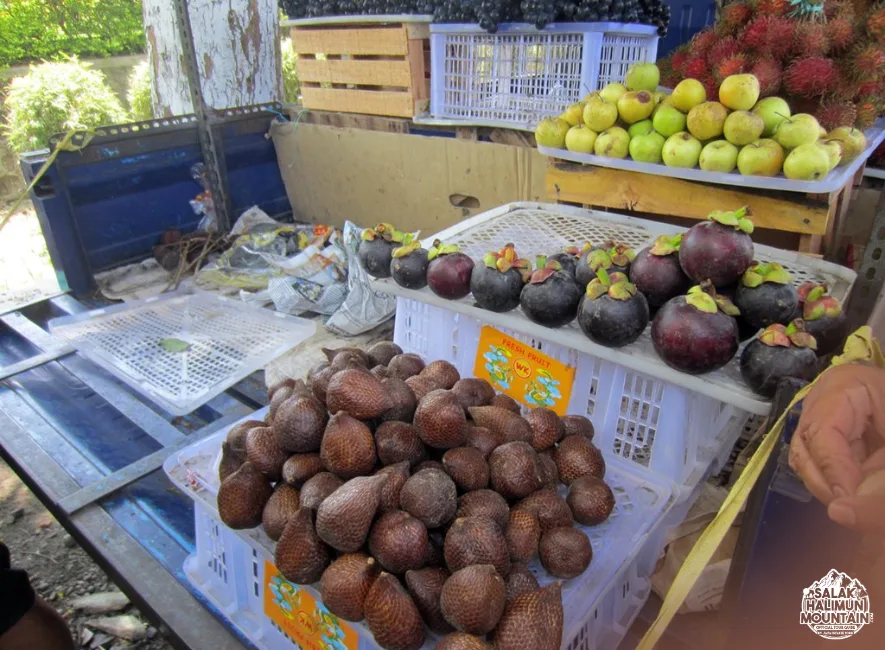
As you move deeper into the market aisles, the scent profile shifts from the earthy smell of vegetables to the sweet, caramel-like aroma of the forest’s treasures. This is where you will find the local fruits we often talk about. Depending on the season, you will see baskets overflowing with Salak (snake fruit), their reddish-brown scales catching the morning light. You will find the deep purple Mangosteen and the yellow, grape-like clusters of Rambai. But perhaps the most iconic sight is the blocks of Gula Aren (palm sugar). These dark, solid cylinders are often wrapped in dried banana or palm leaves, still smelling of the wood fires used to thicken the sap. To buy a block of sugar here is to take home a piece of the forest’s sweetness, hand-crafted in the nearby village kitchens.
Handmade Crafts and Mountain Tools
The village markets near Salak are also the best places to see the traditional craftsmanship of the region. Tucked away between the fruit stalls, you will often find vendors selling handmade tools and household items that have remained unchanged for generations. Look for the “boboko”—beautifully woven bamboo baskets used for washing and serving rice—or the “centong,” rice paddles carved from local wood. You might also find the “ani-ani,” the small traditional harvesting blades, and the sturdy “golok” (machetes) forged by local blacksmiths. These items are not made for tourists; they are high-quality tools made by locals, for locals, designed to withstand the rigorous demands of mountain life and farming.
The Culinary Heart: Traditional Market Snacks
No visit to a village market near Salak is complete without indulging in the “jajanan pasar,” or traditional market snacks. These are the treats that the mountain people have enjoyed for centuries, often made from simple, local ingredients like cassava, rice flour, and coconut. Look for “Gorengan”—crispy, golden fritters of banana, tempeh, or tofu that are perfect for the chilly morning air. You must try “Comro” and “Misro,” grated cassava balls filled with either savory spicy fermented soybean (oncom) or sweet melted palm sugar. The flavors are bold and comforting, providing the energy needed for a day of trekking or working in the fields. Sitting on a small wooden stool with a glass of hot, sweet tea and a plate of fresh market snacks is the ultimate way to blend into the local rhythm.
The Spice Alchemists of the Highlands
One of the most fascinating corners of the market is the spice section. Here, you will find “bumbu giling”—freshly ground spice pastes that form the foundation of Sundanese cuisine. Large stone mortars are used to grind together turmeric, galangal, ginger, lemongrass, and garlic into vibrant, aromatic mashes. The women who run these stalls are like culinary alchemists, knowing exactly which combination of mountain herbs will create the perfect curry or stir-fry. They often source their ingredients from their own back gardens or from the edges of the Salak Halimun forest. Buying a small bag of fresh spices here is like capturing the flavor of the mountain in a bottle, ready to be unleashed in your own kitchen.
A Social Hub of Sundanese Hospitality
While the goods for sale are remarkable, the true value of the village markets near Salak lies in the human connection. In Sundanese culture, the market is the primary social hub. It is where news is exchanged, stories are shared, and community bonds are strengthened. As a visitor, you will be met with curious smiles and the warm hospitality the region is famous for. Don’t be surprised if a vendor offers you a slice of fruit to taste or invites you to try a snack before you buy. The interactions are genuine and unhurried. There is a sense of “gotong royong” (communal cooperation) even in the trade, where everyone knows everyone else, and a fair deal is more important than a quick profit.
Supporting the Guardians of the Mountain
By choosing to visit and shop at these local markets, you are playing a vital role in the conservation of the Mount Salak region. When farmers can sell their produce directly to their community and visitors, it strengthens the local economy and reduces the pressure to expand into the protected areas of the National Park. Every purchase supports a family that has lived in harmony with the forest for generations. It encourages the continuation of traditional farming and crafting methods that are far more sustainable than industrial alternatives. Your visit becomes a way of protecting the very landscape you have come to admire, ensuring that these vibrant traditions don’t fade away in the face of modernization.
Navigating the Market Like a Local
We love taking our guests to these markets because it provides a perspective that no guidebook can offer. To navigate the market like a local, we recommend wearing comfortable shoes (the ground can be damp with morning dew) and bringing a reusable bag. Don’t be afraid to ask questions about the strange-looking roots or the brightly colored fruits; the vendors are usually incredibly proud to explain what they have grown. Whether you are looking for the perfect souvenir, the freshest ingredients for a picnic, or simply a chance to witness the authentic daily life of the Sundanese highlands, the market is an essential stop on any Salak Halimun adventure.
A Sensory Memory of the Salak Slopes
As the sun rises higher and the mist begins to lift, the market starts to wind down. The farmers pack up their remaining bundles, and the villagers head back to their homes with baskets full of the day’s needs. But the memory of the market stays with you. The vibrant colors of the chilies, the sweet scent of the palm sugar, and the warm smiles of the mountain people create a sensory tapestry that defines your experience of Mount Salak. It is a reminder that the mountain provides everything its people need, as long as they treat it with respect. We invite you to wake up early with us, walk through the morning mist, and discover the hidden treasures of the village markets near Salak for yourself.
So, if you’re ready to explore the wonders of Mount Salak Halimun, head over to our ONLINE BOOKING PAGE and let’s start planning your adventure. Or simply CLICK THIS LINK to chat with us on WhatsApp.
With our team, you’re not just getting a guide; you’re gaining a local friend who will ensure your trip is nothing short of extraordinary.