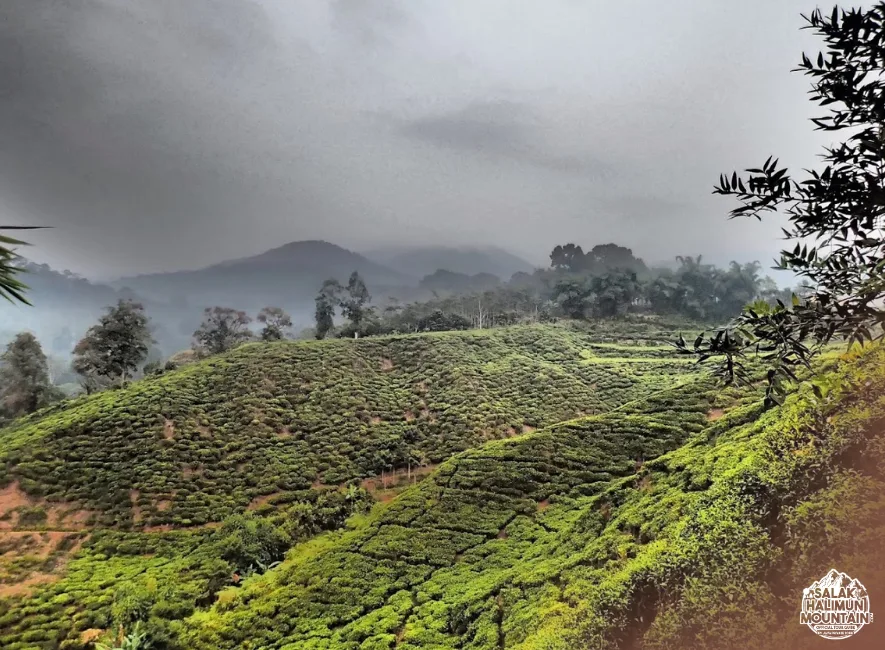
salakhalimunmmountain.com – When people hear the word biodiversity, it often sounds scientific or distant. But here in the forests of Mount Salak, biodiversity is something you can see, hear, and feel with every step you take along the trail.
As part of Halimun–Salak National Park in West Java, Mount Salak offers one of the clearest living examples of biodiversity in Indonesia — where dense rainforests, volcanic landscapes, and rare wildlife exist as one deeply connected system.
Understanding Biodiversity in the Salak–Halimun Rainforest
Biodiversity refers to the variety of life in a specific area, from genes and species to entire ecosystems. In Mount Salak, this diversity is shaped by elevation, volcanic soil, high rainfall, and centuries of relatively undisturbed forest growth.
Walking through these forests, you are not just visiting nature — you are entering a complex web of life that supports West Java’s water systems, climate balance, and cultural heritage.
Species Diversity on Mount Salak
Rich Plant Life in Volcanic Forests
Mount Salak is home to more than 500 recorded plant species. Towering rasamala trees (Altingia excelsa) and puspa trees (Schima wallichii) dominate the canopy, while ferns, mosses, and medicinal plants thrive below.
One of the most striking examples of biodiversity here is orchids. Researchers have identified at least 258 orchid species across different elevations, many of them endemic to Java and highly sensitive to environmental change.
Wildlife That Depends on Intact Forest
The forests of Mount Salak provide critical habitat for rare and endangered species. Among the most iconic is the Javan gibbon (Hylobates moloch), whose calls echo through the morning mist. The Javan hawk-eagle, Indonesia’s national bird, also relies on these forests to survive.
Birds, amphibians, reptiles, and small mammals form intricate food chains that keep the ecosystem balanced.
Insects and Hidden Forest Life
Biodiversity is not only about large animals. Surveys in Mount Salak have recorded over 800 fauna species, with insects making up the majority. Moths alone represent at least 29 families, playing a vital role in pollination and decomposition.
Even land snails contribute to biodiversity. Their populations vary by elevation and habitat, with some species found nowhere else on Earth.
Ecosystem Diversity Across Mount Salak
Mount Salak’s biodiversity is strengthened by the wide range of ecosystems found across its slopes.
Lowland Tropical Rainforest
Below 1,000 meters, dense lowland forests support high species richness and serve as essential buffer zones against human disturbance.
Submontane and Montane Forests
Higher elevations act as natural water towers for West Java. These forests regulate rainfall, protect springs and rivers, and supply water to surrounding communities.
River Systems and Valleys
Narrow valleys and fast-flowing rivers create specialized habitats for amphibians and riparian species, further increasing ecological complexity.
Volcanic Habitats
Areas like Kawah Ratu demonstrate how life adapts to extreme volcanic conditions. Only specially adapted plants and small animals can survive here, making these zones unique within the park.
Genetic Diversity and Forest Resilience
Genetic diversity is harder to see but essential for long-term survival. The variation found among orchids, insects, and other species in Mount Salak shows a strong genetic pool, allowing life to adapt to changes in climate, soil, and altitude.
Ecological Connections Within Halimun–Salak
Mount Salak is part of a larger ecological corridor connecting to Mount Halimun. This allows wildlife movement and genetic exchange, strengthening biodiversity across the entire national park.
When one part of the forest is damaged, the entire system is affected — a reminder of how interconnected this landscape truly is.
Threats to Biodiversity in Mount Salak
Despite its richness, Mount Salak faces real challenges.
- Deforestation and land conversion
- Agricultural expansion and mining pressure
- Habitat fragmentation reducing species diversity
Studies show that disturbed forests can lose up to 50% of their species richness, highlighting the importance of conservation and responsible travel.
Why Biodiversity Matters to Visitors
Understanding biodiversity helps us appreciate Mount Salak not just as a trekking destination, but as a living system that supports wildlife, local communities, and future generations.
At Java Private Tour, we are not a generalist travel company — we are specialists. Our focus is on deep, responsible exploration of places like Mount Salak, guided by local knowledge and respect for nature.
So, if you’re ready to explore the wonders of Mount Salak’s biodiversity, head over to our REQUEST PAGE and let’s start planning your adventure. Or you can simply CLICK THIS LINK to chat with us on WhatsApp. With Java Private Tour, you’re not just getting a guide; you’re gaining a friend who will ensure your trip is nothing short of extraordinary. See you in Java!