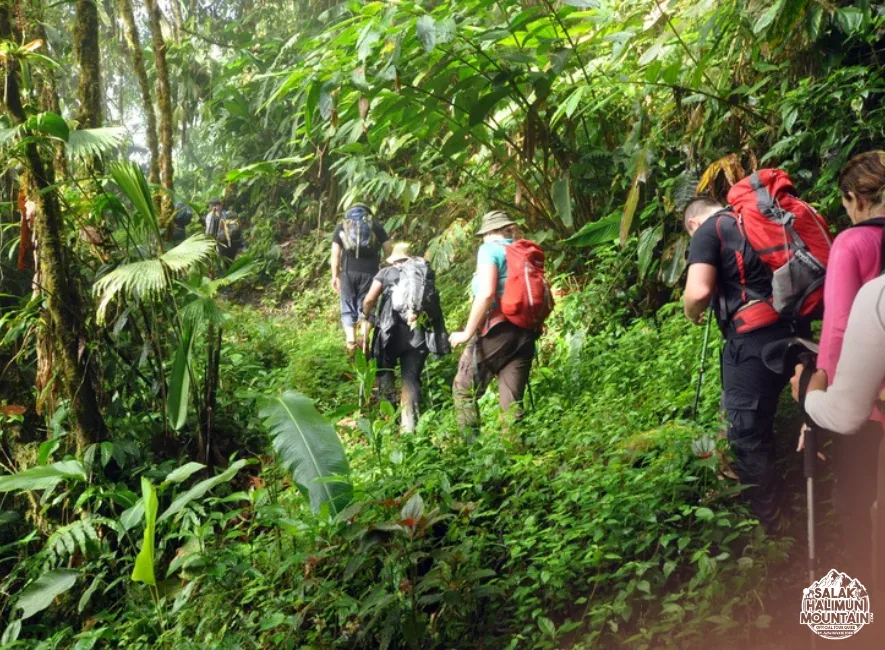
salakhalimunmountain.com – At first glance, rainforest trekking looks almost inviting. Lush green canopies, filtered sunlight, birdsong echoing through the trees — it feels like walking into a living postcard. Many visitors arrive at Mount Salak or Halimun–Salak National Park expecting a peaceful nature walk.
But as any local guide will quietly smile and tell you, rainforest trekking is far more challenging than it looks. Here in the deep rainforests of West Java, even short distances demand strength, patience, and respect for the land.
Let me take you beneath the canopy and explain why rainforest trekking tests both body and mind — especially in places like Salak–Halimun.
The Climate That Drains You Faster Than Expected
Heat and Humidity Work Together
Unlike dry mountain trails, rainforest trekking means moving through air that feels thick and heavy. In Salak–Halimun, humidity often hovers high even in the early morning. Your body sweats constantly, yet evaporation is slow, leaving clothes soaked within minutes.
This leads to rapid fatigue and dehydration. Even experienced hikers are surprised by how quickly their energy drops. A trail that looks “easy” on a map can feel exhausting after just a short climb.
Why Dehydration Is a Serious Risk
Because you’re sweating nonstop, you lose fluids faster than you realize. In rainforest conditions, drinking water regularly is not optional — it’s essential. Without proper hydration, dizziness and muscle cramps can set in quickly, turning a pleasant trek into a struggle.
Unforgiving Terrain Beneath Your Feet
Mud, Roots, and Hidden Obstacles
Rainforest trails in Mount Salak are rarely smooth. The ground is often muddy, slippery, and uneven. Tree roots snake across paths like natural traps, while rocks hide beneath layers of wet leaves.
One careless step can mean a twisted ankle or a hard fall. That’s why local guides move slowly, reading the terrain with every step — something photos never reveal.
Steep Slopes and Sudden Drops
The rainforest grows where the land is alive and changing. In Halimun–Salak National Park, trails often climb sharply, descend suddenly, or follow narrow ridges carved by centuries of rain. Progress becomes slow and deliberate, especially after rainfall.
Navigation Is More Difficult Than It Seems
Dense Vegetation Hides the Way
In open landscapes, paths are obvious. In the rainforest, vegetation grows fast and thick. Trails disappear under vines, fallen leaves, and overgrowth. Without clear markers, it’s surprisingly easy to lose your sense of direction.
This is why rainforest trekking here is never just about walking — it’s about reading the forest, understanding landmarks, and knowing where not to go.
Why Local Knowledge Matters
Many areas of Mount Salak and Halimun are intentionally left wild for conservation. Local guides know which paths are safe, which streams rise suddenly after rain, and which areas should be avoided during certain seasons.
The Physical and Mental Challenge
Constant Focus Is Required
Rainforest trekking demands attention at every moment. You’re watching your footing, ducking under branches, stepping over fallen trees, and pushing through foliage — all while managing heat and fatigue.
This constant awareness becomes mentally draining. Even fit trekkers are surprised by how tiring it feels after several hours.
Mental Resilience in a Disorienting Environment
The forest can feel endless. Sounds echo strangely, visibility is limited, and progress feels slow. It takes mental resilience to stay calm, focused, and positive — especially when every kilometer feels twice as long.
Wildlife and Safety Considerations
Sharing the Forest
The rainforests of Salak–Halimun are alive with wildlife. Snakes, insects, birds, and mammals all call this place home. Encounters are usually peaceful, but awareness is critical.
Understanding where to step, when to pause, and how to behave in wildlife zones is part of trekking safely in a rainforest environment.
Limited Access to Emergency Help
Unlike urban trails, rainforest routes are often remote. Medical help is far away, and phone signals can disappear quickly. Preparation, proper equipment, and experienced guidance make a real difference here.
Why Rainforest Trekking Is So Deceptive
It Looks Easier Than It Is
From photos, rainforests appear gentle and welcoming. What you don’t see is the soaked clothing, aching legs, slippery ground, and slow progress.
In Salak–Halimun, a few kilometers can take hours — not because you’re weak, but because the forest demands respect.
That Challenge Is Also the Reward
And yet, this is exactly what makes rainforest trekking unforgettable. Every challenge brings you deeper into nature. Waterfalls feel more rewarding, silence feels richer, and the forest teaches patience and humility.
Trekking With the Right Specialists Matters
This is why choosing the right guide is essential. Java Private Tour is not a generalist — it is a specialist. Their deep understanding of Java’s rainforests, including Mount Salak and Halimun–Salak National Park, ensures safety, comfort, and a richer connection to the land.
You’re not just walking through trees — you’re learning how the rainforest breathes, moves, and protects itself.
Your Journey Into the Rainforest Awaits
So, if you’re ready to explore the wonders of rainforest trekking in Salak–Halimun, head over to our REQUEST PAGE and let’s start planning your adventure. Or you can simply CLICK THIS LINK to chat with us on WhatsApp. With Java Private Tour, you’re not just getting a guide; you’re gaining a friend who will ensure your trip is nothing short of extraordinary. See you in Java!