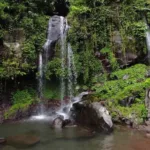
salakhalimunmountain.com – If you ever find yourself wandering along the mist-filled foothills of Mount Halimun, you might feel something different in the air—something ancient, something quiet, something watching. The rainforest here has a way of whispering its stories. Cicadas buzz like hidden chants, water drips from moss-covered branches, and the soft soil carries the memory of countless footsteps across centuries.
Mount Halimun, rising to about 1,925 meters and resting between Bogor, Sukabumi, and Lebak, has long been regarded as one of the most mystical mountains in Java. To the local communities living near its dense rainforest, Halimun is not just a mountain—it is a world filled with invisible guardians, ancestral spirits, and stories woven into the land itself.
But behind the mystical air that surrounds it, Mount Halimun is also a place of immense scientific importance. Its rainforest, one of the most expansive tropical ecosystems in western Java, shelters rare wildlife, ancient trees, and ecosystems that have survived through time. The mountain is both a spiritual sanctuary and a biological treasure—where myth and science walk side by side.
A Journey into the Past The Historical Footsteps of Mount Halimun
Every trail, every river bend, and every shadow beneath the thick canopy of Halimun carries a story. The written history of the mountain begins during the early 20th century, yet local tales about this sacred landscape stretch far beyond that. Still, the official recognition of Halimun as a protected area began nearly a century ago.
Walking along the narrow dirt path that cuts through its rainforest today, you can still feel the legacy of those early conservation efforts. Stilt roots rise beneath giant trees, and orchids cling to trunks like fragile lanterns, reminding visitors why the area became so important to protect.
1924–1934
Halimun Becomes a Dutch Protected Forest
According to historical records, the Dutch colonial administration designated the Halimun region as a protected forest from 1924 to 1934, covering 39,941 hectares. The reason was simple yet crucial: the biodiversity of Halimun was extraordinary, and its ecological balance needed safeguarding.
Even back then, the dense cloud forest was recognized as an irreplaceable ecosystem—one capable of influencing water cycles, supporting wildlife populations, and providing environmental stability for the surrounding regions. The early designation laid the foundation for everything that would follow in the decades to come.
1979
The Birth of Cagar Alam Gunung Halimun
On 11 January 1979, the area received an elevated status: Cagar Alam Gunung Halimun (Mount Halimun Nature Reserve), covering 41,710 hectares. This move brought stricter conservation rules, recognizing Halimun not only as a forest, but as a living sanctuary containing ecosystems that had existed long before human settlement.
1992
A National Park Is Born
On 26 February 1992, the Indonesian Ministry of Forestry declared Halimun a national park, now known as Taman Nasional Gunung Halimun, encompassing 40,000 hectares. This designation pushed conservation efforts further, ensuring that the forests, wildlife, and cultural heritage of the area received long-term protection. It also opened doors for ecotourism, environmental research, and community partnerships.
2003
The Expansion That Created Today’s Halimun–Salak National Park
In 2003, a major transformation took place: the government merged the Halimun region with the forested ecosystem around Mount Salak. The result was the expansive Taman Nasional Gunung Halimun Salak, stretching across 113,357 hectares. This is the Halimun–Salak National Park we know today: a landscape of deep valleys, steep ridges, cascading waterfalls, hidden wildlife corridors, and one of the richest rainforest ecosystems in Java.
A Living Sanctuary The Biodiversity of Mount Halimun
Stepping into the rainforest of Mount Halimun is like entering a different world. Moist air hugs the skin, the forest canopy filters light into soft green glows, and every corner seems to breathe with life. Halimun is one of those rare places where biodiversity still thrives in its most natural form.
Home to Some of Java’s Rarest Wildlife
The national park serves as a haven for countless flora and fauna, some of which are critically endangered. Among the most iconic are:
- Javan Tiger (Panthera tigris sondaica) — Although widely believed to be extinct, stories persist about sightings deep within Halimun’s forest. Whether myth or truth, the idea that these majestic animals could still exist adds to the mountain’s mystique.
- Javan Rhinoceros (Rhinoceros sondaicus) — Once roaming freely across Java, the Javan rhino is now critically endangered. While its last confirmed population lives in Ujung Kulon, historical records and local stories claim Halimun as part of its former habitat.
- Javan Gibbon (Hylobates moloch) — Their haunting morning calls echo through the rainforest, giving trekkers a magical greeting at dawn.
- Clouded leopard, slow loris, hornbills, civets, and countless bird species, reptiles, amphibians, and insects.
A Rainforest Built Over Thousands of Years
Halimun’s name itself means “mist” or “hidden in the clouds”, a fitting tribute to its cloud forest ecosystem. Moisture from the thick fog nourishes ancient trees, ferns, orchids, pitcher plants, and rare understory vegetation.
The Mystical Stories Where the Unseen World Meets the Physical Forest
But beyond its ecological richness, Mount Halimun is deeply tied to local mythology. For centuries, the communities surrounding the mountain have shared stories about unseen beings, ancestral guardians, and sacred realms hidden within the mist.
The Invisible Fortress of Prabu Siliwangi
One of the most well-known myths describes an invisible fortress belonging to Prabu Siliwangi, the legendary Sundanese king. According to local belief, the fortress can only be seen by those with “mata batin”—the inner, spiritual eye. Villagers say that when the mist thickens and the wind grows still, the spiritual fortress reveals itself to chosen individuals.
The Guardians — Hundreds of Mystical Tigers
Perhaps the most captivating myth is the story of hundreds of spiritual tigers guarding the sacred fortress. Locals believe these tigers are not mere animals but ancestral protectors, ensuring that only respectful, pure-hearted visitors may enter Halimun’s inner realms. This belief is not meant to intimidate, but to teach humility—reminding visitors that the forest is alive, aware, and deserving of respect.
The Forest as a Living Teacher
These mystical stories carry a message: nature is sacred, and every tree and river holds meaning. For generations, such tales have preserved a culture of environmental respect long before national park status existed. The forest was never just a resource—it was a guardian, a teacher, and a home for the spirits of the land.
Moving Forward The Need to Protect Mount Halimun for Future Generations
Today, Mount Halimun stands not only as a place of myth and wonder, but also as a vital ecological sanctuary. Its rainforest captures water, stores carbon, shelters wildlife, and supports indigenous communities.
But like many natural landscapes, Halimun faces pressures—from deforestation, human encroachment, illegal poaching, and climate change. The preservation of this mystical mountain is not just a scientific responsibility; it is a cultural one.
The stories of Prabu Siliwangi, the unseen tigers, and the sacred fortress remind us to approach the mountain with humility. And the national park status ensures that these forests remain intact, protected by both ancient beliefs and modern conservation.
To walk through Halimun’s rainforest is to feel history in every breath—the merging of scientific importance and spiritual reverence into one living, breathing landscape. And when you finally step out of the forest into open light, you carry its lessons with you.
So, if you’re ready to explore the wonders of Mount Salak Halimun, head over to our ONLINE BOOKING PAGE and let’s start planning your adventure. Or simply CLICK THIS LINK to chat with us on WhatsApp.
With our team, you’re not just getting a guide; you’re gaining a local friend who will ensure your trip is nothing short of extraordinary.