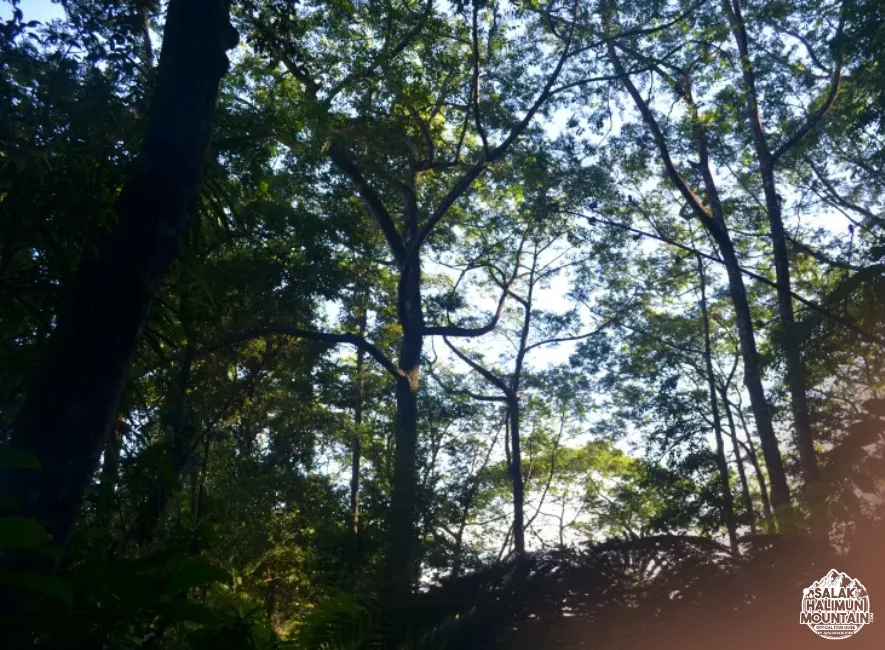
salakhalimunmountain.com – There is a moment—usually within the first ten minutes of entering the rainforest—when something subtle begins to change. Your steps grow quieter. Your breathing deepens without effort. The constant mental ticking of time, deadlines, and notifications fades into the background.
In Mount Salak–Halimun, slowing down is not something you try to do. It happens to you. The forest does not demand your attention loudly. It simply receives you. And in doing so, it gently rewires how your body and mind experience time itself.
As a local guide who has walked these trails in mist and rain for years, I’ve seen it happen again and again. Hikers arrive restless, eyes still glued to schedules. An hour later, they’re kneeling beside a stream, watching leaves drift downstream as if there were nowhere else to be. This is the quiet magic of the rainforest—and it’s deeply rooted in both ecology and human psychology.
The First Shift Happens Before You Notice
The trail into Halimun–Salak rarely announces itself dramatically. There is no sudden “wow” moment at the gate. Instead, the change unfolds gradually.
The air grows heavier with moisture. The scent of wet earth and decomposing leaves rises. Sunlight fractures into soft, green-filtered beams beneath the canopy.
Without realizing it, your senses recalibrate. In cities, our attention is constantly pulled outward—screens, traffic, noise, urgency. In the rainforest, attention is drawn inward and outward at the same time. You begin to notice instead of react.
A cicada starts its call. Water trickles beneath moss-covered stones. Your boots sink slightly into soft mud, forcing each step to be deliberate. This is where time begins to stretch.
Why Time Feels Different in the Rainforest
Awe Expands the Present Moment
Standing beneath towering trees in Halimun—some older than entire cities—you feel small in a comforting way. This sense of awe doesn’t overwhelm; it grounds.
Psychologically, awe pulls us into the present moment. Instead of thinking about what comes next, the mind lingers on what is. In the rainforest, awe is everywhere: in the scale of the canopy, the complexity of vines, the persistence of life in damp darkness. A simple walk suddenly feels longer—not because it’s difficult, but because each moment feels full.
The Forest Removes Urgency
Nothing in the rainforest rushes. Ferns unfurl at their own pace. Mushrooms emerge overnight, silently. Rivers carve valleys over centuries, not minutes.
When you walk through Mount Salak Halimun, your nervous system begins to mirror this rhythm. The constant internal pressure to hurry loosens its grip. You stop checking the time because the forest does not care about it.
How the Rainforest Calms the Body
The Nervous System Finds Balance
Nature has a direct physiological effect on the human body, and the rainforest amplifies it.
As you walk beneath dense canopy, your heart rate slows. Blood pressure drops. Muscles unclench. This isn’t imagination—it’s biology responding to a safe, non-threatening environment.
In Halimun–Salak, the soundscape plays a crucial role. Unlike urban noise, forest sounds are irregular but gentle. Bird calls, wind through leaves, distant water—these sounds signal safety to the brain.
Stress hormones decrease. Mood-regulating chemicals rise. You don’t force relaxation; your body remembers how to do it on its own.
Breathing Changes Without Instruction
Notice how your breath behaves on the trail. At first, it may be shallow. After a while, it deepens. Soon, it syncs with your steps.
The humid rainforest air slows breathing naturally. You inhale more fully, exhale longer. This activates the parasympathetic nervous system—the part responsible for rest, recovery, and calm.
Mindfulness Happens Without Effort
In modern life, mindfulness often feels like another task on a long to-do list. The rainforest asks none of that. It offers endless small details that gently anchor your attention.
A beetle navigating a fallen branch. Tiny orchids clinging to tree trunks. Raindrops gathering on a single leaf before falling. Your mind settles not because you command it to, but because it’s naturally engaged.
The Power of Natural Rhythms
In Halimun–Salak, time moves differently—and when you align with that pace, something inside you softens.
Tree roots reshape stone slowly. Rivers find their way patiently. Forests heal themselves when given space. Slowing down here is not laziness. It is wisdom.
Simple Ways to Let the Forest Slow You Down
Sit Without Doing Anything
Find a safe spot near a stream or beneath large trees. Sit. Breathe. Don’t reach for your phone.
Notice the Small Life
Look for moss patterns, insects at work, and light shifting through leaves. These moments gently pull you back into the present.
Take an Awe Walk
Walk with no destination other than noticing beauty. In Mount Salak Halimun, awe appears the moment you stop rushing.
Responsible Slowing Down
Slowing down also means moving responsibly. Stay on marked trails, respect wildlife, and leave no trace. When you move gently, the forest responds in kind.
The Quiet Gift You Carry Home
Long after you leave the rainforest, its rhythm stays with you. You breathe slower. You react less. You remember how calm feels. Mount Salak Halimun doesn’t force you to slow down—it reminds you how.
So, if you’re ready to explore the wonders of Mount Salak Halimun, head over to our ONLINE BOOKING PAGE and let’s start planning your adventure. Or simply CLICK THIS LINK to chat with us on WhatsApp.
With our team, you’re not just getting a guide; you’re gaining a local friend who will ensure your trip is nothing short of extraordinary.