salakhalimunmountain.com – Camping in the ancient, fog-shrouded rainforests of Mount Salak and Halimun National Park offers trekkers a rare opportunity to explore the habitat of West Java’s apex predator: the Javan Leopard (Panthera pardus melas). While Javan leopards are elusive, solitary, and naturally cautious around humans, camping in deep wilderness requires strict campcraft discipline to ensure wildlife is never attracted to your campsite. Food odors do not just draw leopards—they also attract opportunistic scavengers like Javan civets, long-tailed macaques, wild boars, and nocturnal rodents. Hanging bear bags for Javan leopard country is a crucial camp hygiene practice that keeps your food secure, protects local wildlife from habituation, and maintains a safe, conflict-free perimeter around your camp.
In North America, hanging food is primarily associated with brown and black bears. In Java’s high-canopy jungle, the same principles apply to safeguarding your rations from agile tree-climbers and curious predators. Big cats and primates possess keen senses of smell and remarkable agility. By adopting disciplined food containment protocols, proper branch selection, and proven hanging methods like the PCT technique, you can safeguard your food supply while preserving the wild instincts of Java’s endangered wildlife.
Understanding Wildlife Odors and Camp Perimeter Safety
The primary driver of wildlife encounters in the backcountry is smell. Food items, scented toiletries, cooking grease, and trash release aromatic compounds that travel far across humid jungle air. In dense ecosystems like Mount Halimun Salak, animals have evolved highly sensitive olfactory systems to track food across vast distances.
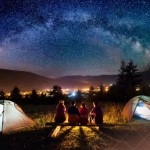
To keep your sleeping area secure, implement the classic “Camp Triangle” layout. Establish your sleeping zone, cooking zone, and food storage zone at least 50 to 100 meters apart from one another downwind. Never store food, snack wrappers, or scented items inside your tent or hammock shelter. Cooking grease splatter on clothing or open trash bags inside a vestibule can transform your sleeping quarters into an olfactory magnet for curious nocturnal scavengers.
Managing “Smellables” Beyond Regular Meals
When preparing your food bag for hanging, remember that “smellables” include more than just dinner ingredients. Scavengers are attracted to anything with an artificial or concentrated scent.
Include all scented items inside your hanging bag: toothpaste, lip balm, sunscreen, insect repellent, cooking utensils, dirty pots, and trash bags containing food scraps or empty freeze-dried pouches. Storing these items together in heavy-duty odor-proof dry bags adds an essential primary layer of scent containment before the bag ever leaves the ground.
Selecting High-Canopy Anchor Trees for Tropical Hanging
Hanging a food bag in a tropical rainforest presents unique challenges compared to temperate pine forests. Java’s rainforest canopy is thick with climbing vines, dense foliage, and wide hardwood branches. Finding an ideal anchor branch requires careful scanning of the upper canopy.
Select a strong, living tree located roughly 50 to 100 meters away from your sleeping zone and downwind of prevailing night breezes. Look for a sturdy, horizontal branch positioned 6 to 8 meters (20 to 25 feet) above the ground that extends at least 2 to 3 meters outward from the main trunk. The branch must be thick enough to support the weight of your food bag but thin enough at its outer end to prevent heavier animals, like large macaques or civets, from walking out along it.
Avoiding Jungle Vine Tangles and Snag Hazards
Rainforest canopies are crisscrossed with lianas, rattan vines, and dense epiphytes that can snag throw lines or offer climbing pathways for small mammals. Inspect the line vector between the ground and your target branch to ensure a clear vertical drop.
Avoid placing your food bag near adjacent saplings, hanging vine clusters, or lower secondary branches that an agile animal could use as a jumping platform. Your goal is to suspend the food bag in open air where it cannot be reached from the ground, the trunk, or overhead branches.
Mastering the PCT Hanging Method and Equipment
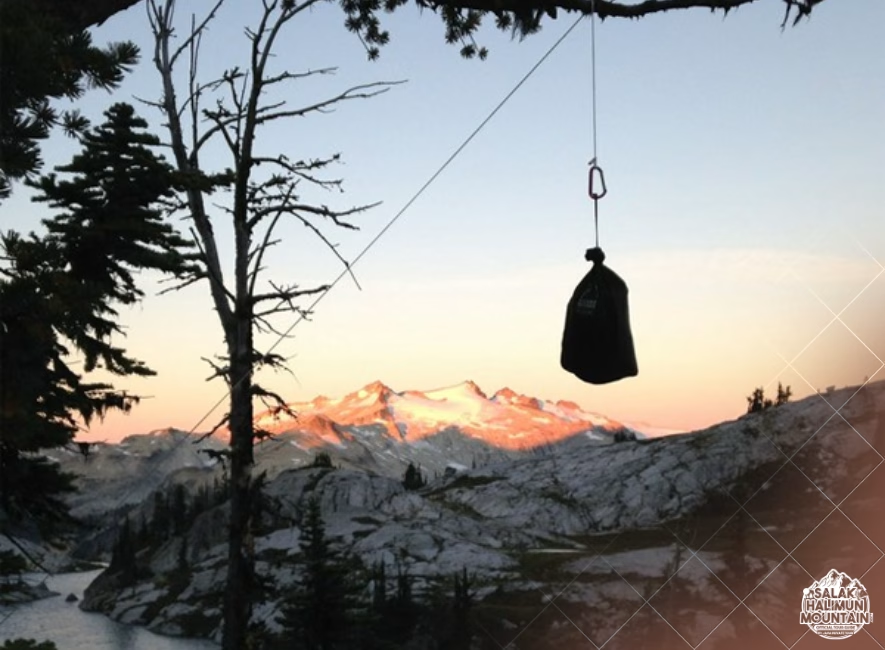
Simple “tie-to-a-trunk” hanging techniques fail in wilderness environments because animals quickly learn to chew through lines anchored to lower tree trunks. The Pacific Crest Trail (PCT) method solves this problem by using a lightweight carabiner and a friction stick to lock the food bag in mid-air, leaving no line anchored near the ground.
To execute the PCT method, attach a small throw weight (such as a rock stuffed inside a small pouch) to a 15- to 20-meter length of durable, slick cordage like Dyneema or reflective utility line. Toss the weight over your selected canopy branch, allowing it to drop back down to the ground. Remove the weight and clip a lightweight locking carabiner to the end of the line.
Locking the Load in Mid-Air
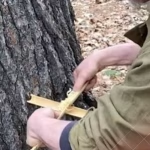
Pass the long tail of the cordage through the carabiner, attach your sealed dry bag to the carabiner, and haul the food bag all the way up to the branch. Once the bag reaches the top, reach up as high as you can along the taut line and tie a sturdy stick (roughly the thickness of a thumb) into the cord using a clove hitch.
Slowly lower the food bag back down. As the bag descends, the stick rises until it hits the carabiner at the top, jamming against it and locking the bag in mid-air—suspended roughly 4 to 5 meters off the ground and 2 meters below the branch. To retrieve your food the next morning, simply pull down on the line to release the stick, remove the toggle, and lower your bag smoothly to the ground.
Maintaining Good Camp Sanitation and Leave-No-Trace Principles
Even the most secure food bag hang is ineffective if your camp floor is littered with food crumbs and grease. Maintaining immaculate kitchen hygiene completes your defense against wildlife attraction.
Strain gray water from cooking pots through a fine mesh strainer to catch food scraps before scattering the water broadly at least 50 meters away from camp and natural water sources. Pack out all solid scraps in sealed zip-top bags and place them directly into your hanging bear bag. Clean all stoves, cookware, and eating utensils immediately after meals so no residual odors linger into the night.
Hanging a food bag in Javan leopard country is a mark of respect for the wild landscapes of Mount Salak and Halimun National Park. By mastering high-canopy suspension, keeping a clean camp perimeter, and using odor-proof barriers, you protect yourself, your gear, and Java’s rare wildlife, ensuring these majestic mountains remain wild for generations to come.
So, if you’re ready to explore the wonders of Mount Salak Halimun, head over to our ONLINE BOOKING PAGE and let’s start planning your adventure. Or simply CLICK THIS LINK to chat with us on WhatsApp.
With our team, you’re not just getting a guide; you’re gaining a local friend who will ensure your trip is nothing short of extraordinary.