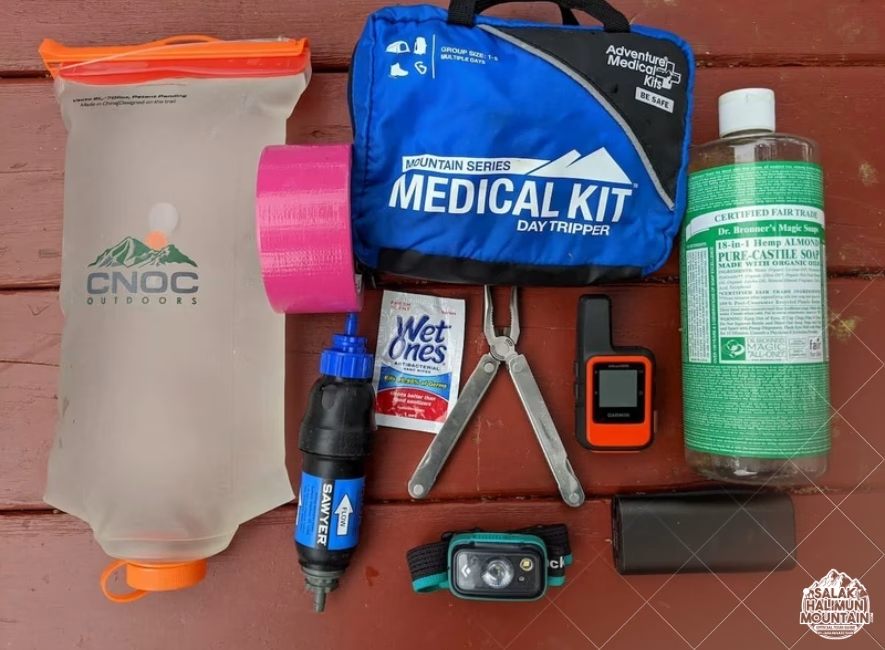
salakhalimunmountain.com – As a local nature guide who has spent countless seasons traversing the misty, untamed ridges of the Halimun Salak region, I always tell adventurers that the mountain demands respect. Mount Salak is incredibly beautiful, layered with historical mystery, thick ancient trees, and deep volcanic valleys. However, its weather can shift in a heartbeat. One moment you are enjoying the dense canopy light filtering through leaves, and the next you are enveloped in a blinding cloud of mountain fog while torrential rains turn the trail into a rushing stream. Packing the right essential emergency survival gear for Mount Salak hikes is not about being paranoid; it is about ensuring that you return home safely to share your stories with loved ones. Let us look inside my guide pack together and discuss what you must bring before stepping onto our beautiful but unpredictable slopes.
The terrain here is unique compared to other Javanese peaks. The heavy rainforest air holds immense moisture, creating a permanent state of dampness that makes everything slick and cold once the sun goes down. If an unexpected delay keeps you on the trail past twilight, or if a sudden injury slows your pace down, your standard day pack items will not be enough to keep you comfortable. Survival in this wilderness relies heavily on preparation, local insight, and possessing the specific tools needed to manage isolation, cold conditions, and deep jungle navigation. Packing essential emergency survival gear for Mount Salak hikes ensures that an unexpected event remains a manageable challenge rather than becoming a dangerous situation.
Shelter and Warmth Against the Deep Jungle Chill
Many hikers do not realize how cold a tropical rainforest can get at night. Because the humidity is high, the dampness penetrates your clothing and draws warmth away from your body rapidly. If you are forced to spend an unplanned night on the soft mud trails, hypothermia is your greatest enemy. That is why an emergency shelter is the absolute cornerstone of your safety kit. A lightweight space blanket or a compact emergency bivy sack takes up no more room than a pack of cards, yet it can reflect up to ninety percent of your body heat back to you. Wrapping yourself in one of these metallic sheets while waiting out a midnight storm can genuinely save your life.
In addition to a personal emergency blanket, I always carry a compact, bright orange silicone tarp or flysheet. When the sky opens up and rains pour down on Mount Salak, finding a dry spot under the trees is nearly impossible. With a few meters of strong cordage, you can quickly tie this tarp between two sturdy trees, creating a dry microclimate for yourself and your trekking companions. Sitting on your backpack to stay off the wet ground while sheltered beneath a tarp keeps your spirits high and your clothes dry. Remember that keeping your core temperature stable is your primary goal when waiting out an emergency in the wilderness.
Fire Starting Tools That Defy the Moisture
Building a fire in a primary rainforest is an art form because almost everything you find will be soaked through by the afternoon mists. In an emergency situation, trying to rub sticks together or relying on a standard gas lighter that has gotten wet will only lead to frustration. You need reliable, weatherproof fire starting tools. I recommend carrying a high quality ferrocerium rod, which produces intense sparks even when completely drenched. Combine this with waterproof matches stored in a sealed container, and you have a solid backup system that will not fail you when the temperature drops.
Sparks alone will not ignite wet wood, so you must also pack dry tinder from home. Cotton balls soaked in petroleum jelly, small blocks of compressed wax, or pieces of resinous wood work beautifully. When you are shivering and the cicada calls are replaced by the heavy sound of a downpour, having a reliable way to create a flame means you can boil water, dry your socks, and signal for help if necessary. Always practice using your fire starter at home before your trek so that your hands know exactly what to do when conditions are less than ideal.
Navigation and Communication in the Dense Canopy
The trails on Mount Salak are notoriously maze-like, crisscrossed by animal paths and old tracks that can easily confuse an unguided hiker, especially when the mountain mist rolls in and reduces visibility to just a few meters. Do not rely solely on your mobile phone for navigation. The deep ravines and thick vegetation frequently block cellular signals, and phone batteries drain quickly in cold, damp environments. Essential emergency survival gear for Mount Salak hikes must include a traditional magnetic compass and a detailed, physical topographical map of the area protected in a waterproof sleeve.
Understanding how to read a map allows you to identify your approximate location based on surrounding ridges and rivers, helping you make informed decisions if you ever lose sight of the main trail markers. Before you set out, always inform a trusted friend or the rangers at the registration post about your exact planned route and your estimated return time. This simple step ensures that if your communication fails, local search teams will know precisely where to begin looking for you. A physical map combined with a basic compass remains the most reliable navigation system ever invented for the deep woods.
The Power of Sound and Light Signals
If you find yourself lost or injured off the trail, shouting for help will quickly exhaust you and dry out your throat. The dense forest canopy and the sound of rushing rivers can swallow human voices surprisingly fast. A high-decibel pealess whistle is a tiny, weightless tool that should be clipped directly to your shoulder strap or jacket zipper. The sharp, piercing sound of a whistle travels much farther through thick jungle growth than a human scream, and it requires far less energy to produce. Three sharp blasts is the universal distress signal that every guide and ranger recognizes instantly.
For signaling at night and navigating safely after dark, a high-intensity headlamp is non-negotiable. Walking along mountain paths with a handheld flashlight is difficult because you need your hands free to hold trekking poles or steady yourself on moss covered rocks. Look for a headlamp with a high lumen output and a dedicated strobe feature for emergency signaling. Always carry an extra set of batteries wrapped in plastic, or a fully charged power bank if your light source is rechargeable. A bright, flashing light can guide searchers to your position from across a deep valley, turning a potentially long search into a quick rescue.
Hydration and Medical Readiness on the Trail
While water is abundant throughout Halimun Salak National Park, you should never drink directly from mountain streams without treating it first. Even the clearest, coldest water can harbor harmful bacteria and parasites from wild animals living upstream. Contracting a stomach illness while lost or injured on a mountain can cause rapid dehydration, weakening your body when you need your strength the most. A compact water filter or a small bottle of chemical purification tablets is an essential addition to your survival kit, allowing you to turn any stream into safe drinking water.
When packing your emergency water system, think about durability. A sturdy, single-wall stainless steel water bottle is excellent for survival situations because it can be placed directly over an open fire to boil water if your filter fails or breaks. Remaining well hydrated keeps your muscles functioning smoothly, helps your brain stay focused, and allows you to make calm, logical decisions during an emergency. Never underestimate how quickly dehydration can cloud your judgment when you are under stress.
A Tailored First Aid Kit for Jungle Injuries
A basic first aid kit is essential for any outdoor excursion, but for a Mount Salak trek, it needs to be tailored to handle specific tropical challenges. Your kit should be housed in a robust, completely waterproof bag to protect the contents from the persistent moisture. It should include sterile gauze, medical tape, antiseptic wipes, and a variety of bandages to treat cuts and scrapes caused by sharp branches or rough volcanic rock. I also recommend packing blister cushions or moleskin, as wet feet on long downhills can quickly develop painful sores that make walking difficult.
Additionally, make sure to include rehydration salts, anti-diarrhea medication, and basic pain relievers. If you are hiking during the rainy season, packing fine-tipped tweezers or salt is helpful for removing leeches safely without causing secondary infections. A well-stocked first aid kit gives you the ability to manage minor injuries on the spot, allowing you to continue moving safely down the mountain or keeping you stable until professional help arrives. It is a tool kit for self-reliance that every responsible hiker should carry in their pack.
The Mindset and Ethics of Survival
Beyond all the physical equipment you carry, the most important piece of essential emergency survival gear for Mount Salak hikes is your personal mindset. When a situation changes or an accident occurs, panic is your greatest enemy. I always teach hikers the old survival acronym STOP: Stop, Think, Observe, and Plan. If you realize you are no longer on the trail, stop walking immediately. Sit down on a log, take a sip of water, and breathe in the forest air. Rushing around in fear will only cause you to become more lost or risk an injury on the steep slopes.
Observe your surroundings carefully. Look for shelter possibilities before darkness falls, check your water supply, and evaluate the weather. Once you have a clear understanding of your situation, make a calm plan based on your available gear and the daylight remaining. Sometimes, the wisest choice is to stay exactly where you are and prepare a secure, visible campsite for the night rather than trying to push through the dark jungle. Self-control, patience, and logical thinking will maximize the effectiveness of every tool inside your backpack.
Respecting the Wild and Walking Ethically
As lovers of nature, our emergency preparation should always align with strong conservation ethics. When you pack your survival gear, ensure that everything you bring into the national park also leaves with you. If you must use emergency items like glow sticks, foil packaging, or plastic tape, collect every piece of waste carefully. Our presence in these mountains should be as gentle as the morning fog, preserving the pristine environment for the Javan leopards, the silvery gibbons, and the future generations of hikers who will walk these beautiful paths after us.
By preparing thoroughly and carrying the right emergency gear, you demonstrate true respect for Mount Salak and its powerful natural forces. You transform yourself from a vulnerable visitor into a resilient, responsible adventurer who understands the balance of the wilderness. When you are properly equipped, you can step onto the trail with a deep sense of confidence, ready to immerse yourself fully in the magic, the sounds, and the breathtaking beauty of Java’s premier rainforest kingdom. The mountains are waiting to reveal their secrets, and your safe, well-prepared journey begins with the very first step you take.
So, if you’re ready to explore the wonders of Mount Salak Halimun, head over to our ONLINE BOOKING PAGE and let’s start planning your adventure. Or simply CLICK THIS LINK to chat with us on WhatsApp.
With our team, you’re not just getting a guide; you’re gaining a local friend who will ensure your trip is nothing short of extraordinary.