salakhalimunmountain.com – The first steps toward the Canopy Trail Cikaniki feel deceptively simple. A narrow forest path, damp soil underfoot, the steady rhythm of cicadas echoing from unseen branches. But as the trees thin and the structure comes into view, something shifts. You are no longer preparing for a walk through the forest. You are preparing to step into it, above it, and quietly alongside the living roof of Halimun’s ancient rainforest.
The Canopy Trail Cikaniki is not a thrill ride, nor a spectacle built for speed. It is a suspended invitation to slow down, lift your eyes, and experience the rainforest from a level that humans rarely reach. Here, among swaying treetops and filtered light, the forest reveals a different story, one written in leaves, wings, and silence.
What the Canopy Trail Cikaniki Really Is
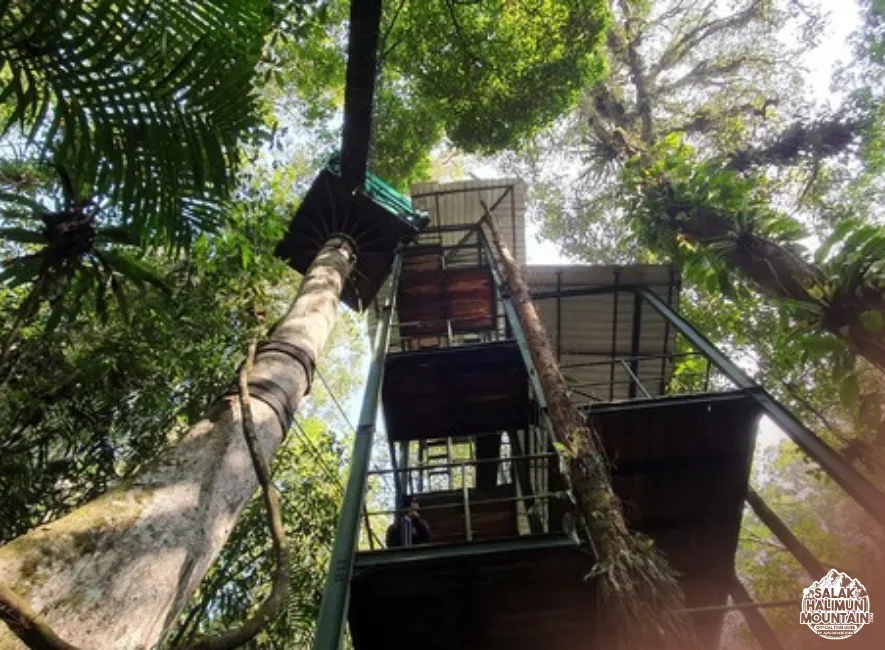
The Canopy Trail Cikaniki is a suspended walkway stretching between mature rainforest trees within the Cikaniki Research and Conservation Area of Halimun–Salak National Park. Built with careful consideration for the forest structure, it allows visitors to walk at canopy height without cutting through or disturbing the ecosystem below.
This is one of the few places in Java where people can safely experience the rainforest canopy, the most active and biodiverse layer of tropical forest life. From this height, the ground disappears into green depth, and the forest no longer feels like a backdrop. It becomes a living system moving all around you.
The trail exists not only for visitors, but also for researchers, students, and conservation efforts. It functions as an outdoor classroom, offering a real perspective on how rainforest layers work together, from soil to sky.
The First Steps Onto the Bridge
Stepping onto the canopy bridge for the first time brings an instinctive pause. The structure responds gently to movement, not unstable, but alive. The soundscape changes immediately. Footsteps soften. Wind becomes more noticeable. Leaves rustle at eye level instead of overhead.
In the early morning, mist often hangs between the trees, drifting slowly across the bridge. The air feels heavier here, cooler, carrying the scent of damp bark and moss. Light filters through overlapping leaves, breaking into soft patterns that shift as clouds move above the canopy.
Many visitors instinctively lower their voices at this point. Not because of rules, but because the forest seems to ask for it. Loud sounds feel out of place, absorbed awkwardly by the leaves and branches that surround you.
A Different World at Canopy Level
Most rainforest walks happen on the forest floor, where roots, fallen leaves, and shadows dominate the experience. The canopy tells a different story. Here, life is brighter, busier, and constantly in motion.
From the Canopy Trail Cikaniki, you begin to notice how trees interact with each other. Branches stretch outward in search of light. Vines loop and twist, connecting one trunk to another. Epiphytic plants cling to bark, thriving without ever touching the ground.
This upper layer is where sunlight is strongest, and as a result, where much of the forest’s energy flows. Photosynthesis happens at full scale. Insects swarm in small bursts. Birds dart between branches, rarely staying still long enough to be easily seen.
Walking slowly allows the forest to reveal itself. The canopy is not something to rush through. It rewards patience.
Birds and Insects of the Upper Forest
The canopy is the realm of wings. From this height, visitors may spot forest birds moving confidently through their natural space. Sunbirds, bulbuls, and other canopy-dwelling species appear briefly, often announced by sound before sight.
Insects are everywhere, though rarely obvious at first glance. Butterflies drift across open spaces between trees. Dragonflies hover near clearings where light breaks through. Smaller insects cling to leaves, bark, and moss, forming the foundation of the rainforest food web.
Listening becomes as important as looking. The canopy carries sound differently than the forest floor. Bird calls echo softly. Insect rhythms blend into a continuous background hum. With time, individual sounds become distinct, each signaling movement, territory, or warning.
Mosses Epiphytes and Life Without Soil
One of the most striking aspects of the Canopy Trail Cikaniki is the abundance of plants growing without ever touching the ground. Mosses coat branches in soft green layers, holding moisture and sheltering tiny organisms.
Epiphytes, including ferns and orchids, anchor themselves to tree bark, drawing nutrients from rain, air, and decaying organic matter. These plants do not harm their hosts. Instead, they form microhabitats, creating living platforms for insects and small creatures.
From above, you can see how these plant communities cluster around branch junctions and rough bark, places where water and organic material naturally collect. It is a reminder that the rainforest is built vertically, not just horizontally.
Education and Conservation in One Structure
The Canopy Trail Cikaniki exists because Halimun–Salak National Park values education as much as protection. By allowing controlled access to the canopy, the trail helps visitors understand why this ecosystem matters.
Seeing the forest from above changes perception. It becomes clear how interconnected everything is. Damage at one level affects all others. Litter on the forest floor, noise in the canopy, or careless movement can disrupt life far beyond what is immediately visible.
For students and researchers, the trail provides long-term observation opportunities without the need for invasive methods. For visitors, it builds respect through experience, not instruction.
How Visitors Should Behave on the Canopy Trail
The canopy is not a place for loud excitement or rushed movement. Walking slowly keeps the structure stable and minimizes disturbance to wildlife. Sudden movements, jumping, or shaking the bridge can stress animals and damage the surrounding vegetation.
Photography is welcome, but it should be done thoughtfully. Blocking the path, leaning over railings, or chasing birds for close shots disrupts both safety and the natural rhythm of the forest.
Quiet observation is the most rewarding approach. When voices lower and movements slow, the canopy responds. Birds return. Insects resume their patterns. The forest begins to feel less like a destination and more like a shared space.
A Gateway Into the Halimun Rainforest
The Canopy Trail Cikaniki is often a visitor’s first deep encounter with the Halimun rainforest. It sets the tone for everything that follows. From here, trails lead downward again, back into the shadows and roots of the forest floor.
But the memory of the canopy lingers. Once you have seen the forest from above, it is impossible to think of it as just trees. You understand it as layers of life, each supporting the other in quiet balance.
Walking away from the trail, many visitors move more carefully, listen more closely, and treat the forest with a deeper sense of respect. That is the true success of the Canopy Trail Cikaniki. It does not demand admiration. It earns it.
So, if you’re ready to explore the wonders of Mount Salak Halimun, head over to our ONLINE BOOKING PAGE and let’s start planning your adventure. Or simply CLICK THIS LINK to chat with us on WhatsApp.
With our team, you’re not just getting a guide; you’re gaining a local friend who will ensure your trip is nothing short of extraordinary.