salakhalimunmountain.com – Trekking through the mist-shrouded elevations and dense forests of Halimun Salak National Park brings an intense connection to Java’s raw, elemental beauty. Beyond the physical challenge of navigating the technical soft mud trails and single-tracks, visitors often notice a profound sense of social order and timeless peace in the highland settlements. This enduring social harmony is not maintained by modern administrative forces or written state laws. Instead, it is anchored by a sacred, ancestral structure of human governance. The role of traditional elders in Halimun Salak villages is the vital cornerstone of life here, serving as the ultimate bridge between ancient cultural philosophies, active environmental stewardship, and daily community survival.
In the challenging environment of a tropical volcanic mountain range, where sudden mountain storms, volcanic mists, and rugged terrain test collective resilience, the wisdom of experience is a community’s greatest asset. The traditional elders—most notably within the Kasepuhan indigenous communities bordering the national park—are the living repositories of decades of ancestral knowledge. They guide everything from the agricultural calendars to village spatial planning, utilizing deep-rooted cultural philosophies like Tri Tangtu (the three absolute pillars of cosmic balance) and Tepo Seliro (mutual empathy). By exploring the roles these respected leaders play, we discover how their gentle, morally grounded authority continues to safeguard both the cultural identity of the people and the pristine primary rainforest itself.
The Living Repositories of Ancestral Law and History
Within the traditional worldview of the Halimun Salak communities, history is not a static collection of facts found in textbooks; it is an active, guiding force for the present. Because these highland societies have traditionally passed down their heritage through rich oral traditions, the village elders serve as the absolute keepers of ancestral law, known as adat. They memorize complex genealogical lineages, migration histories, historical treaties, and sacred legends that define the community’s relationship with the land.
This deep historical memory is critical for maintaining social stability. When a modern dispute arises within a village regarding land boundaries, historical agreements, or family obligations, community members do not rush to external courts. Instead, they gather at the traditional council house to seek the counsel of the elders. The elders resolve these conflicts not through rigid, punitive measures, but through patient dialogue, mediation, and a collective reflection on ancestral precedents. This restorative justice system ensures that conflicts are defused before they can fracture the village harmony, restoring mutual respect and preserving peace.
Guarding the Rama Pillar of Tri Tangtu
The moral authority of the traditional elders is beautifully explained by the ancient Sundanese philosophy of Tri Tangtu, which governs cosmic and social equilibrium through three essential pillars: Rama (The Ancestors/Founders), Resi (The Spiritual Sages), and Ratu (The Secular Leaders/Administrators). In this societal trinity, the traditional elders embody the vital pillar of Rama.
While the administrative village head (the Ratu element) handles modern government bureaucracy, infrastructure budgets, and public logistics, their power is never absolute. Any major civic decision, developmental shift, or new local regulation must first be reviewed and blessed by the traditional elders (the Rama element). This system of checks and balances ensures that modern administrative actions never violate historical ethics or sever the community’s connection to its roots. The elders act as a stabilizing anchor, keeping the village safely balanced amid rapid external changes.
Architects of Sustainable Agriculture and the Rice Cycle
The influence of traditional elders extends directly onto the steep, terraced hillsides, where they serve as the master architects of local agricultural life. For the Kasepuhan traditionalists, farming mountain rice is a sacred, ritualistic dialogue with nature that follows a strict, single-harvest annual cycle. The elders hold the ultimate responsibility for tracking the cosmic clock, utilizing ancestral astronomical knowledge passed down through generations to determine the exact timeline for the entire community.
By observing the alignment of specific celestial markers, such as the Orion constellation (Bentang Orion) and the Pleiades (Bentang Kerti), the elders calculate the precise days to initiate soil preparation, sow the heirloom seeds, and begin the harvest. Individual farmers do not plant according to personal timeline preferences or market pressures; they wait for the collective declaration from the elders. This synchronized agricultural rhythm allows the volcanic soil to rest and naturally recover its organic nutrients, completely bypassing the need for modern chemical fertilizers or synthetic pesticides and ensuring long-term food security.
Preserving the Sacred Legacy of the Leuit
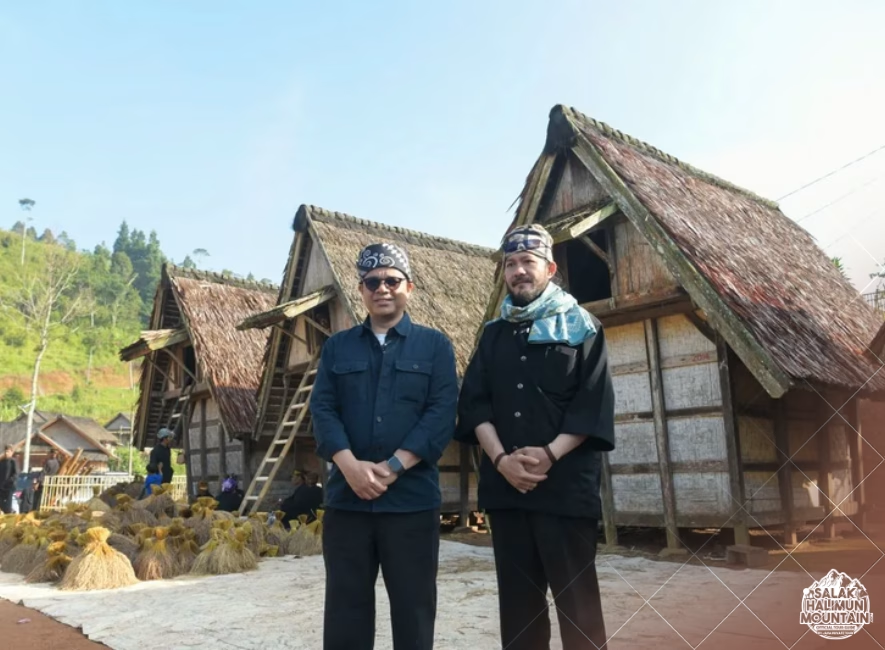
Once the harvest is carefully gathered from the fields using the traditional ani-ani finger blades, the elders oversee the safe storage of the community’s life source. Under ancestral mandate, selling the sacred heirloom rice to commercial markets for quick financial gain is strictly taboo (buyut). Instead, the elders manage the allocation of the grain into the iconic communal stilt granaries, known as leuit.
The elders ensure that the leuit structures are meticulously maintained using zero-waste, sustainable materials like timber, bamboo, and hydrophobic palm fiber roofs (ijuk) that naturally deter moisture and pests. Under their watchful eye, these granaries function as an absolute collective insurance policy. If the mountain experiences unexpected crop failures, severe volcanic disruptions, or erratic seasonal mists, the elders open the leuit vaults to distribute stored rice equitably to affected families. This system prevents hunger, eliminates economic panic, and reinforces a beautiful culture of shared survival.
Frontline Protectors of the Rainforest Ecosystem
To modern conservationists, the traditional elders of the Halimun Salak region are recognized as some of the most effective environmental guardians on Earth. Their ancestral zoning laws divide the vast forest into distinct spiritual and ecological categories: *Leuweung Titipan* (The Entrusted Forest), *Leuweung Tutupan* (The Forbidden Forest), and *Leuweung Garapan* (The Cultivated Forest). The elders are the strict, unyielding enforcers of these boundaries.
They educate the younger generations on the absolute sacredness of the *Leuweung Titipan*, the high-altitude primary forest and watersheds where all logging, hunting, and agricultural clearing are strictly prohibited by ancestral law. If an individual attempts to encroach upon these protected zones or contaminate the pristine mountain springs, the elders intervene immediately with powerful moral reprimands and traditional spiritual sanctions. By framing conservation as a profound ancestral and spiritual duty rather than a bureaucratic law, the elders maintain a pristine habitat for endangered wildlife, including the Javan leopard, silvery gibbons, and rare wild orchids.
Fostering Gotong Royong and Upstream Empathy
The environmental protection enforced by the elders is driven by the daily cultivation of *Tepo Seliro*—the art of active, mutual empathy—and the traditional practice of *Gotong Royong* (communal mutual aid). The elders continuously remind the village that their actions on the high volcanic slopes directly impact the safety, water quality, and livelihood of communities living further down the valleys.
When a severe mountain storm triggers a landslide that damages a single-track trail, blocks a vital irrigation canal, or impacts a neighbor’s traditional stilt home, the elders do not wait for outside government assistance. They issue a collective call for *Gotong Royong*, mobilizing an organized team of village volunteers within hours. Under the calm guidance of the elders, the community clears the debris, stabilizes the clay ridges using sustainable river stones, and restores the infrastructure using local bamboo joinery. This rapid, self-reliant response turns environmental challenges into moments of deep social bonding.
Lessons for Mindful Explorers: Honoring the Highland Guardians
For the modern trekker, backpacker, or researcher entering the borders of Halimun Salak National Park, encountering the quiet authority of the traditional elders is a deeply humbling experience. It serves as a powerful reminder that sustainable tourism and successful wilderness preservation are completely inseparable from the preservation of indigenous culture. The pristine state of the trails, rivers, and canopies we enjoy today is the direct result of centuries of mindful stewardship led by these respected leaders.
As responsible travelers, we can actively practice the ethics of *Tepo Seliro* by showing utmost respect to the village elders when passing through their ancestral domains. This means slowing down our pace, seeking formal permission before photographing community life or sacred structures, and adhering strictly to Leave No Trace principles to ensure we leave absolutely no waste behind. By supporting community-run homestays, listening mindfully to oral histories, and honoring local water and forest taboos, we align our steps with the cosmic balance of the mountain, helping the elders protect this sacred sanctuary for generations to come. Walk softly, listen deeply, and honor the guardians of the forest.
So, if you’re ready to explore the wonders of Mount Salak Halimun, head over to our ONLINE BOOKING PAGE and let’s start planning your adventure. Or simply CLICK THIS LINK to chat with us on WhatsApp.
With our team, you’re not just getting a guide; you’re gaining a local friend who will ensure your trip is nothing short of extraordinary.