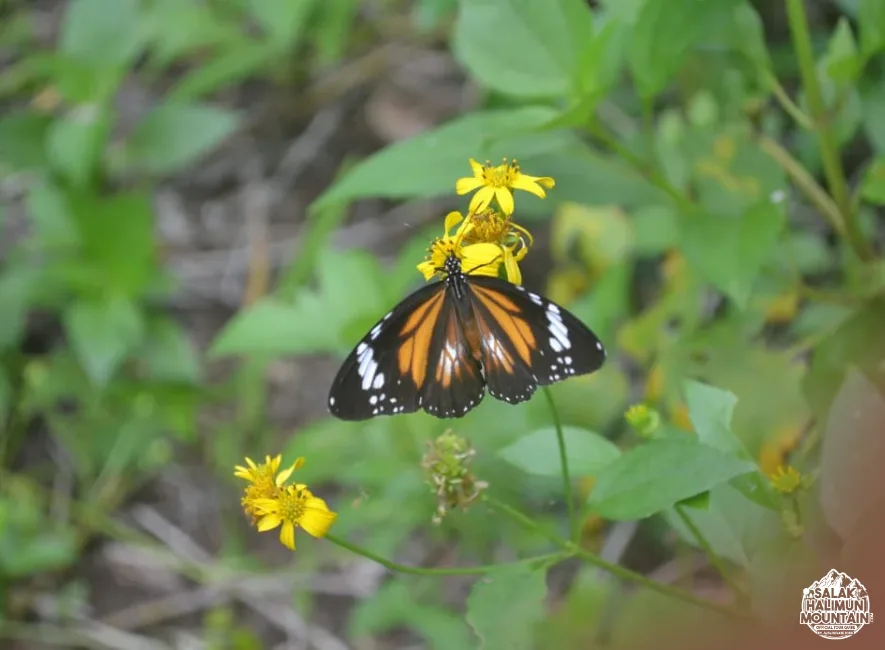
salakhalimunmountain.com – There is a delicate, floating beauty that defines the sunnier corners of our highland home. While many come to these peaks seeking the roar of waterfalls or the shadow of the leopard, those who slow down often find themselves captivated by the silent dance of wings. Identifying the best butterfly watching spots in Halimun Salak area is like learning to read the forest’s secret map of color. Here, the heavy rainforest air acts as a perfect medium for hundreds of species, from the palm-sized birdwings to the tiny, iridescent blues that gather near the stream banks. As a guide who has spent years tracking these “flying flowers,” I can tell you that butterfly watching is an exercise in mindfulness. It requires you to wait for that perfect moment when the dense canopy light hits a clearing, triggering a kaleidoscope of movement that feels like the forest is finally exhaling in color.
The Vibrant Corridors of Gunung Bunder
When scouting for butterfly watching spots in Halimun Salak area, the Gunung Bunder region is often the most rewarding starting point. Because this area features a mix of primary forest edges and open riparian zones near the waterfalls, it attracts a high diversity of species. The moisture from the cascading water keeps the surrounding vegetation lush, providing an endless supply of nectar. In the early morning, before the mountain mist has fully lifted, you can find butterflies “puddling” on the soft mud trails. This fascinating behavior, where groups of males gather to mineralize from the damp earth, creates a stunning mosaic of wings right at your feet.
Among the residents here, keep a sharp eye out for the Common Birdwing (Troides helena) with its majestic black and golden-yellow wings. Seeing one of these giants gliding effortlessly through the heavy rainforest air is a highlight of any nature trek. The trails leading to Curug Ngumpet and Curug Cigamea are particularly famous for sightings. The key is to find a patch where the sun breaks through the trees; these cold-blooded beauties rely on the warmth of the dense canopy light to power their flight. By sitting quietly near a flowering Lantana bush, you may find yourself surrounded by dozens of different species, each more intricate than the last.
The Rare Jewels of the Cikaniki Riverbank
For a deeper immersion, the Cikaniki riverbank in the Halimun sector stands out as one of the premier butterfly watching spots in Halimun Salak area. This area is a sanctuary for some of Java’s more elusive forest specialists that prefer the high humidity of the deep jungle. The river serves as a natural sun-highway, cutting through the ancient trees and providing a space where butterflies can congregate and find mates. Here, the moss covered rocks along the water’s edge are often visited by the stunning Great Yellow Mormon or the iridescent Paper Kite butterflies, which look like floating pieces of white lace against the green backdrop.
The Cikaniki area is also home to several species of “Leaf Butterflies” (Kallima paralekta). These are the masters of disguise; when their wings are closed, they look exactly like a dead, brown leaf, complete with veins and mold spots. However, when they take flight, they reveal a brilliant flash of blue and orange. Finding them requires a keen eye and a local guide who knows their favorite resting spots. These encounters remind us that the biodiversity of the Halimun Salak area is built on layers of incredible adaptation. Every wing pattern and every behavior is a response to the challenges of living in one of the world’s most complex rainforest environments.
Highland Specialists of the Salak Ridges
As you ascend toward the higher volcanic ridges, the butterfly watching spots in Halimun Salak area offer a different set of species adapted to the cooler, mistier climate. The sub-montane forests are the territory of the Satyrinae, or “Browns,” which have evolved subtle, earthy tones to blend in with the leaf litter and the shadows of the ancient trees. While they may not have the flashy colors of their lowland cousins, their intricate “eyespots” are a marvel of natural engineering, designed to confuse predators in the dim, dense canopy light of the upper slopes.
Trekking the ridges near Kawah Ratu provides a unique opportunity to see how volcanic activity influences the local flora and, consequently, the butterfly populations. Certain species are attracted to the mineral-rich soils near the geothermal vents. The heavy rainforest air at this altitude is often filled with the scent of sulfur, yet life persists in beautiful forms. We often see the vibrant Lime Butterfly or various Swallowtails patrolling these ridges, using the updrafts from the craters to soar across the valleys. This transition zone, where the “dead forest” meets the living jungle, is a dramatic theater for observing the resilience and variety of Javanese lepidoptera.
The Hidden World of Nocturnal Moths
While the focus of most visitors is on the daytime beauties, the butterfly watching spots in Halimun Salak area actually transition into a world of spectacular moths once the sun sets. The Atlas Moth (Attacus atlas), one of the largest insects in the world, is a resident of these mountains. With a wingspan that can reach over 25 centimeters and patterns that resemble snake heads to deter birds, seeing an Atlas Moth resting on the bark of a Rasamala tree is an awe-inspiring experience. They are the giants of the heavy rainforest air at night, moving with a heavy, fluttering grace that is entirely distinct from the butterflies.
To see these nocturnal wonders, we often set up light traps near our forest campsites in Citalahab. The light attracts a dizzying array of moths, from the lime-green Luna Moths to tiny, metallic-colored species that look like living jewels. This nocturnal diversity is a critical part of the park’s ecosystem, as many forest plants rely specifically on moths for pollination. Exploring the “dark side” of the butterfly world gives you a complete appreciation for the complexity of the national park. It proves that the forest never truly rests; it simply changes its wardrobe when the moon rises over the volcanic peaks.
Best Times and Seasons for Butterfly Watching
Timing is everything when it comes to visiting the best butterfly watching spots in Halimun Salak area. Generally, the best window is during the transition from the rainy season to the dry season, typically between April and June. During these months, the forest is at its most lush, and the increased sunshine triggers a massive emergence of adults from their pupae. The heavy rainforest air is warm but not yet parched, providing the perfect conditions for flight. On a clear morning following a rainstorm, the activity levels in the forest clearings can be truly spectacular as thousands of wings dry out in the sun.
The best time of day is usually between 9:00 AM and 11:00 AM. This is when the dense canopy light is strong enough to warm the butterflies but before the midday heat becomes too intense, causing them to seek shelter in the deep shade. In the afternoon, you can still find them, but they are often more stationary, resting on the undersides of leaves or high in the ancient trees. A patient trekker who understands these daily rhythms will always see more. We recommend a slow-moving approach; butterflies are highly sensitive to sudden movements and shadows, so moving with the grace of the forest itself is the secret to a close encounter.
Conservation and the Fragility of Wings
The butterfly watching spots in Halimun Salak area are more than just beautiful places; they are indicators of environmental health. Butterflies are highly sensitive to changes in temperature, humidity, and the presence of specific host plants. The fact that we still see such a high diversity here is a testament to the integrity of the primary forest. However, they are also vulnerable to habitat fragmentation and the illegal wildlife trade. Many of Java’s most beautiful species are protected by law, and we maintain a strict policy of “observation only” to ensure their populations continue to thrive.
When you visit these spots with us, you are supporting a form of tourism that values the living animal over a specimen in a box. We educate our guests on the life cycles of these insects—from the specialized caterpillars that eat only one type of vine to the adults that may only live for a few weeks. By understanding their fragility, we develop a deeper respect for the heavy rainforest air and the ancient trees that sustain them. Every butterfly you see is a success story of conservation, a tiny miracle that has survived the challenges of the jungle to add its dash of color to the mountain mist.
Essential Gear for Your Butterfly Expedition
To fully enjoy the butterfly watching spots in Halimun Salak area, a few pieces of specialized gear can make a big difference. A pair of close-focus binoculars is perhaps the most useful tool, allowing you to see the microscopic scales on a wing from a respectful distance. For photographers, a macro lens is essential for capturing the intricate details, but a telephoto lens is often better for those species that stay high in the canopy. Because you will be doing a lot of standing and waiting in potentially damp areas, waterproof footwear and long, breathable clothing are recommended to protect against the soft mud trails and forest insects.
We also suggest bringing a field guide specific to the butterflies of Java and Bali. Identifying what you see adds a rewarding layer of “treasure hunting” to the trek. Most importantly, bring a large dose of patience. Unlike a waterfall, which is always there, a butterfly is a fleeting moment of beauty. It may disappear into the dense canopy light as quickly as it appeared. But it is this very elusiveness that makes a successful sighting so rewarding. When you finally capture that perfect image or simply spend a minute watching a swallowtail dance over a stream, you realize that the best things in the Halimun Salak area are often the ones that weigh almost nothing at all.
Conclusion: The Floating Spirit of the Forest
As we wrap up our tour of the butterfly watching spots in Halimun Salak area, I hope you are ready to look at the “small things” with new eyes. These winged inhabitants are the spirit of the mountain, moving between the heavy rainforest air and the ancient trees with a freedom we can only envy. They are a reminder of the delicate balance of life in the tropics and the incredible beauty that emerges when we protect the wild places of the earth. We invite you to come and walk the misty trails with us, to find the sun-drenched clearings, and to lose yourself in the silent, colorful world of the Javanese butterflies. The dance is about to begin.
So, if you’re ready to explore the wonders of Mount Salak Halimun, head over to our ONLINE BOOKING PAGE and let’s start planning your adventure. Or simply CLICK THIS LINK to chat with us on WhatsApp.
With our team, you’re not just getting a guide; you’re gaining a local friend who will ensure your trip is nothing short of extraordinary.