salakhalimunmountain.com — Choosing between Mount Salak vs Mount Papandayan is a decision between two very different volcanic personalities in West Java. While both are active volcanoes offering stunning geothermal features, they provide vastly different trekking experiences. Mount Papandayan is often called the “beginner’s mountain” due to its relatively gentle slopes and wide, accessible crater floor. Mount Salak, however, is the “mountain of mystery,” known for its rugged terrain, dense primary rainforest, and a physical challenge that tests even experienced hikers. Whether you are looking for an easy family-friendly walk through a lunar landscape or a deep immersion into the wild, heavy rainforest air, understanding the contrast between Mount Salak vs Mount Papandayan will help you pick the right peak for your next adventure. As a guide, I see Papandayan as a beautiful introduction to volcanology, while Salak is a masterclass in tropical wilderness and endurance.
The Terrain: Lunar Landscapes vs. Jungle Deep
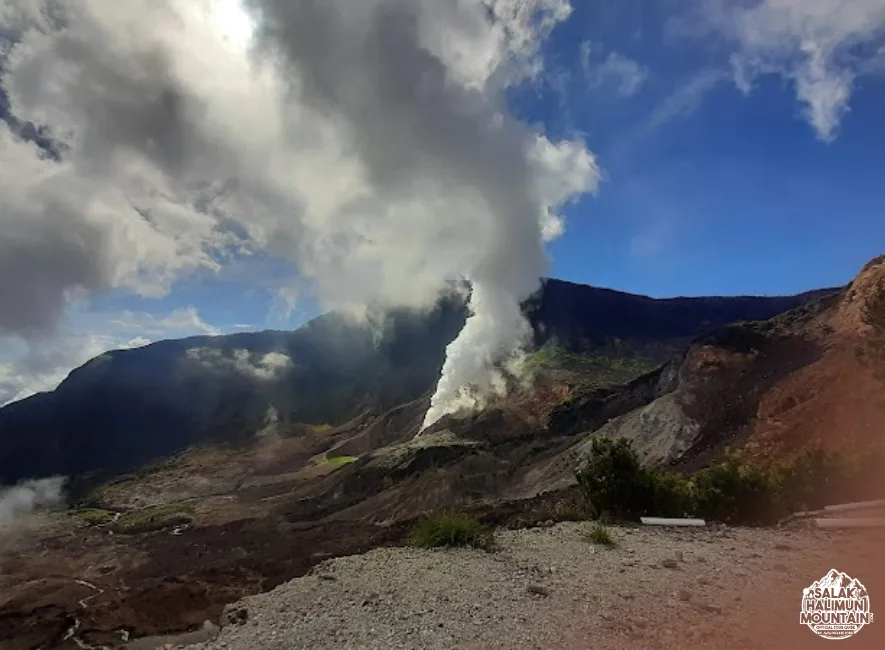
The most striking difference in the Mount Salak vs Mount Papandayan debate is the visual and physical terrain. Mount Papandayan is famous for its massive, open crater area. The trail starts with a steady walk through a white-washed landscape of sulfur vents and scorched rocks, offering wide vistas from the very beginning. It is an open, sun-drenched environment that feels like another planet. In contrast, Mount Salak is an enclosed world. The trails are dominated by the dense canopy light of the Halimun Salak National Park, where the forest is so thick it feels like a green cathedral. Instead of open sulfur fields, you navigate soft mud trails, climb over massive root systems, and push through thick ferns. Salak is vertical and intimate; Papandayan is expansive and accessible.
For those who prefer a clear, well-defined path, Papandayan is the ideal choice. You can reach the famous “Dead Forest” (Hutan Mati) with relatively little effort, making it perfect for casual hikers. However, if you crave the “unseen side” of the mountain, Salak is the clear winner in the Mount Salak vs Mount Papandayan comparison. On Salak, the trail is an obstacle course designed by nature. You are constantly engaging with the environment—ducking under vines, stepping over moss covered rocks, and crossing rushing rivers. This ruggedness is what gives Salak its legendary status among local adventurers. It isn’t just a walk; it’s a full-body experience that demands respect for the ancient volcanic slopes.
Geothermal Wonders: Craters and Sulfur Vents
Both peaks offer incredible geothermal activity, but the way you experience it differs. Mount Papandayan’s crater is the star of the show, a massive amphitheater of steam and yellow sulfur deposits that you walk directly through. It is highly dramatic and easy to photograph. Mount Salak’s primary geothermal attraction is Kawah Ratu (Queen’s Crater). Reaching Kawah Ratu requires a three-hour trek through the deep rainforest, making the arrival feel like a hard-earned reward. The crater itself is tucked away, surrounded by vibrant green ridges, creating a stunning contrast between the sterile sulfur floor and the lush life of the national park. In the Mount Salak vs Mount Papandayan contest, Papandayan offers “instant” volcanic views, while Salak offers a hidden treasure at the end of a jungle quest.
The atmosphere at these craters is also distinct. Papandayan can feel like a busy tourist attraction on weekends, with many people exploring the main vents. Salak’s Kawah Ratu maintains a more secluded, mysterious vibe. The heavy rainforest air often traps the steam, creating a misty, ethereal environment that feels like a scene from an ancient Javanese legend. If you want to see the raw power of a volcano without the crowds, the Salak side provides that sense of isolation. Both locations remind you of the island’s fiery heart, but Salak keeps its power guarded by the density of the forest, requiring a bit of “mountain time” and sweat to witness.
Flora, Fauna, and the Famous Edelweiss
When comparing Mount Salak vs Mount Papandayan for nature lovers, the vegetation is a major factor. Mount Papandayan is one of the best places in West Java to see the Tegal Alun edelweiss meadow, one of the largest in the region. The sight of thousands of “everlasting flowers” in a high-altitude field is a bucket-list experience for many. Salak does not have these vast sub-alpine meadows; instead, it offers the richest biodiversity of primary rainforest. Here, the Altingia trees tower above, and the forest is a hotspot for the rare Javan gibbon and endemic birds. Salak is about the complexity of the ecosystem, while Papandayan is about the iconic beauty of the alpine flora.
Trekking in Salak is a lesson in botany. You will see giant tree ferns, rare jungle orchids, and vibrant mosses that thrive in the perpetual moisture of the peaks. In the Mount Salak vs Mount Papandayan comparison, choose Papandayan if you want that “classic” mountain meadow photo. Choose Salak if you want to see the rainforest in its most undisturbed and diverse state. The silence of the Salak woods is often broken by the screech of a hawk-eagle or the rustle of a langur in the canopy, providing a sense of being in a true wildlife refuge. It is a place where the nature feels powerful and untouched, a sanctuary that rewards those who move quietly and watch the shadows.
Logistics, Camping, and Difficulty
In terms of logistics, Mount Papandayan is very well-developed. There are established camping grounds with facilities like toilets and even a warm-water pool near the entrance. This makes it a popular “luxury” camping destination. Mount Salak is much more “back-to-basics.” Camping on Salak usually means finding a small clearing in the forest or near the crater, with no facilities and only the rushing rivers for water. When choosing Mount Salak vs Mount Papandayan, consider your comfort requirements. Papandayan is a “soft” adventure; Salak is a “hard” adventure. The road conditions around Mount Salak also tend to be more challenging, involving narrow village paths compared to the wider roads leading to Papandayan’s main gate in Garut.
The difficulty level is perhaps the biggest divider. Mount Papandayan is suitable for children and first-time hikers, with a summit that is easily reached. Mount Salak’s summits (Peak 1 and Peak 2) are among the most difficult to reach in West Java due to the steep, slippery terrain and the dense vegetation. Even the trek to the crater on Salak is more physically demanding than the walk into Papandayan’s crater. In the Mount Salak vs Mount Papandayan debate, be honest about your fitness level. If you want a relaxed weekend with great views, go to Garut. If you want to push your limits and earn your views through physical effort, the Salak Halimun region is your destination.
Conclusion: The Choice Between Two Giants
Ultimately, the choice of Mount Salak vs Mount Papandayan depends on what you want to feel at the end of the day. Choose Mount Papandayan for a scenic, comfortable, and visually spectacular volcanic walk that is accessible to everyone. Choose Mount Salak for a rugged, soul-stirring journey into the heart of the jungle, where the reward is the silence of the wilderness and the pride of conquering a difficult trail. Both mountains are essential parts of the Javanese landscape, offering the cooling air and volcanic energy that we all seek. Whether you prefer the edelweiss fields or the primary forest, the mountains of West Java are waiting to share their stories with you.
So, if you’re ready to explore the wonders of Mount Salak Halimun, head over to our ONLINE BOOKING PAGE and let’s start planning your adventure. Or simply CLICK THIS LINK to chat with us on WhatsApp.
With our team, you’re not just getting a guide; you’re gaining a local friend who will ensure your trip is nothing short of extraordinary.