salakhalimunmountain.com – Walking through the dense, humid foothills of Mount Salak is like wandering through a vast, natural pantry that never truly closes. As the tropical sun filters through the high canopy, casting dappled light onto the mossy forest floor, you are surrounded by a staggering variety of wild and cultivated treasures. The local fruits found around Mount Salak are a vibrant testament to the incredible fertility of this volcanic region. Here, the combination of rich, mineral-heavy soil and the constant moisture of the mountain mist creates a paradise for fruit-bearing trees. From the prickly, brown-skinned clusters of the mountain’s namesake fruit to the hidden, juicy gems tucked away in the deep jungle, every bite offers a flavor that is as bold and mysterious as the rainforest itself.
The Namesake Treasure: Salak Pondoh and Beyond
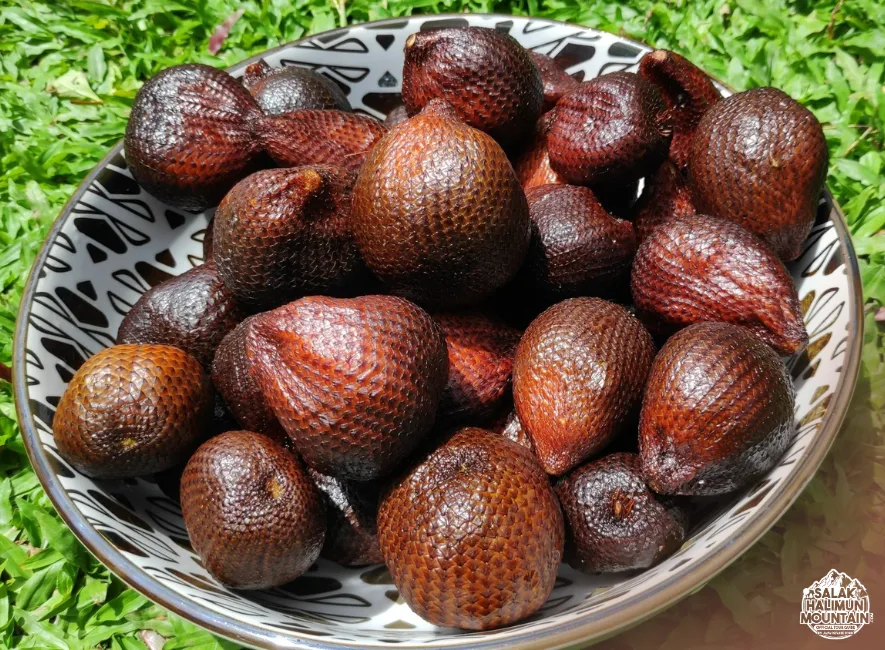
You cannot talk about the local fruits found around Mount Salak without starting with the “snake fruit” or Salak. While the mountain was likely named after the Sanskrit word for “silica,” the abundance of Salak fruit in the region has made the name synonymous with the prickly palm that grows in the shade of the larger forest trees. The Salak fruit is a wonder of nature’s packaging, covered in a shimmering, reddish-brown skin that looks exactly like the scales of a cobra. Peeling it back reveals three firm, cream-colored lobes that have a crunch similar to a crisp apple but a flavor profile that is a complex blend of pineapple, strawberry, and a hint of honey. It is the ultimate mountain snack—durable, portable, and perfectly suited to the rugged trails of the national park.
A Variety of Textures and Tastes
On the slopes of Mount Salak, you will find different varieties of this iconic fruit. The Salak Pondoh is a local favorite, known for its intense sweetness and a floral aroma that fills the air when a cluster is freshly harvested. Some varieties are slightly more astringent, which the local villagers often prefer for pickling or pairing with a spicy sambal. As we trek through the village gardens, you will see the low-growing Salak palms, their long, thorny fronds acting as a natural fence. These palms thrive in the dappled shade, requiring the protection of the taller canopy trees to produce their best fruit. They are a reminder that in the Salak Halimun ecosystem, everything—even the prickly palms—relies on the health of the surrounding forest.
The Queen of the Rainforest: Mangosteen
Hidden beneath a dense crown of glossy, dark green leaves, the Mangosteen (Manggis) reigns as the “Queen of Fruits” in the valleys surrounding the mountain. The volcanic soil of West Java produces some of the finest mangosteens in the world. When you hold a ripe mangosteen, its thick, leathery purple rind feels cool and heavy in your hand—a protection against the mountain’s humidity. Once you crack the shell, the contrast is breathtaking: snow-white segments of flesh that are so delicate they almost melt on your tongue. The taste is a perfect balance of tart and sweet, a refreshing reward after a long morning of trekking through the heavy rainforest air.
Seasonal Rhythms and Village Harvests
The mangosteen harvest is a celebrated time in the villages near Mount Salak. Unlike fruits that are available year-round, the mangosteen follows a strict seasonal rhythm, usually peaking when the rains are most consistent. You will see families gathered under the tall, symmetrical trees, using long bamboo poles with clever basket attachments to gently pluck the fruit without bruising it. The local people believe that the mangosteen is a cooling fruit, often eaten to balance the “heat” of other tropical delicacies. It is a fruit that demands a moment of stillness to enjoy, a sensory experience that captures the pure, clean essence of the Salak Halimun foothills.
The King of Scent: Durian Salak
No exploration of local fruits found around Mount Salak is complete without the Durian. Known as the “King of Fruits,” the durians grown on these volcanic slopes have a reputation for being particularly pungent and creamy. Unlike the mass-produced varieties found in supermarkets, the mountain durians of Salak and Halimun are often “durian kampung”—traditional varieties that have grown wild or in forest gardens for generations. These trees can grow to be giants, their massive trunks disappearing into the forest canopy. When a durian is ripe, it doesn’t wait to be picked; it falls to the ground in the dead of night, its heavy, spiked shell thudding onto the soft mud of the forest floor.
An Adventure for the Palate
Eating a Mount Salak durian is a true adventure. The aroma is legendary—a thick, sweet, and sulfurous scent that can be detected from a mile away. For those brave enough to dive in, the reward is a custard-like flesh that ranges in color from pale ivory to deep sunset orange. Each tree produces a slightly different flavor profile; some are sweet and buttery, while others have a sophisticated, slightly bitter aftertaste that local connoisseurs prize above all else. Sharing a freshly fallen durian with a group of local guides by the side of a mountain stream is a rite of passage for any true nature lover visiting the region. It is a flavor that stays with you long after you have left the mountain.
Hidden Gems of the Deep Jungle
Beyond the famous names, the deep rainforest of Salak Halimun hides a variety of wild fruits that few outsiders ever get to see. As we move deeper along the misty jungle paths, your guide might point out the “Rambai” or “Lansat” hanging in long, pale yellow clusters from the trunks of trees. These small, grape-like fruits have a thin skin and a translucent flesh that is incredibly refreshing on a humid day. They are the favorite snacks of the forest’s inhabitants, from the colorful tropical birds to the shy macaques that watch us from the branches above. Seeing these fruits in their natural habitat reminds us that the mountain is a living, breathing food web.
The Rare and Exotic Wild Berries
During certain times of the year, you might come across the “Ciplukan” (Cape Gooseberry) growing wild along the sunnier edges of the trekking trails, or find various species of wild mountain raspberries (Murbai) tucked away in the cooler, higher elevations. These small fruits are packed with vitamins and have been used by the local Sundanese people as natural medicines for centuries. There is also the “Gandaria,” a bright orange fruit with a purple seed that has a sharp, mango-like tang. These wild fruits are the hidden jewels of the National Park, requiring a keen eye and the knowledge of a local guide to find and identify. They are the “secret menu” of the Mount Salak forest.
The Sweetness of Sustainable Agriculture
The abundance of local fruits found around Mount Salak is a direct result of the sustainable “Pekarangan” or home-garden systems practiced by the villagers. These are not monoculture orchards; they are complex, multi-layered forest gardens where fruit trees grow alongside medicinal herbs, coffee, and timber trees. This method of farming ensures that the soil remains fertile and that the biodiversity of the National Park is protected. When you eat a piece of fruit grown here, you are supporting a way of life that values the long-term health of the mountain over short-term profit. You are tasting the result of a landscape where humans have lived in balance with the rainforest for hundreds of years.
A Culinary Journey from Tree to Table
Our tours aren’t just about the views; they are about the flavors. We take you into the heart of these forest gardens, where you can see the fruits hanging from the branches and learn how they are harvested. You will have the chance to try “Rujak,” a traditional fruit salad made with a spicy, palm-sugar based dressing that perfectly complements the sweetness of the mountain fruits. It is a culinary journey that connects you to the earth in a very literal way. There is something deeply satisfying about peeling a fruit that was growing in the rainforest just hours before—a freshness that you simply cannot find in a city.
Preserving the Bounty of Salak Halimun
As we look to the future, the preservation of these local fruit varieties is more important than ever. The expansion of modern agriculture often threatens the heirloom trees that have lived on the mountain for centuries. By celebrating and creating a demand for these traditional fruits, we help the local communities see the value in protecting their ancestral trees. Every mangosteen, every salak, and every durian represents a piece of the mountain’s genetic history. We invite you to come and taste this history for yourself, to wander through the emerald groves and discover the sweet, wild, and wonderful world of Mount Salak’s natural pantry.
Discover the Flavors of the Volcano
The next time you find yourself on a trail with us, keep your eyes open. That strange, colorful fruit hanging just out of reach might be the most delicious thing you’ve ever tasted. Our guides are always eager to share their knowledge of the forest’s bounty, helping you identify which fruits are safe to eat and which are the most prized by the local people. It is a journey for all the senses—the sight of the vibrant rinds, the scent of the ripening fruit in the warm air, and finally, the incredible explosion of flavor that only a mountain-grown fruit can provide. Come and experience the sweetness of the Salak Halimun wilderness with us.
So, if you’re ready to explore the wonders of Mount Salak Halimun, head over to our ONLINE BOOKING PAGE and let’s start planning your adventure. Or simply CLICK THIS LINK to chat with us on WhatsApp.
With our team, you’re not just getting a guide; you’re gaining a local friend who will ensure your trip is nothing short of extraordinary.