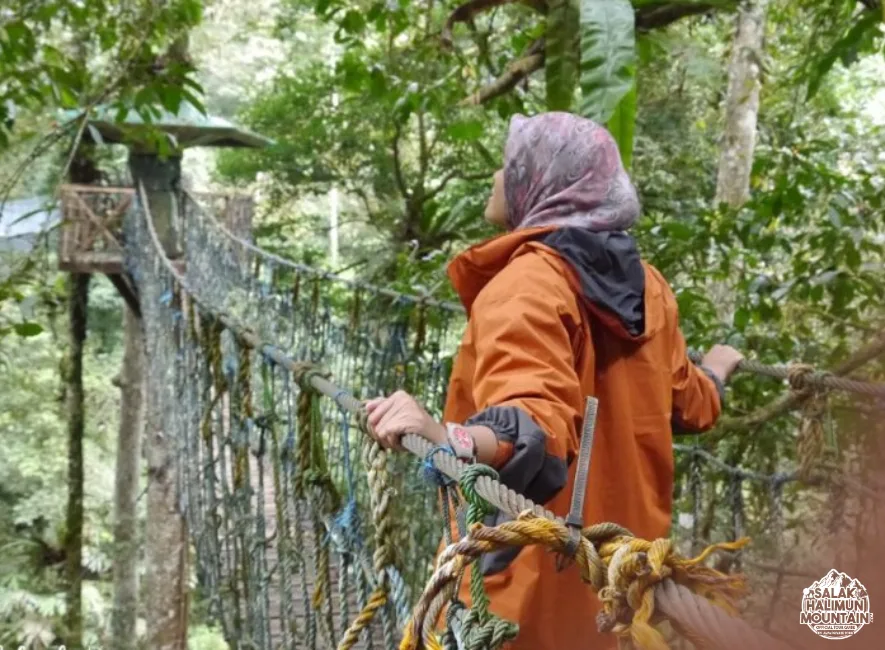
salakhalimunmountain.com – The canopy of Halimun rainforest is not built for noise or haste. It is a living ceiling of leaves, branches, and quiet movement, shaped by time rather than tourism. Stepping onto the Canopy Trail Cikaniki means entering a space where human presence must soften, slow, and adapt to the rhythm of the forest.
This elevated walk is more than an experience. It is a responsibility. Every step, sound, and pause carries an impact beyond what the eye can immediately see. Understanding how to walk the canopy trail with respect and awareness is essential, not only for safety, but for the long-term protection of Halimun’s fragile ecosystem.
Why Behavior Matters at Canopy Level
The canopy is the most sensitive and active layer of the rainforest. Animals feed, communicate, and move through this space constantly. Unlike the forest floor, disturbances here spread quickly and widely.
Jumping, shaking the bridge, or shouting may feel harmless, but these actions send vibrations and sound through branches that animals rely on for balance and safety. Birds may abandon feeding areas. Insects retreat. Mammals alter their routes.
Repeated disturbances can teach wildlife to avoid the area entirely. Over time, this changes natural behavior patterns and reduces the educational value of the trail itself.
The Harm of Jumping Shaking and Loud Noise
The canopy trail is engineered for stability, but it is not designed for rough movement. Jumping or intentionally shaking the structure places unnecessary stress on both the trail and the surrounding trees.
More importantly, these actions cause alarm. In the canopy, sound and vibration are interpreted as danger. Animals respond instinctively, often fleeing or hiding for extended periods.
Silence and steady movement allow the forest to continue its natural flow. When visitors remain calm and controlled, wildlife presence increases rather than disappears.
Photography Etiquette on the Canopy Trail
Photography is one of the most common reasons people visit the Canopy Trail Cikaniki, but it requires discipline. The desire for the perfect image should never override safety or respect for the forest.
Blocking the walkway, leaning over railings, or stepping outside designated areas puts both people and plants at risk. The canopy supports life that is easily damaged by pressure or contact.
Photographs are best taken by staying still and allowing the scene to unfold naturally. Wildlife images often come to those who wait, not those who chase.
Quiet photography preserves the experience for everyone on the trail and minimizes stress on animals.
Group Size and Pacing Matter
The canopy is not meant for crowds moving at once. Smaller groups reduce noise, vibration, and visual disturbance. They also allow guides to manage safety and interpretation more effectively.
Moving slowly is not a limitation. It is the intended pace. Rushing through the trail increases the risk of accidents and decreases the chance of meaningful encounters.
Pauses are part of the experience. Standing still allows the forest to reappear around you. Birds return. Insects resume movement. The canopy breathes again.
Staying Still and Letting the Forest Come to You
One of the most powerful lessons of the Canopy Trail Cikaniki is that the forest reveals itself on its own terms. Stillness is often rewarded more than movement.
When visitors stop walking, lower their voices, and remain patient, the canopy responds. Leaves shift. Wings flutter. Sounds layer gradually into clarity.
This approach transforms the walk into a shared moment rather than a performance. The forest is no longer something to be consumed, but something to be experienced alongside.
Canopy Trails as Conservation Tools Not Attractions
The Canopy Trail Cikaniki was built with conservation and education in mind. It allows access to a fragile ecosystem without damaging the forest floor or cutting new paths.
By concentrating visitor movement onto a single structure, the surrounding habitat remains largely untouched. This reduces erosion, protects plant growth, and limits human impact.
Viewing the canopy trail as an attraction misses its deeper purpose. It is a tool for understanding why forests must remain intact, complex, and undisturbed.
The Role of Visitors in Long Term Protection
Every visitor becomes part of the canopy’s story. Respectful behavior supports conservation goals. Careless actions undermine them.
Following guidelines is not about restriction. It is about participation. Visitors who move thoughtfully help maintain the trail as a place of learning rather than exploitation.
Long-term protection depends on collective behavior. When the canopy remains calm and healthy, future visitors, researchers, and local communities all benefit.
Walking Away With Awareness
The Canopy Trail Cikaniki leaves a lasting impression not because of height or views, but because of perspective. Walking above the forest changes how people see nature and their place within it.
Respect and awareness are not temporary rules. They are attitudes that carry beyond the trail, shaping how visitors move through forests everywhere.
When you step off the canopy and back onto the forest path, the lesson continues. Move gently. Listen closely. Let the forest lead.
So, if you’re ready to explore the wonders of Mount Salak Halimun, head over to our ONLINE BOOKING PAGE and let’s start planning your adventure. Or simply CLICK THIS LINK to chat with us on WhatsApp.
With our team, you’re not just getting a guide; you’re gaining a local friend who will ensure your trip is nothing short of extraordinary.