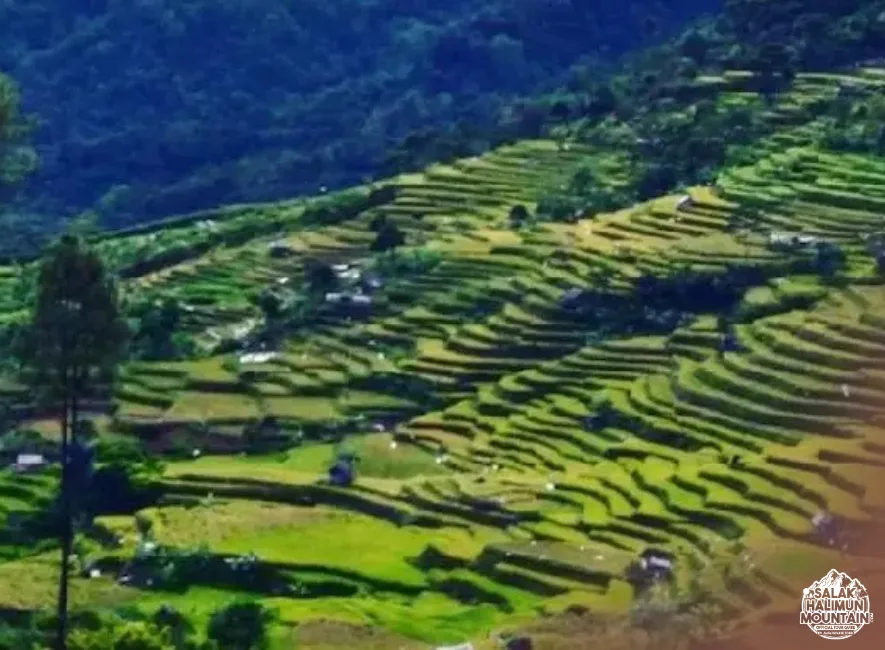
salakhalimunmountain.com – morning in Desa Wisata Malasari begins before the sun clears the hills. Mist hangs low over rice fields, clinging to the edges of forest trees as if unwilling to let go. Roosters call from different corners of the village, their voices echoing softly through damp air scented with soil, leaves, and wood smoke.
This is not a village that wakes abruptly. Life here unfolds slowly, guided by habit, weather, and the unspoken agreement between people and the rainforest that surrounds them. In Malasari, daily life is not separate from nature. It is shaped by it, negotiated with it, and sustained by its limits.
Morning Routines Shaped by the Forest
As the light strengthens, doors open one by one. Farmers step outside carrying simple tools, pausing briefly to study the sky. The color of the clouds matters. Rain in the high forest can reach the fields without warning.
Women begin preparing meals with ingredients gathered from nearby gardens. Cassava leaves, chilies, bananas, and herbs grow close to the house, forming a living pantry that reduces dependence on distant markets. Children wash their faces with cool water drawn from pipes fed by mountain springs.
There is no rush. Time in Malasari is measured not by clocks, but by readiness. When the ground is too wet, work waits. When insects are loud, rain is coming.
Listening Before Acting
Villagers here listen carefully. To birds calling from the forest edge. To the river’s changing tone after rainfall. To the wind moving through bamboo stands. These sounds guide decisions as much as experience does.
This attentiveness is not romantic. It is practical. Mistakes cost harvests.
Farming Rhythms and Rice Field Life
Rice fields stretch outward from the village like mirrors reflecting the sky. Their layout follows natural contours, shaped by generations who understood how water moves across land.
Planting rice is a communal activity. Families help one another, moving barefoot through shallow water, pressing young shoots into soft mud. Conversation flows easily, punctuated by laughter and quiet focus.
Chemical fertilizers are avoided near waterways. Traditional methods dominate, using compost, ash, and organic matter. Yield may be smaller, but the soil remains alive.
Harvest season brings shared meals and collective labor. It also brings relief. The forest has provided again.
Agroforestry and Home Gardens
Beyond the rice fields lie agroforestry plots where fruit trees grow alongside coffee, spices, and timber species. These mixed systems imitate the forest’s layered structure, protecting soil and maintaining moisture.
Banana trees shade young coffee plants. Cloves rise slowly, their scent noticeable even before flowering. Firewood trees are planted intentionally, reducing pressure on protected forest zones.
Home gardens reflect individual care. Each one is different, shaped by taste, habit, and inheritance. Some focus on medicinal plants. Others grow vegetables for daily cooking. All reduce dependency on forest extraction.
Small Choices With Long Impact
These gardens may look modest, but they play a major role in conservation. Every leaf harvested close to home is one less taken from the forest.
In Malasari, sustainability is built quietly through repetition.
Knowing Where the Forest Begins and Ends
Forest boundaries are clearly understood here. Not through fences, but through shared knowledge. Children grow up knowing which paths are for gathering firewood, which are for farming, and which lead into protected areas.
Certain zones are avoided entirely. Sacred groves near water sources are left untouched. Elders remind the younger generation why these places matter.
The forest is not feared, but it is respected. People enter with purpose, never casually.
Respectful Interaction With the Rainforest
When villagers collect forest products, they do so carefully. Bamboo is cut selectively. Medicinal plants are taken sparingly. Nothing is wasted.
Hunting is limited by tradition and necessity. Many species are left alone entirely, understood as part of the forest’s balance.
Noise is kept low. Large groups are discouraged. The forest listens, too.
Guides as Cultural Bridges
Local guides play a special role. They translate forest knowledge into understanding for visitors, explaining not only what exists, but why restraint matters.
Guiding is not about showing everything. It is about protecting what should remain unseen.
Stories From Elders
Elders remember times when forest cover was thinner and rivers more unpredictable. They speak of floods that reshaped fields and landslides that followed careless clearing.
These stories are told not as warnings, but as lessons. The forest, they say, remembers what humans do.
Children listen while repairing nets or shelling corn, absorbing history as part of daily work.
Farmers and the Weight of Seasons
Farmers speak of patience. Of waiting through failed harvests. Of learning to accept limits rather than push against them.
They know that pushing too hard leads to loss. The forest teaches this every year.
The Guide’s Quiet Pride
Local guides speak softly about their work. Pride comes not from numbers of visitors, but from visitors who understand.
They take satisfaction in showing restraint. In turning back when rain is heavy. In teaching guests to walk carefully on soft ground.
This pride is rooted in belonging.
A Quiet Relationship That Endures
Life in Desa Wisata Malasari is not dramatic. It is steady. Its strength lies in repetition, in habits passed down, in boundaries respected even when no one is watching.
The rainforest provides water, shade, and stability. In return, people offer care, patience, and restraint.
This relationship does not need to be loud to endure.
Visitors who come with open eyes may not leave with spectacular photographs. But they leave with something rarer. Understanding.
So, if you’re ready to explore the wonders of Mount Salak Halimun, head over to our ONLINE BOOKING PAGE and let’s start planning your adventure. Or simply CLICK THIS LINK to chat with us on WhatsApp.
With our team, you’re not just getting a guide; you’re gaining a local friend who will ensure your trip is nothing short of extraordinary.