salakhalimunmountain.com – deep inside the rainforests of Halimun Salak, protection does not always arrive in the form of fences or warning signs. Sometimes, it comes quietly, through carefully designed pathways that invite people to understand before they consume. Jembatan Tajuk Cikaniki stands as one of those quiet tools, showing how ecotourism, when done with intention, can become a form of forest protection rather than exploitation.
Rethinking Tourism in a Protected Rainforest
Tourism in sensitive natural areas often raises difficult questions. Increased visitors can bring economic opportunity, but they can also bring noise, waste, and pressure on ecosystems. In places like Halimun Salak National Park, where biodiversity is high and ecosystems are fragile, these questions matter deeply.
Ecotourism offers an alternative path. It is not about attracting as many visitors as possible. It is about inviting the right kind of engagement. Jembatan Tajuk Cikaniki reflects this philosophy. It does not promise thrill or spectacle. Instead, it offers understanding, perspective, and respect.
This approach challenges the idea that nature must be consumed to be valued. Here, value comes from restraint and thoughtful access.
How Low Impact Attractions Support Conservation
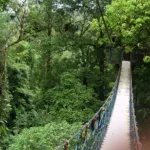
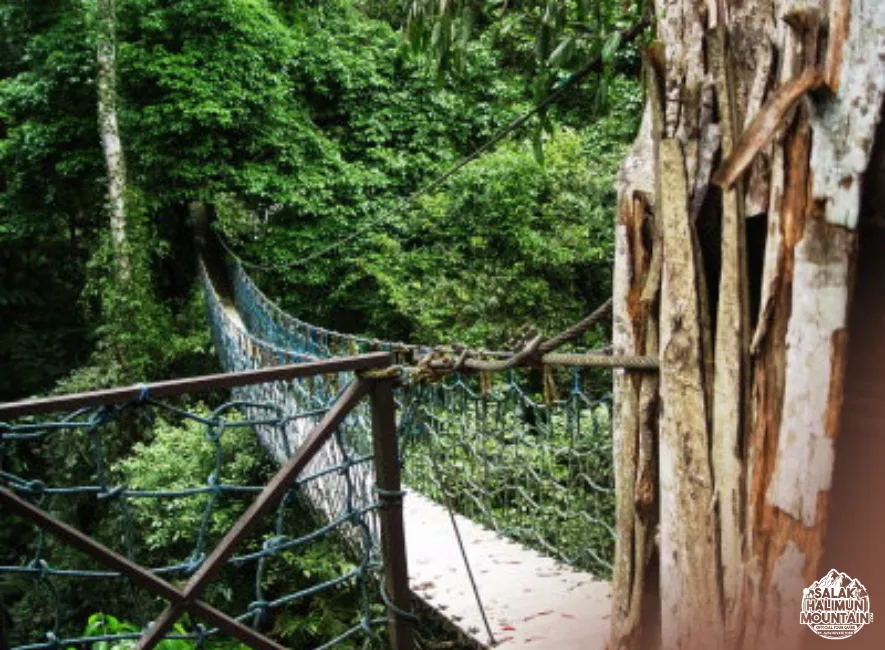
Jembatan Tajuk Cikaniki is a low impact structure by design. It occupies a narrow footprint, avoiding large scale clearing or permanent alteration of the forest floor. By elevating visitors into the canopy, it reduces pressure on sensitive ground level habitats while still allowing meaningful interaction with the ecosystem.
This kind of infrastructure helps concentrate visitor movement along a defined route. Instead of wandering freely through vulnerable areas, visitors follow a controlled path that limits disturbance. This protects undergrowth, soil structure, and wildlife movement patterns.
Low impact attractions also reduce the need for excessive facilities. There are no large buildings or paved areas dominating the landscape. The forest remains the primary presence, not human construction.
In conservation terms, this matters. Every minimized disturbance helps maintain ecological balance in a rainforest that has taken centuries to form.
Education as the Foundation of Protection
One of the strongest conservation outcomes of ecotourism is education. People protect what they understand. Jembatan Tajuk Cikaniki offers learning not through signs or lectures alone, but through direct experience.
Walking at canopy level allows visitors to see how much life exists above the ground. Birds feeding, insects pollinating, and plants growing without soil all become visible realities rather than abstract concepts.
This experience reshapes perception. Forests stop being seen as empty green spaces and start being understood as layered systems filled with relationships.
For students, educators, and eco conscious travelers, this form of learning is powerful. It builds emotional connection alongside knowledge, which is essential for long term conservation awareness.
The Importance of Local Involvement
Ecotourism cannot succeed without local participation. In the Halimun Salak region, surrounding communities have long lived alongside the forest, depending on it for water, climate stability, and cultural identity.
Jembatan Tajuk Cikaniki exists within this social landscape. Local guides, staff, and conservation workers play an important role in managing access, sharing knowledge, and ensuring that visitor presence aligns with protection goals.
When local communities are involved, ecotourism becomes a shared responsibility. Economic benefits help support livelihoods, reducing pressure to exploit forest resources unsustainably.
At the same time, cultural values shape how tourism is conducted. Respect for nature is not presented as a rule imposed from outside, but as a lived principle rooted in daily experience.
Why Controlled Access Matters
Not all access is equal. Unrestricted tourism can overwhelm even resilient ecosystems. Controlled access, on the other hand, allows balance.
At Jembatan Tajuk Cikaniki, visitor numbers, behavior, and movement are managed carefully. This ensures safety while also protecting wildlife and vegetation.
Controlled access reduces noise levels, limits physical impact, and prevents overcrowding. It also creates a calmer atmosphere where observation and reflection are possible.
For policy aware audiences and conservation organizations, this model demonstrates how tourism and protection can coexist when limits are respected.
The Role of Responsible Visitors
Ecotourism depends not only on design and management, but also on visitor behavior. Every person who steps onto Jembatan Tajuk Cikaniki becomes part of the conservation equation.
Moving slowly, keeping noise low, and staying on designated paths are simple actions with meaningful impact. Avoiding litter, flash photography, and unnecessary disturbance protects wildlife that depends on stability.
Responsible visitors understand that their presence is temporary, while the forest is permanent. This mindset shifts tourism from entitlement to stewardship.
In this way, ecotourism becomes a shared effort between park managers, local communities, and travelers themselves.
Tourism as a Tool for Forest Protection
When done thoughtfully, tourism can support conservation goals rather than undermine them. Revenue generated through ecotourism helps fund park management, research, and environmental education.
More importantly, it builds public support for protected areas. People who have experienced the canopy of Halimun Salak are more likely to advocate for its preservation.
Jembatan Tajuk Cikaniki plays a role in this process by offering access that inspires care instead of consumption. It demonstrates that forests can be valued without being exploited.
This approach aligns with global conservation strategies that emphasize community engagement, education, and sustainable livelihoods.
Standing Apart from Mass Tourism Models
Many travel destinations focus on volume and speed. Quick visits, crowded viewpoints, and constant promotion often define the experience.
Jembatan Tajuk Cikaniki represents a different philosophy. It favors depth over numbers and understanding over entertainment.
This distinction is important for conscious travelers seeking meaningful experiences. It also positions Halimun Salak as a place where values guide tourism decisions.
For organizations and researchers observing ecotourism models, this approach offers valuable lessons in balancing access and protection.
A Long Term Vision for Halimun Salak
The future of Halimun Salak National Park depends on choices made today. Climate change, land pressure, and biodiversity loss all pose ongoing challenges.
Ecotourism alone cannot solve these issues, but it can contribute to resilience. By fostering understanding, supporting local livelihoods, and generating protection focused revenue, attractions like Jembatan Tajuk Cikaniki play a meaningful role.
This long term vision values forests not as commodities, but as living systems worthy of care.
Choosing How We Enter the Forest
Every pathway into a forest carries intention. Some paths extract. Others connect.
Jembatan Tajuk Cikaniki invites visitors to choose connection. It asks them to slow down, observe, and recognize their place within a larger system.
In doing so, it transforms ecotourism into an act of protection, proving that access, when guided by respect, can strengthen conservation rather than weaken it.
So, if you’re ready to explore the wonders of Mount Salak Halimun, head over to our ONLINE BOOKING PAGE and let’s start planning your adventure. Or simply CLICK THIS LINK to chat with us on WhatsApp.
With our team, you’re not just getting a guide; you’re gaining a local friend who will ensure your trip is nothing short of extraordinary.