salakhalimunmountain.com – the moment you step out of your vehicle in the Salak Endah area, the air already feels different. It is cooler, heavier, and filled with the layered scents of wet soil, fallen leaves, and distant forest flowers. Somewhere beyond the trees, water is already moving. You can hear it faintly, a low continuous murmur that hints at what lies deeper inside the rainforest. This is how most journeys to Curug Cigamea begin, quietly and without spectacle, just the forest gently inviting you forward.
Where Curug Cigamea Rests Within Salak Halimun
Curug Cigamea is located in Desa Gunungsari, Kecamatan Pamijahan, Kabupaten Bogor, inside the protected area of Taman Nasional Gunung Halimun Salak. This region sits on the western slopes of Mount Salak, where dense lowland rainforest blends seamlessly into montane forest. The area is known for its abundant water sources, and Curug Cigamea stands out as one of the most accessible and well-loved waterfalls in the park.
What makes Curug Cigamea special is not only its beauty, but also its position within a living forest system. The waterfall is fed by clean mountain streams that flow year-round, shaped by volcanic rock and softened by moss, roots, and time. Unlike remote curug that require hours of trekking, Curug Cigamea offers a gentle introduction to the rainforest while still delivering a deeply immersive experience.
The Journey From Bogor City to the Forest Edge
Reaching Curug Cigamea from Bogor City is a journey that gradually shifts from urban rhythm to rural calm. Most visitors take the route toward Kampus IPB Dramaga, continuing onward to Leuwiliang. From there, the road begins to narrow as it winds through villages, rice fields, and forest edges.
After traveling approximately three to five kilometers beyond Leuwiliang, the scenery becomes noticeably greener. Banana trees lean over the road, small streams cross under simple bridges, and local warung appear at regular intervals. This is the transition zone where human life and forest life overlap, a defining feature of Salak Halimun.
Alternative Routes to Curug Cigamea
There are several routes that lead to Curug Cigamea, all converging toward the Salak Endah area. Visitors can choose the path that best suits their starting point.
The first route passes through Cemplang, also known as Cibungbulang, then continues through Kecamatan Pamijahan until reaching Salak Endah.
The second route follows the Cikampak direction toward Salak Endah, offering scenic roadside views of forested hills.
The third option goes through Cibatok or via the Tamansari Gunung Bunder route before arriving at Salak Endah.
Each route provides its own subtle changes in landscape, but all eventually lead you to the same forest gateway.
Entering the National Park and Visitor Access
To reach Curug Cigamea, visitors must first enter the Halimun Salak National Park area. The entrance process is straightforward and affordable. Visitors pay a national park entrance fee of Rp10.000, followed by an additional ticket of Rp7.000 per person for the Curug Cigamea attraction.
This system helps support conservation efforts, trail maintenance, and local livelihoods connected to eco tourism. As you pass through the gate, you leave behind paved roads and step into a space where nature sets the pace.
A Forest Walk Filled With Life
The walk from the entrance to Curug Cigamea is one of the most rewarding parts of the experience. The trail is relatively easy, making it suitable for families, casual travelers, and first-time rainforest visitors. Soft earth cushions your steps, and the canopy above filters sunlight into gentle green patterns.
Along the path, tall trees are wrapped in vines and epiphytes. Moss-covered rocks line the trail, and small insects dart between leaves. The calls of cicadas rise and fall like waves, while birds move unseen through the branches. Occasionally, visitors may spot monkeys watching quietly from above, reminders that this is their home first.
The air feels moist and alive. Every breath carries the scent of rain-soaked leaves and flowing water.
The Twin Waterfalls of Curug Cigamea
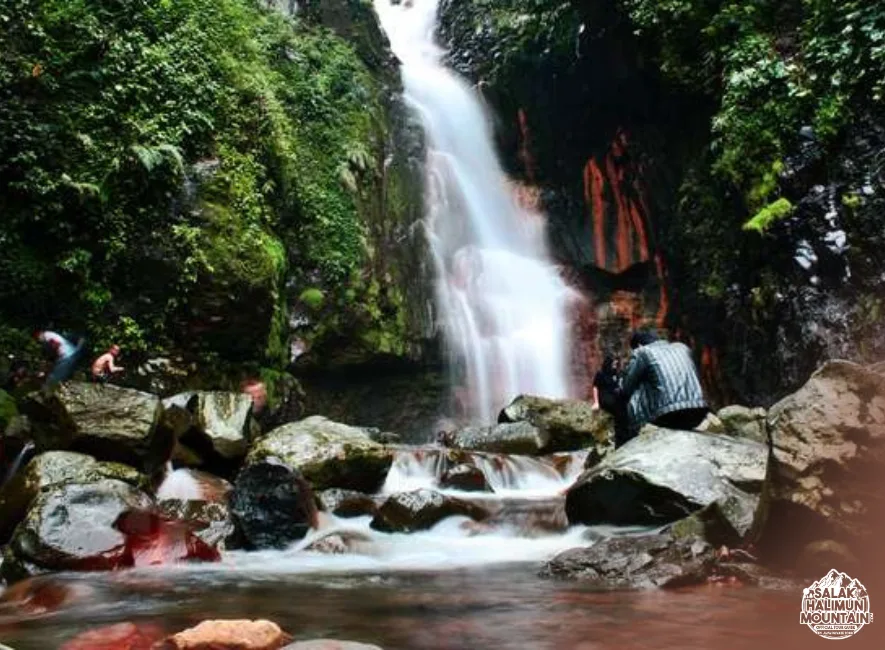
Curug Cigamea is known for its twin waterfalls, a rare and visually striking feature. Two powerful streams plunge side by side over a dark rock wall, separated by a narrow strip of stone. During the rainy season, the water volume increases dramatically, creating a thunderous sound that echoes through the forest.
In the dry season, the flow softens but remains steady, revealing more of the rock formations beneath. Mist rises constantly from the base of the falls, cooling the surrounding area and nourishing the thick vegetation that clings to every surface.
Standing before the twin cascades, visitors often fall silent. It is a moment that naturally slows the mind, inviting simple observation rather than conversation.
Activities Around Curug Cigamea
Beyond enjoying the waterfall itself, Curug Cigamea offers several simple recreational activities that add variety to the visit. One of the popular attractions is the flying fox, which allows visitors to glide briefly above the forest clearing, offering a unique perspective of the surrounding greenery.
Shallow pools near the base of the waterfall invite cautious exploration, though swimming should always be done with care due to changing water levels and slippery rocks. Photography enthusiasts will find countless angles, from wide shots of the twin falls to close-ups of moss, droplets, and light.
Why Curug Cigamea Becomes a Favorite
Among the many waterfalls scattered throughout the Salak Halimun region, Curug Cigamea has become a standout destination. Its accessibility, clear trails, and dramatic twin waterfalls make it an ideal introduction to the park. For many visitors, it is their first encounter with the deeper rainforest of Mount Salak.
Yet even repeat visitors find new details each time. Light changes with the hour, water patterns shift with the season, and the forest reveals different sounds depending on weather and time of day.
Responsible Travel in a Living Forest
Curug Cigamea is not just a tourist site, but part of a fragile ecosystem. Visitors are encouraged to respect the forest by staying on marked trails, carrying out all trash, and avoiding disturbance to wildlife.
The forest gives generously, but it also remembers how it is treated. Responsible trekking ensures that Curug Cigamea remains healthy and welcoming for generations to come.
When to Visit Curug Cigamea
The best time to visit Curug Cigamea is during the dry season, typically from May to September, when trails are safer and water clarity is higher. However, the rainy season offers its own beauty, with stronger water flow and richer forest colors, though extra caution is required.
Morning visits are recommended for cooler temperatures and softer light filtering through the canopy.
Closing Reflections Beside Flowing Water
Curug Cigamea is more than a waterfall. It is a meeting point between water, forest, and human curiosity. It reminds us that nature does not need exaggeration to impress. It simply needs to be approached with patience, respect, and open senses.
So, if you’re ready to explore the wonders of Mount Salak Halimun, head over to our ONLINE BOOKING PAGE and let’s start planning your adventure. Or simply CLICK THIS LINK to chat with us on WhatsApp.
With our team, you’re not just getting a guide; you’re gaining a local friend who will ensure your trip is nothing short of extraordinary.