salakhalimunmountain.com – Trekking through the lush, hyper-biodiverse rainforests of Mount Halimun Salak National Park immerses hikers in one of Java’s richest ecosystems. From vibrant butterflies and towering canopy cicadas to giant forest ants and nocturnal beetles, insects play a vital role in keeping this ancient jungle healthy. However, for many trekkers, the constant presence of crawling or buzzing forest life can trigger intense anxiety or fear. Managing fear of insects on Halimun expeditions is an essential mental and physical skill that allows hikers to stay calm, comfortable, and focused on the beauty of the trail.
Entomophobia or general insect aversion on jungle hikes is a natural psychological response, often heightened by high humidity, dense foliage, and unfamiliar sounds. In deep rainforest settings where branches trail across paths and ground leaf litter holds active macro-in زندگی, fear can lead to sudden, uncoordinated movements—such as jumping back on slick mud or flailing near steep drops. By pairing smart protective clothing choices with proactive gear habits, natural repellents, and simple psychological grounding techniques, you can comfortably navigate Halimun’s wild trails without feeling overwhelmed.
Understanding the Jungle Ecosystem and Reframing Insect Behavior
To overcome insect-related anxiety, it helps to understand why insects behave the way they do in high-altitude tropical forests. The vast majority of insects encountered along Halimun’s trails are completely harmless to humans; they are simply navigating their natural habitat, foraging for sap, or seeking shelter under leaves.
Insects do not target humans aggressively unless their nests are directly disturbed. Reframing buzzing or crawling creatures as fascinating, non-threatening components of the forest food web—rather than personal dangers—helps strip away panic. Recognizing that species like giant forest ants or glowing fireflies are signs of a pristine, thriving national park converts fear into curious appreciation.
Creating Physical Barriers with Smart Trail Clothing
The single most effective way to eliminate the fear of insects is to create a full-coverage physical barrier between your skin and the surrounding forest environment. Knowing that insects cannot physically touch or bite your skin provides immediate mental comfort.
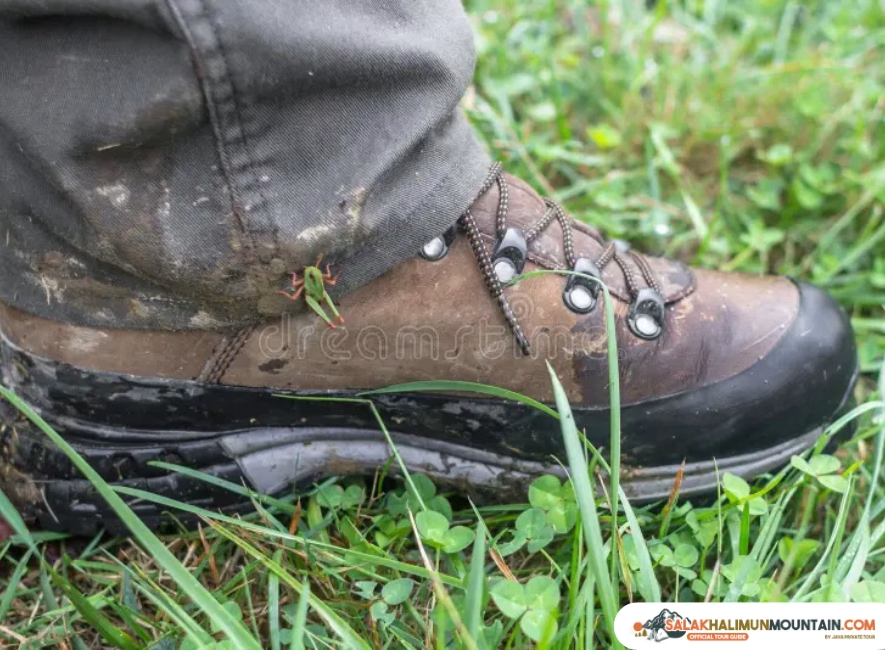
Wear lightweight, long-sleeved trekking shirts and full-length trousers made from tightly woven synthetic fabrics like nylon or polyester. Tightly woven materials prevent insect mouthparts from penetrating fabric while keeping you cool in high humidity. Tuck your pants legs directly into long socks or wear lightweight trail gaiters to seal off ankle gaps, completely blocking ground-dwelling crawlers and leeches from reaching your legs.
Selecting Light Colors and Protective Headwear
Dark-colored clothing—especially black or deep navy—can attract biting insects and make small crawlers difficult to spot on your fabric.
Choose light-colored trail gear such as khaki, beige, or light gray. Light fabrics reflect forest heat and make it effortless to spot and brush off any stray bug long before it reaches your skin. Wear a broad-brimmed hat or trail cap, and consider carrying a fine-mesh head net tucked into your pocket for instant peace of mind during dense, low-canopy trail segments.
Proactive Camp and Trail Hygiene Rules
Insect behavior around campsites and rest spots is directly driven by scent, food residue, and moisture. Maintaining strict personal and gear hygiene keeps bugs far away from your personal space.
Apply broad-spectrum insect repellents containing DEET, Picaridin, or oil of lemon eucalyptus to exposed skin and clothing cuffs before setting out. Avoid using scented soaps, perfumes, deodorants, or floral-scented shampoos before or during the expedition, as sweet artificial fragrances attract curious pollinators and flies.
Securing Food Rations and Tent Zips
Food crumbs and open sugary drink pouches inside shelters are the primary cause of campsite insect visits.
Keep all meals, snacks, and trash tightly sealed in airtight zip-top bags or dry sacks at all times. When setting up camp, establish a strict “tent zip discipline”: keep mesh tent doors completely zipped shut at all times, even when stepping out for just a few seconds. Inspect your clothing quickly before crawling inside your shelter to ensure your sleeping area remains a pristine, insect-free sanctuary.
Practicing Psychological Grounding and Somatic Calming
If an unexpected insect lands on your gear or buzzes close to your face, your natural reaction might be to freeze, gasp, or swat wildly. Practicing somatic emotional regulation prevents minor encounters from spiraling into anxiety.
Pause your movement immediately and take a slow, deep breath through your nose. Remind yourself that the insect is simply passing through and that your clothes form an impenetrable shield. Instead of swatting aggressively—which can agitate the insect—gently flick it away using a trekking pole, gloved finger, or trail map. Controlled, calm movements keep you balanced on slick terrain and prevent unnecessary distress.
Managing fear of insects on Halimun expeditions transforms how you experience the deep jungle. By dressing in protective gear, sealing your shelter, applying smart hygiene practices, and maintaining a calm mindset, you replace anxiety with confidence, allowing you to fully enjoy every mile of West Java’s premier rainforest reserve.
So, if you’re ready to explore the wonders of Mount Salak Halimun, head over to our ONLINE BOOKING PAGE and let’s start planning your adventure. Or simply CLICK THIS LINK to chat with us on WhatsApp.
With our team, you’re not just getting a guide; you’re gaining a local friend who will ensure your trip is nothing short of extraordinary.