salakhalimunmountain.com – Climbing the steep, unrelenting volcanic slopes of Mount Salak and Halimun National Park demands more than just raw physical strength. With vertical root ladders, deep volcanic mud, and endless ridgelines rising through the high-canopy jungle, pushing too hard too early is a guaranteed path to premature exhaustion. In these high-humidity mountain environments, true endurance is found through rhythm, breath, and mental composure. Embracing the zen of pacing on endless volcanic ascents allows trekkers to transform grueling, high-gradient climbs into a sustainable, meditative flow that preserves energy and protects the body over long miles.
The philosophy of pacing relies on aligning physical effort with personal oxygen intake rather than rushing to match an arbitrary speed. When climbing steep volcanic terrain, rushing creates a cycle of cardiovascular spikes followed by heavy muscle fatigue and frequent, lengthy rest stops. By cultivating a steady cadence, practicing synchronized breathing, managing physical heart rates, and maintaining mental presence, you turn daunting vertical climbs into an effortless, steady progression toward the peak.
Establishing the Synchronized Step and Breath Rhythm
The foundation of sustainable mountain pacing is the synchronization of foot movements with full, rhythmic breathing. Rather than letting terrain dictate your speed, allow your breath to set your stride length and tempo.
Match every step to a conscious inhalation or exhalation. On moderate inclines, take one step per inhale and one step per exhale. When the gradient steepens into severe volcanic inclines or slick root steps, slow your movement down to two breaths per step. This rhythmic alignment ensures a continuous supply of oxygen to your working quadriceps and calves, preventing lactic acid buildup and keeping your heart rate in a steady, aerobic burn zone.
Applying the Mountaineer’s Lock-Step Technique
For steep vertical sections, adopt the classic “lock-step” technique to conserve leg muscle energy over thousands of elevation gain meters.
As you step forward onto an elevated rock or root, pause briefly on the trailing leg, locking the knee straight for a micro-second so your skeletal frame—rather than your muscles—supports your body weight. This instantaneous resting pause gives your leg muscles a split-second recovery break with every single step, dramatically reducing muscle fatigue over multi-hour ascents.
Managing Internal Cadence vs. External Terrain Clutter
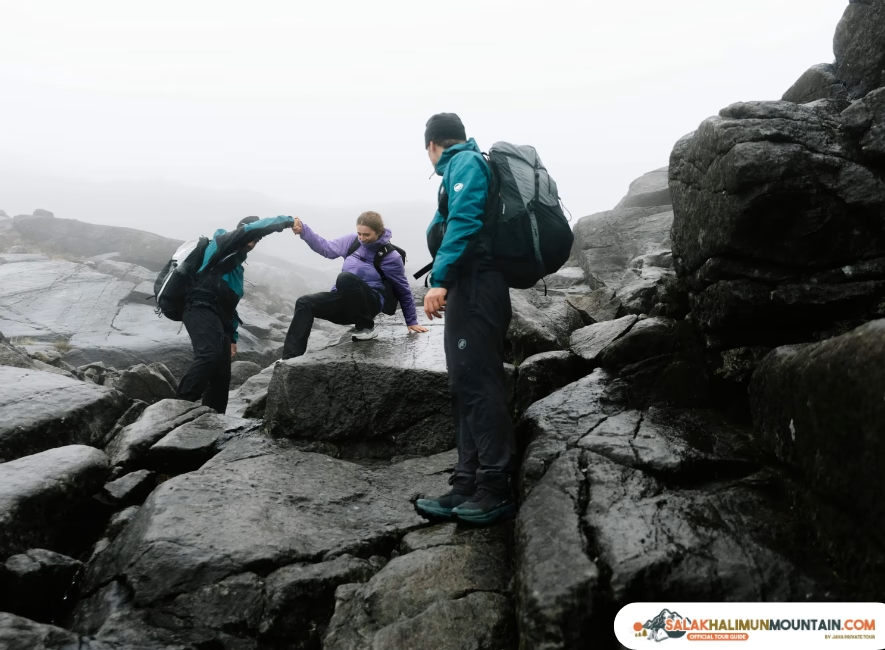
Volcanic trails are rarely uniform; they are filled with uneven step heights, muddy drops, and sudden steep pitches. A common mistake is accelerating into steep sections or jumping over obstacles, which spikes your metabolic rate and burns valuable energy reserves.
Maintain a constant, unflappable energy output regardless of how steep the trail becomes. When approaching a high step or muddy embankment, shorten your stride length significantly—taking small, deliberate micro-steps rather than long, high-exertion strides. Keeping your center of gravity balanced directly over your feet minimizes energy expenditure, protects knee joints from high impact, and keeps your respiratory rate calm and steady.
Sensing Heart Rate Zones Without Complex Electronics
You do not need an electronic heart rate monitor to gauge your exertion level on the mountain. Use the “Conversational Test” as your guide.
You should be able to speak a full sentence comfortably without gasping for air. If you can only utter one or two words between heavy breaths, your body has crossed into an anaerobic zone, burning limited glycogen reserves. Immediately slow your pace or shorten your stride until your breathing settles back into a smooth, conversational rhythm.
Cultivating the Meditative Mind and Visual Focus
Pacing is as much a psychological discipline as it is a physical technique. Staring constantly at a distant, fog-covered ridge or worrying about remaining vertical meters can trigger mental fatigue and impatience, prompting you to rush your pace.
Shift your visual attention to the immediate present—focusing on the smooth rhythm of your boots, the placement of your trekking poles, and the textured bark of ancient rainforest trees along the trail. Embrace the repetitive, hypnotic motion of the climb. By letting go of the summit destination and immersing yourself in the present step, the physical burden dissolves, replaced by a quiet, meditative state of effortless movement.
Mastering the zen of pacing on endless volcanic ascents transforms how you experience Mount Salak and Halimun National Park. By breathing with intention, utilizing the lock-step, honoring your body’s natural tempo, and remaining mentally grounded, you turn the steepest volcanic climbs into a deeply rewarding, peaceful journey across Java’s majestic wilderness.
So, if you’re ready to explore the wonders of Mount Salak Halimun, head over to our ONLINE BOOKING PAGE and let’s start planning your adventure. Or simply CLICK THIS LINK to chat with us on WhatsApp.
With our team, you’re not just getting a guide; you’re gaining a local friend who will ensure your trip is nothing short of extraordinary.