salakhalimunmountain.com – Trekking through the ancient, overgrown rainforests of Mount Salak and Halimun National Park offers an unparalleled immersion into wild nature. However, the sheer density of West Java’s high-canopy jungle can occasionally trigger an unexpected psychological challenge: trail claustrophobia. Known among long-distance hikers as “green tunnel vision,” the combination of towering tree canopies, thick hanging lianas, tall bamboo thickets, and persistent mountain mist can create a feeling of spatial confinement. Overcoming claustrophobia in dense jungle trails is an essential psychological and tactical skill that empowers trekkers to maintain calm, preserve energy, and enjoy every step through Java’s wildest terrain.
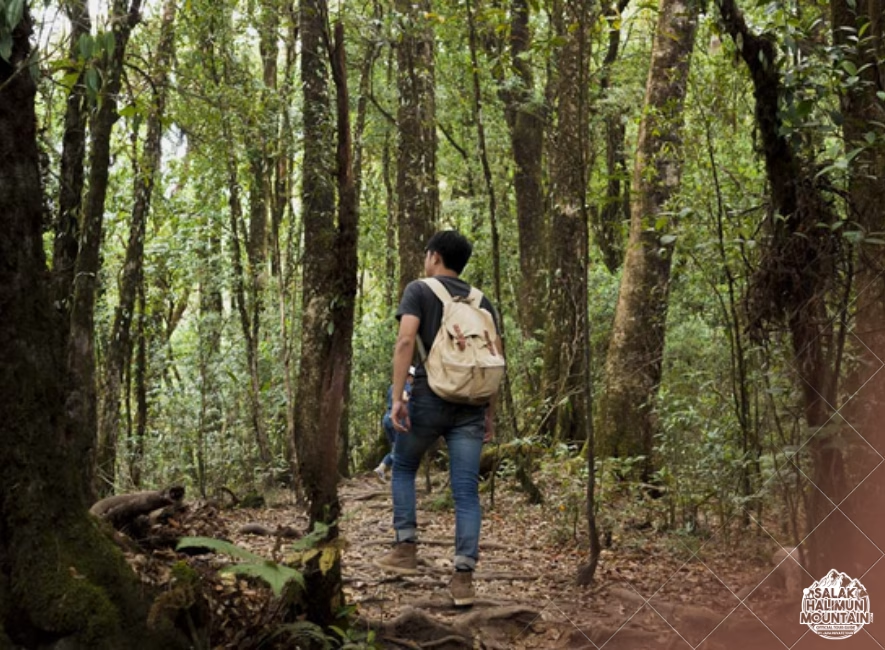
Claustrophobia in the wilderness does not require a cave or enclosed room; it is triggered by visual restriction, limited overhead sunlight, and the sensation of being enclosed by endless walls of vegetation. In deep sections of Halimun, where trails narrow into dense brush or subterranean-like root tunnels, your nervous system can misinterpret environmental density as a lack of escape or air. By combining psychological grounding methods, smart trail navigation techniques, proper gear adjustments, and supportive team communication, you can comfortably master the mental game of jungle trekking.
Understanding “Green Tunnel” Vision and the Brain’s Stress Response
To overcome jungle claustrophobia, it helps to understand why the human brain reacts to dense foliage. When walking under a multi-layered rainforest canopy where overhead sky is obscured, your peripheral vision is constantly filled with close-range visual stimuli—leaves, vines, and thick moss. This lack of a distant horizon can cause sensory overload and make the forest feel like it is closing in.
When sensory restriction occurs alongside physical exertion and high humidity, your autonomic nervous system may trigger a mild “fight-or-flight” stress response. Shallow breathing, an elevated heart rate, and a sense of sudden panic are physical signals that your brain is feeling hemmed in. Recognizing these symptoms early allows you to intervene before anxiety impacts your stamina or decision-making on the trail.
Psychological Grounding and Somatic Breathing Exercises
The moment you feel the sensation of confinement rising while navigating an overgrown ridge or dense bamboo grove, halt your movement in a safe, stable spot. Do not attempt to rush blindly through the brush to “escape,” as this increases fatigue and the risk of tripping over exposed root networks.
Implement immediate somatic breathing techniques to down-regulate your nervous system. Practice “Box Breathing”—inhale deeply through your nose for 4 seconds, hold for 4 seconds, exhale slowly through your mouth for 4 seconds, and pause for 4 seconds. Deep belly breathing activates the parasympathetic nervous system, slowing your pulse and restoring rational control over your thoughts.
Using the 5-4-3-2-1 Grounding Method
To break the cycle of visual tunnel vision, anchor your mind in the present physical environment using sensory grounding.
Look around and name 5 specific non-threatening details (a blue butterfly, a patterned fern leaf, textured tree bark); acknowledge 4 physical sensations (the solid ground beneath your boots, cool mist on your face, the grip of your trekking pole); identify 3 distinct sounds (falling raindrops, distant bird calls, wind through high leaves); notice 2 scents (damp earth, fresh crushed vegetation); and take 1 deep, conscious breath. Grounding re-establishes spatial orientation and reassures your mind that you are safe in open air.
Tactical Trail Navigation and Visual Spatial Management
How you move through the jungle directly affects your sense of personal space. Simple adjustments to your gaze, body position, and spacing can dramatically open up your perceived field of vision.
Avoid fixing your eyes exclusively on the ground directly in front of your boots or on the thick brush slapping your shoulders. Lift your chin frequently and direct your focus forward along the trail path, scanning for small light breaks in the canopy above or natural openings in the undergrowth ahead. Looking toward distant focal points breaks the perception of immediate enclosure.
Managing Physical Clearance with Trekking Poles
Use trekking poles to actively create personal physical boundaries around your upper body. Holding poles out slightly in front of you allows you to brush aside hanging vines, wet fronds, and tall grass before they brush against your face or chest.
Establishing a gentle buffer zone between yourself and dense foliage prevents the jarring sensation of being touched unexpectedly by hidden branches, keeping your personal space feeling clear and controlled.
Gear Selection and Attire for Mental Openness
Your clothing and equipment choices play a surprisingly large role in managing spatial anxiety in humid jungle settings. Heavy, dark, or restrictive gear can compound feelings of overheating and confinement.
Wear light-colored, highly breathable, loose-fitting long-sleeve shirts and trekking trousers. Light colors reflect ambient forest light and make you feel less enveloped by darkness. Choose a wide-brim hat or trail cap with a stiff visor that keeps falling debris and wet leaves off your face, maintaining an unobstructed field of vision above your eyes.
Optimizing Backpack and Headlamp Setup
Ensure your backpack is properly fitted so weight rests comfortably on your hips rather than pinching across your chest, which can restrict lung expansion and mirror panic symptoms.
During late afternoon hikes or foggy conditions under thick canopy, turn on a bright headlamp early. Broad-beam, high-lumen illumination cuts through murky shadow layers, widening your visual corridor and eliminating dark visual pockets that trigger spatial anxiety.
Leveraging Group Dynamics and Mindful Pacing
You never have to navigate psychological trail challenges alone. Communicating openly with your trekking companions and mountain guides turns group presence into a powerful source of reassurance.
If you feel anxious in narrow trail sections, avoid hiking at the very back of the line where you might feel left behind, or directly behind a large pack that blocks your forward view. Position yourself near the middle or front-center of the group, leaving a comfortable 2-to-3-meter gap between yourself and the hiker ahead. This gap ensures you have a clear line of sight and room to breathe without feeling crowded.
Overcoming claustrophobia in dense jungle trails transforms how you experience the rainforest. By understanding your stress triggers, practicing active grounding, creating physical space with your gear, and maintaining a steady pace, you convert the green tunnel of Mount Salak and Halimun into an awe-inspiring, sanctuary-like journey through Java’s ancient natural heritage.
So, if you’re ready to explore the wonders of Mount Salak Halimun, head over to our ONLINE BOOKING PAGE and let’s start planning your adventure. Or simply CLICK THIS LINK to chat with us on WhatsApp.
With our team, you’re not just getting a guide; you’re gaining a local friend who will ensure your trip is nothing short of extraordinary.