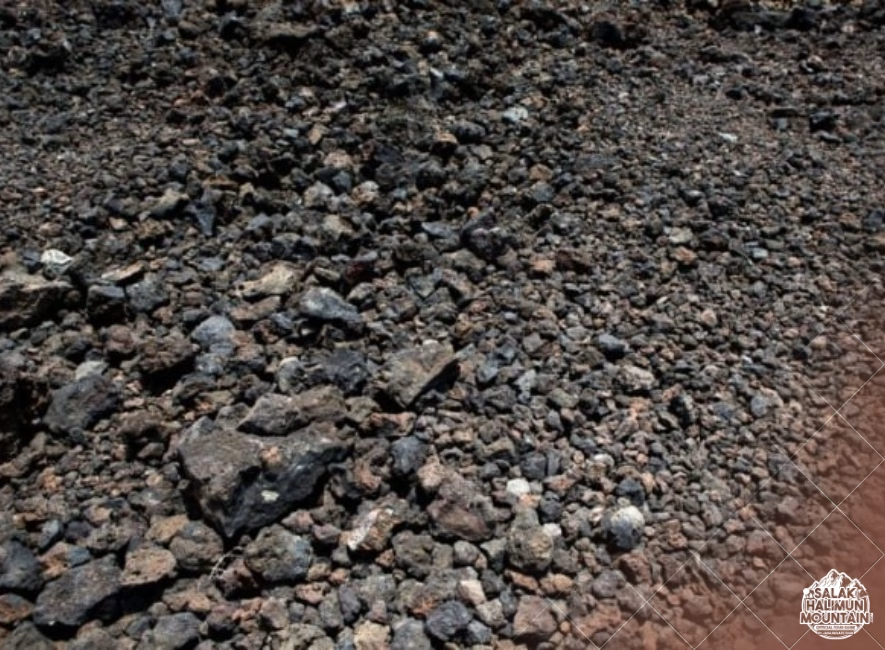
salakhalimunmountain.com – Climbing high toward the upper ridges and summit crater of Mount Salak brings a sudden, dramatic shift in terrain. As you push above the dense moss-draped forest, the firm dirt paths and tangled tree roots give way to loose, powdery grey slopes. These are the volcanic ash trails of Mount Salak. Formed by ancient eruptions and weathered over centuries of heavy tropical rain, these stretches of loose ash and fine gravel behave unlike any standard dirt trail. Standing on an ash slope can feel a bit like trying to climb a sand dune suspended on a mountain face, where every step forward threatens to slide half a step back.
To an unprepared trekker, walking on volcanic ash can be exhausting and frustrating. Your boots sink deep into the fine grey dust, standard friction disappears, and your calf muscles work twice as hard just to keep you upright. But if you observe how local nature guides move across these identical sections, you will notice a smooth, fluid rhythm. They do not fight the sliding earth or waste energy scrambling frantically. By understanding the unique mechanics of volcanic ash underfoot and applying simple footing adjustments, you can conquer these loose slopes with confidence and enjoy sweeping views of West Java’s high wilderness.
Understanding the Mechanics of Volcanic Ash Underfoot
Volcanic ash on Mount Salak is not simple dirt or garden soil. It consists of microscopic glass fragments, pulverized basalt rock, and light mineral dust ejected during the mountain’s eruptive past. Because these particles are extremely light and lack organic binders like clay or root systems, they do not pack tightly together when dry. Instead, they shift fluidly under pressure, acting like tiny ball bearings beneath the soles of your boots.
When you plant your foot on a steep ash incline, your body weight applies both downward force and backward shear force. On a normal dirt path, the soil resists that backward push, launching you forward into your next stride. On volcanic ash, that backward push breaks the delicate tension between dust particles, causing the surface layer to collapse and slide downhill. Learning to control the angle and force of your foot strike is the key to gaining solid traction on these soft slopes.
Dry Dust versus Damp Ash Conditions
Weather plays a massive role in how volcanic ash trails behave on Mount Salak. During dry spells or bright mornings, upper elevation ash becomes loose and powdery. In these conditions, dust rises with every step, and finding firm ground requires sinking your boot heel deeper into the slope to reach the packed sub-layer beneath.
When light rainforest mist or a brief afternoon shower dampens the mountain, the texture of the ash shifts entirely. Water creates surface tension between fine particles, causing the ash to clump together into a firm, tacky crust. Damp ash actually offers fantastic grip, allowing your boot lugs to bite cleanly into the earth. However, if rain becomes too heavy, ash can transform into slick, heavy grey slurry, requiring extra care along steep ridge drops.
Uphill Mechanics: The Plunge Step and Weight Placement
Climbing steep volcanic ash slopes requires a complete adjustment of your walking technique. The standard toe-first push that works so well on stairs or firm earth will completely fail on loose ash. When you push off hard using your toes, you exert maximum shear force on the dust, sending a wave of ash sliding downhill while your body stays stuck in place.
To climb volcanic ash efficiently, switch to a flat-footed or heel-first landing style. As you lift your lead foot forward, sink your heel deliberately into the ash slope before resting your full weight on it. This creates a temporary horizontal shelf, or step pocket, in the loose earth. Once your heel settles into a firm spot, transfer your weight vertically downward into the mountain rather than pushing backward with your calves.
Pacing with the Rest Step Technique
Ascending loose ash takes a toll on your endurance if you try to hurry. Every time your boot slides slightly, your stabilizing muscles fire frantically to correct your balance. Applying the rest step technique allows your skeleton to carry your weight rather than relying solely on tired muscles.
With each upward stride on an ash slope, pause for a fraction of a second when your trailing leg is fully extended and locked at the knee. Transfer your body weight entirely onto that rear bone structure before stepping forward with your lead foot. This brief micro-rest between steps keeps your heart rate stable and prevents muscle burnout during long, steep ascents through loose volcanic gravel.
Descending Ash Slopes: Controlled Heels and Soft Knees
While climbing ash requires patience and steady effort, descending a loose volcanic ash trail can be one of the fastest and most enjoyable parts of a Mount Salak trek if you master the correct technique. Descending ash safely relies on controlled sliding, using the soft depth of the dust to cushion your descent as you move downhill in a smooth, fluid rhythm.
Trying to tread lightly or stop completely with every single downward step on ash is exhausting and often leads to slipping backward onto your hip. Instead, embrace the soft depth of the terrain by executing a proper ash descent heel-strike. Plant your rear heel firmly into the slope, allowing your boot to sink three to four inches into the ash wave. The deep dust acts as a natural brake, absorbing your downward momentum smoothly.
Leaning into the Slope Vector
The single biggest mistake hikers make when descending steep ash is leaning backward out of fear. When you lean back away from the slope, your center of gravity shifts far behind your feet. This causes your boots to shoot out from under you instantly, sliding out of control on the loose surface.
Keep your torso upright and slightly forward, keeping your hips centered directly over your knees and feet. Keep your knees bent and relaxed so they act as responsive shock absorbers. Keep your eyes looking two to three steps ahead, picking deep ash chutes rather than hard, exposed rock slabs. Moving with confidence and leaning slightly forward keeps your balance steady and your boots firmly anchored in the sliding dust.
Gear and Clothing Essentials for Ash Trails
Having the right equipment is crucial when tackling high-altitude volcanic ash trails on Mount Salak. Fine dust and sharp volcanic gravel can quickly ruin a hike if your gear is not built to handle abrasive, loose conditions.
Select high-cut trekking boots with soft rubber outsoles and deep, widely spaced lugs. Soft rubber compounds stick far better to smooth volcanic particles than hard rubber soles, while aggressive lug patterns channel loose dust out from under your foot, allowing the boot to bite into firm underlying soil. High-cut ankles prevent fine ash from working its way inside your shoes, which can cause painful friction blisters within an hour of trekking.
Gaiters and Trekking Poles for Total Control
Pairing your boots with a lightweight pair of trail gaiters is one of the best choices you can make for an ash trail hike. Gaiters wrap securely around your calf and lower boot, forming a dust-proof seal that keeps fine grey ash, tiny pebbles, and debris out of your socks completely.
Trekking poles are equally indispensable when navigating loose volcanic slopes. They act as two additional points of balance, giving you instant stability when step pockets give way. When climbing uphill, plant your poles firmly behind your body to help propel your weight upward. On descents, plant your poles slightly ahead and out to the sides to maintain a secure frame as your boots sink into the sliding ash.
Environmental Respect and Trail Ethics on Salak’s Slopes
The upper reaches of Mount Salak are ecologically fragile environments. Because volcanic ash soil is loose and easily eroded, heavy rainstorms can quickly turn human footpaths into massive erosion gullies if hikers stray off established lines. Staying on designated single-track paths is vital for preserving the mountain’s delicate subalpine slopes.
Avoid cutting switchbacks or sliding down vegetated embankments bordering the ash trails. Wild mountain ferns, mosses, and hardy alpine shrubs take decades to anchor their roots in thin volcanic soil, holding the mountain face together against erosion. By moving mindfully, using proper footwork techniques, and respecting established trails, you protect the high wilderness while enjoying an incredible adventure on West Java’s iconic peak.
So, if you’re ready to explore the wonders of Mount Salak Halimun, head over to our ONLINE BOOKING PAGE and let’s start planning your adventure. Or simply CLICK THIS LINK to chat with us on WhatsApp.
With our team, you’re not just getting a guide; you’re gaining a local friend who will ensure your trip is nothing short of extraordinary.