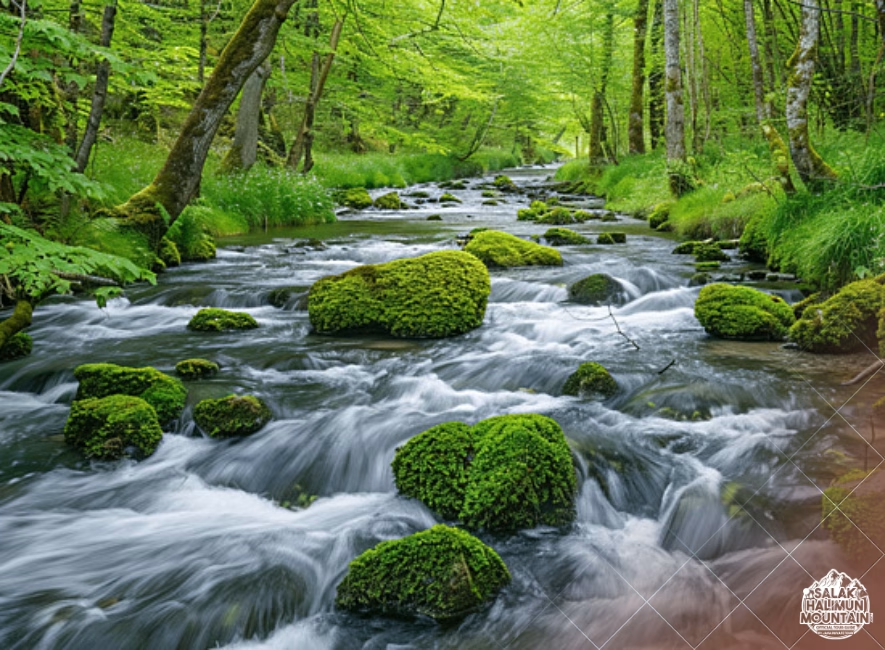
salakhalimunmountain.com – Trekking deep into the rainforest of Mount Salak usually means one thing: eventually, your trail will meet a rushing mountain stream. The sound of cool, clear water cascading over smooth basalt boulders is one of the most refreshing parts of a jungle trek. But as you step out from beneath the dense green canopy and stand at the riverbank, you are faced with one of the forest’s most deceptive challenges. Resting beneath the rushing currents and along the damp spray zones are river rocks coated in thick, slick mountain moss. Navigating these mossy rock river crossings safely is a core skill every hiker must learn when exploring Halimun Salak National Park.
To an inexperienced hiker, a river crossing looks like a quick game of hopscotch across flat stepping stones. However, tropical river moss combined with microscopic algae forms a natural layer that can feel as slick as ice under a wet boot sole. A single misstep can send your feet sliding out from beneath you, resulting in soaked gear, bruised knees, or worse, a twisted ankle mid-trek. By learning how to read the riverbed, understand rock textures, and adjust your body balance, you can cross Salak’s wild mountain streams with complete confidence and keep your feet dry.
Reading the Riverbed: Identifying Safe Stepping Points
Before you take your first step into or across a mountain stream on Mount Salak, pause at the water’s edge for a moment. Assessing the river crossing before moving onto the rocks saves energy and prevents unexpected slips. Not every rock in the stream offers equal traction, and learning to identify which stones to avoid is the first step toward a safe crossing.
Take a close look at the color and texture of the rocks sticking out of the water. Rocks that are bright green, dark olive, or covered in a smooth dark sheen are actively growing algae and submerged moss. These are high-slip hazards. Instead, search for rocks that have a rough, coarse volcanic grain with light grey or reddish surfaces. Rocks exposed to direct sunlight and open air tend to dry out, making the moss brittle and far less slippery than stones sitting in damp shade or water spray zones.
Submerged Rocks versus Dry Crests
When picking your route across a river, you often have to choose between stepping on the dry tops of boulders or wading through shallow water onto submerged stones. While stepping on dry boulder crests keeps your boots out of the water, high rocks can be top-heavy and tilt under your body weight if they are not firmly embedded in the riverbed.
In many cases, stepping into shallow water onto flat, coarse gravel bed riverlines provides much better stability than leaping between tall, mossy rocks. Water slows down your footing, but flat river gravel offers consistent traction. If a rock is completely submerged under fast-flowing water, assume it is coated in slippery biofilm and place your foot firmly in the sandy gaps between rocks instead whenever possible.
Body Mechanics and Dynamic Balance on Wet Stone
How you place your foot on a wet, mossy rock determines whether your boot sole grips or slides. On dry ground, we naturally walk heel-to-toe, transferring our body weight forward in a rolling motion. On slick river rocks, this traditional walking style is dangerous because a striking heel easily skids across a mossy surface.
To cross mossy rocks safely, adopt a flat-footed stepping style. Place the full sole of your boot squarely on top of the rock surface, keeping your foot completely flat. This maximizes the contact area of your rubber tread against the stone. Keep your knees slightly bent and relaxed to lower your center of gravity, allowing your legs to absorb any small shifts if a stone moves beneath you.
Maintain Three Points of Contact
Never rush a river crossing. Take short, deliberate steps and maintain three points of contact whenever you move across challenging sections. This means having two feet planted firmly while moving a trekking pole, or two poles planted while shifting one foot forward.
When stepping onto a questionable mossy rock, test the grip with a light touch before committing your full body weight to that foot. Keep your upper body centered directly over your feet rather than leaning backward or reaching far forward. If your foot begins to slide, a centered body allows you to quickly shift your weight back to your trailing foot without falling sideways into the river.
Gear and Clothing Strategies for River Safety
Having the right equipment makes navigating wet river crossings in Mount Salak much safer and far more comfortable. Trying to cross mossy boulders in smooth-soled street shoes or lightweight sneakers with worn tread is a recipe for a hard slip. Proper footwear designed for tropical rainforest trails is your best protection against stream hazards.
Choose trekking boots or trail shoes with soft, sticky rubber outsoles featuring deep, widely spaced lugs. Soft rubber compounds mold slightly to the rough texture of volcanic rock, offering vastly superior grip on wet surfaces compared to hard rubber soles. Additionally, footwear with reinforced rubber toe caps protects your toes from painful impacts against hidden underwater rocks when wading through murky currents.
Unbuckle Waist Straps and Use Trekking Poles
One of the most important safety rules when crossing deeper or faster mountain streams involves your backpack. Always unbuckle your backpack’s hip belt and chest strap before stepping into the river. If you lose your balance and fall into a deep river pool, a heavy, buckled backpack can trap you underwater or weigh you down. With the straps unbuckled, you can easily slide your arms out of the pack if you slip.
Trekking poles are essential tools for river crossings. They act as steady extensions of your arms, giving you incredible stability on slick boulders. Plant your poles on the upstream side of your body into stable gravel gaps between rocks. The pressure of the flowing water will naturally push the poles firmly into the riverbed, providing a solid anchor as you step across wet rocks.
Managing Rushing Currents and Unexpected High Water
The rivers around Mount Salak are fed by high-elevation watersheds that receive sudden rain showers, especially during the tropical wet season. A quiet stream can rise quickly if a heavy rainstorm hits the upper peaks of the volcano. Understanding how to handle moving water ensures that a pleasant river break does not turn into a dangerous situation.
If you encounter a river crossing where the water is flowing fast and reaches above your knees, do not attempt to hop across slick mossy boulders. The force of moving water against your legs combined with slippery footing makes balancing on rocks nearly impossible. In fast water, turn your body to face upstream into the current, lean slightly forward into the water, and slide your feet along the riverbed rather than lifting them high out of the water.
Knowing When to Wait or Turn Back
The smartest decision a trekker can make when facing a swollen, muddy river is knowing when to pause. If the water looks dark brown, carries floating debris, and rushes with heavy force, the river is flash-flooding. Attempting to cross a flooded mountain stream on mossy rocks is extremely hazardous.
Find a safe, elevated spot on the riverbank away from rising water and wait. Tropical mountain flash floods often recede as quickly as they rise once the storm passes overhead. Patience, clear judgment, and respect for the mountain’s natural water cycles will keep you and your trekking companions safe throughout your rainforest journey.
Leaving No Trace along Salak’s Waterways
Mountain streams on Mount Salak are the lifeblood of the surrounding forest and local downstream communities. The cool, pristine water provides a habitat for wild mountain amphibians, freshwater crabs, and native fish species. As trekkers, protecting these clean water sources is just as important as navigating them safely.
Avoid washing muddy boots or gear directly in small drinking water pools along the trail. Keep all food wrappers, plastic trash, and personal items securely zipped inside your backpack so nothing accidentally falls into the river current. By treading lightly and respecting the natural beauty of the riverbank, you help preserve the pristine magic of West Java’s rainforests for everyone who follows in your footsteps.
So, if you’re ready to explore the wonders of Mount Salak Halimun, head over to our ONLINE BOOKING PAGE and let’s start planning your adventure. Or simply CLICK THIS LINK to chat with us on WhatsApp.
With our team, you’re not just getting a guide; you’re gaining a local friend who will ensure your trip is nothing short of extraordinary.