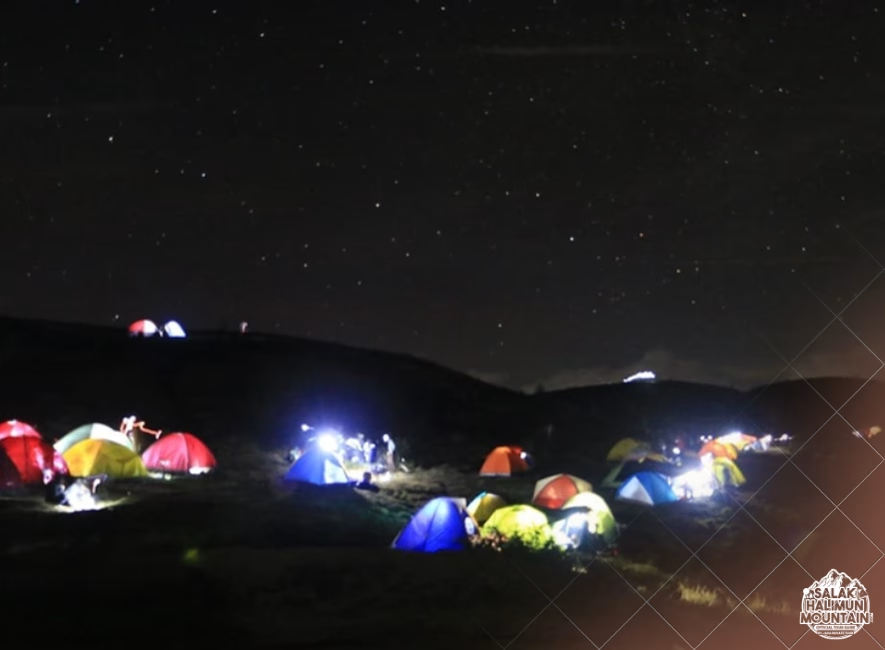
salakhalimunmountain.com – Stepping onto the wilderness trails after the sun goes down is a profound transformation. As twilight fades, the magnificent canopy light filtering through leaves vanishes, replaced by a deep, velvety darkness that wakes up an entirely different world. The ancient rainforest of Mount Salak comes alive at night; the legendary symphony of cicada calls, croaking tree frogs, and the rustle of nocturnal wildlife echoes through the misty valleys. However, navigating this terrain after dark demands absolute preparation and respect. The Ultimate Guide to Night Jungle Trekking in Mount Salak is your essential roadmap to experiencing this nocturnal magic safely, ensuring you conquer the steep ridges and changing weather conditions under the cover of night.
Night trekking is an extraordinary sensory experience, but it multiplies the natural challenges of a tropical rainforest. The soft mud trails that require careful footwork by day become even more deceptive under flashlight beams, obscuring slippery volcanic clay, exposed tree roots, and steep drop-offs. Furthermore, the heavy rainforest air holds immense moisture, bringing a damp, penetrating chill as soon as darkness settles over the mountain. Moving safely through this environment requires specialized lighting strategies, meticulous gear selection, and a focused group mindset. By mastering nocturnal navigation, you transform the intimidating jungle darkness into an inspiring, unforgettable theater of wild adventure.
High-Intensity Lighting and Backup Power Strategies
When you are deep within the primary rainforest of Mount Salak, the thick overhead canopy blocks out all ambient moonlight and starlight, creating a state of absolute, ink-black darkness. In this environment, your light source is your primary line of safety. A high-quality, high-intensity headlamp is non-negotiable for night trekking. Walking with a handheld flashlight is highly inefficient because you need your hands completely free to hold trekking poles, stabilize your balance, or grip sturdy roots when climbing near-vertical trail sections. Look for a headlamp with a powerful lumen output and a wide, adjustable beam that illuminates both your immediate foot placement and the trail markers ahead.
Because the cold, damp mountain air drains battery life rapidly, always carry a complete set of extra batteries wrapped in a waterproof bag, or a fully charged power bank if your light source is rechargeable. A smart tactical approach is to use a headlamp with a dedicated red-light mode. Red light preserves your eyes’ natural night vision and prevents sudden glare when you turn to speak to your companions. It also attracts far fewer nocturnal insects to your face, allowing you to move comfortably through the humid air without a constant cloud of bugs disrupting your vision. Never step onto a night trail without verifying your illumination system is entirely flawless.
The Importance of a Dedicated Secondary Light
Relying on a single headlamp during a night jungle trek is an unnecessary risk that can leave you stranded in total darkness if the unit suffers a mechanical failure or drops into a deep mud pool. Every single hiker in your group must carry a secondary, independent backup light source, such as a compact handheld flashlight or an emergency angle light clipped to their backpack strap. This backup should be easily accessible without needing to unpack your main pack compartment.
Additionally, check that your main headlamp features an integrated strobe or flashing SOS mode. In the unlikely event of an injury or an unexpected delay on the steep ridges, a bright, flashing beacon can guide local search and rescue teams to your position from across a deep volcanic valley. Team members should also practice changing their light batteries in complete darkness at home, ensuring that if a light fails on a pitch-black trail, your hands can execute the swap quickly and calmly without causing group anxiety.
Nocturnal Navigation and Group Dynamics
The maze-like trails of Mount Salak are challenging to navigate during the day, but at night, a path can vanish completely if you take your eyes off the track for just a moment. The dense mists that regularly roll across the ridges can reflect your headlamp light, creating a blinding white wall that reduces visibility to just a few meters. To stay on track, do not rely on mobile phones, as cellular signals are blocked by deep ravines and thick vegetation. Your navigation kit must include a traditional magnetic compass and a physical, topographical map protected in a waterproof sleeve.
Before leaving the ranger post, always inform a trusted contact of your exact route and estimated return time. While on the trail, keep your group tightly consolidated. Establish a strict moving order where an experienced navigator leads the line, pacing the group slowly and rhythmically, while a designated “sweep” walks at the absolute rear to ensure no one falls behind. Group members must maintain continuous visual contact with the headlamp of the person directly in front of them, ensuring the line never stretches out or breaks apart in the dense undergrowth.
Utilizing Acoustic and Non-Visual Signals
In the deep darkness, human voices can easily be swallowed by the rushing sound of mountain streams and the heavy drone of nocturnal insects. To maintain communication without constantly shouting and exhausting your throat, every hiker should have a high-decibel pealess whistle clipped directly to their jacket zipper or shoulder strap. A whistle blast carries significantly farther through the thick jungle canopy than a human scream and requires minimal physical energy to produce.
Establish simple whistle codes before starting your trek: one sharp blast means “stop the line,” two blasts mean “resume moving,” and three sharp blasts is the universal distress signal indicating an emergency. If your group encounters a sudden cloud of heavy mountain fog that destroys visual tracking, halting movement immediately and relying on clear whistle signals ensures the team remains completely organized and anchored together, preventing anyone from stepping off the main path onto an unstable slope.
Footwork Tactics for Slick, Pitch-Black Slopes
Navigating the legendary mud and volcanic clay of Mount Salak requires precise body mechanics, which become even more critical when your depth perception is altered by flashlight shadows. Headlamps cast flat shadows that can make a deep mud wallow or an off-camber root look perfectly flat. To counteract this, utilize your trekking poles aggressively to probe the terrain ahead of you before planting your weight down. Push the pole tip through the top layer of dirt to evaluate if the ground is firm volcanic crust or a deep, deceptive mire.
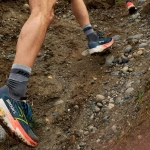
Adopt a flat-footed, whole-foot landing technique on slick inclines. Avoid landing heel-first, as this concentrates your downward force on a tiny area, causing your shoe to slice through the mud and slide out from under you. Planting your foot entirely flat engages every single rubber lug on your outsole simultaneously, maximizing your traction. Keep your strides short, controlled, and directly underneath your center of gravity. A low, stable stance allows you to adjust your balance instantly when your foot encounters a hidden patch of wet clay or a moss-covered stone.
Managing Hidden Vegetation Hazards
The Javanese rainforest is packed with thorny vines, low-hanging briars, and sharp volcanic rock shards that are nearly impossible to see until they brush against your skin. When night trekking, avoid grabbing random branches or vines for balance along the edges of the trail. Many jungle plants are covered in fine, irritating hairs or sharp thorns that can puncture your hands or rip your gear. Rely strictly on your dual trekking poles for lateral stability rather than trusting the surrounding flora.
Wearing durable, long-sleeved synthetic shirts, full-length trekking pants, and lightweight gloves provides an invaluable physical barrier against these hidden environmental hazards. Additionally, ensure your trail running shoes or hiking boots are laced tightly through the midfoot and heel. The powerful vacuum suction of deep rainforest mud can easily pull a loose shoe right off your foot when you step into a wet wallow after dark. A locked-down fit guarantees your footwear remains a secure extension of your body through every stride.
Thermal Protection Against Damp Rainforest Moisture
A common misconception among tropical hikers is that the jungle remains warm all night long. Because Halimun Salak National Park is a high-altitude rainforest, the humidity acts like a sponge, holding onto the damp chill and drawing warmth away from your body rapidly when you stop moving. If a sudden afternoon downpour has soaked the trail, or if an unexpected delay keeps you on the ridge past midnight, hypothermia can become a serious threat to an unprepared trekker.
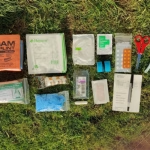
Your emergency kit must include a lightweight space blanket or a compact emergency bivy sack packed tightly in a waterproof compartment. These metallic sheets take up no more room than a pack of cards, yet they can reflect up to ninety percent of your body heat back to your core if you are forced to wait out a storm. Always pack a dry, insulating layer, such as a lightweight fleece or a packable synthetic jacket, sealed inside a dry bag within your backpack. Having a completely dry layer to slip into during extended trail breaks keeps your core temperature stable and your morale high.
Weatherproof Fire Starting Tools
In a survival situation after dark, a fire provides vital warmth, a psychological boost, and a powerful visual signal for rescuers. However, finding dry wood in a misty primary rainforest at night is incredibly difficult, as almost everything is saturated by evening condensation. You cannot rely on a standard gas lighter, which can fail if it gets wet or cold. Pack a high-quality ferrocerium rod and waterproof matches stored in a hermetically sealed container.
Because wet jungle wood will not ignite from sparks alone, you must also carry dry tinder from home, such as cotton balls soaked in petroleum jelly or small blocks of compressed wax. Practicing your fire-making skills at home ensures that if you ever experience an emergency on a cold, wet ridge, your hands will know exactly how to strike a flame efficiently. Total self-reliance is the ultimate goal of any responsible adventurer exploring the mountain after dark.
Nocturnal Wildlife Awareness and Trail Ethics
Night trekking offers a rare privilege: entering the active living space of Java’s incredible nocturnal ecosystem. While you look for eye-shines reflecting in your light beams—which could belong to a rare Javan small-toothed civet, a flying squirrel, or a slow loris—always remember that you are a silent visitor in their home. Avoid making loud, unnecessary noises or shouting, as sudden human sounds can cause severe stress to wild animals and disrupt their natural mating or hunting rhythms.
Keep your headlamp beams focused primarily on the trail path directly ahead of your feet. Avoid shining high-intensity, thousand-lumen lights directly into the canopies or into the eyes of wildlife, as bright artificial light can temporarily blind nocturnal creatures, leaving them vulnerable to predators or accidental falls from high branches. If you are fortunate enough to spot a rare animal, dim your lights or use your headlamp’s gentle red-light mode to observe them mindfully without causing disruption or panic.
Leaving No Trace in the Velvet Darkness
Practicing strict conservation ethics is even more critical during a night trek when visibility is limited. It is incredibly easy to accidentally drop a piece of plastic wrapping, a water bottle cap, or a used glow stick on a pitch-black trail without noticing. Make a conscious commitment to secure all your trash inside a zippered pocket of your backpack immediately after use. Inspect your rest stops thoroughly with your headlamp beam before moving forward to ensure absolutely no waste is left behind.
By moving slowly, preparing thoroughly, and respecting both the powerful natural forces of the volcano and its wild inhabitants, you transform your night jungle trek into a soulful, deeply rewarding journey. You will step off the mountain not just as an adventurer who conquered a dark path, but as a resilient, mindful explorer who truly understands the complete, timeless rhythm of Java’s premier rainforest kingdom. Prepare your lights, lace your shoes securely, and let the night reveal its secrets.
So, if you’re ready to explore the wonders of Mount Salak Halimun, head over to our ONLINE BOOKING PAGE and let’s start planning your adventure. Or simply CLICK THIS LINK to chat with us on WhatsApp.
With our team, you’re not just getting a guide; you’re gaining a local friend who will ensure your trip is nothing short of extraordinary.