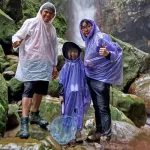
salakhalimunmountain.com – Life in Desa Wisata Malasari unfolds quietly, guided by the forest, the fields, and the passing of seasons rather than by clocks or crowds. Here, daily routines are shaped by misty mornings, fertile soil, and the presence of Halimun Salak National Park just beyond the village paths. Culture is not performed. It is lived, carried gently through habits, values, and a deep respect for the land that sustains the community.
For visitors who take the time to slow down, Malasari offers more than scenery. It offers insight into how a village can exist alongside a protected rainforest without dominating it. Understanding Malasari means understanding its people, their rhythms, and the unwritten rules that guide life at the forest’s edge.
Daily Life Guided by Farming Rhythms
Agriculture remains the backbone of daily life in Malasari. Rice fields stretch across gentle slopes and valley floors, following the natural contours of the land. These fields are not uniform or industrial. They are carefully tended plots shaped by generations of observation and experience.
The rhythm of farming defines the village calendar. Planting, tending, and harvesting follow seasonal rainfall and water flow from forest streams. Early mornings are often spent in the fields, where farmers move steadily through soft mud, guided by familiarity rather than haste.
Rice is more than a crop. It represents balance between human needs and natural limits. Fields are positioned to avoid disrupting water sources. Forest boundaries are respected, acknowledging that healthy forests ensure fertile land downstream.
Living at the Forest Edge
Many livelihoods in Malasari exist at the boundary between village and forest. This edge is not a line of separation but a zone of careful interaction.
Residents gather forest products responsibly, mindful of regeneration and seasonal availability. Firewood, medicinal plants, and natural materials are taken with restraint, guided by local knowledge passed down through families.
This relationship fosters awareness. Villagers notice changes in bird calls, water clarity, and plant growth. Such observations are not abstract. They inform decisions about land use, planting schedules, and daily movement.
Community Values Rooted in Nature
Respect for nature is embedded in Malasari’s community values. It is expressed through behavior rather than slogans. Loud disturbances are uncommon. Waste is managed carefully. Paths are maintained without excessive alteration.
Children grow up understanding that the forest is not a playground to be conquered but a living system to be respected. Elders share stories not to entertain but to teach awareness, patience, and humility.
These values are reinforced by proximity to Halimun Salak National Park. Living within a conservation landscape encourages responsibility, reminding the community that their actions affect water sources, wildlife, and future generations.
Local Wisdom and Unspoken Etiquette
Visitors to Malasari quickly notice that behavior matters. There are no formal ruleboards outlining etiquette, yet expectations are clear.
Speaking softly is appreciated, especially near forest edges and water sources. Dressing modestly reflects respect for community norms. Asking before photographing people or private spaces is considered basic courtesy.
Movement through the village is unhurried. Rushing feels out of place. Taking time to greet residents, observe surroundings, and adapt to local pace helps visitors integrate rather than intrude.
This local wisdom creates harmony. It allows guests to feel welcome while protecting the community’s sense of place.
Tourism Shaped by Community Rules
Tourism in Malasari exists on community terms. Activities are shaped by local values and conservation needs rather than by trends or demand for spectacle.
Visitor numbers are managed to avoid overwhelming daily life. Routes are chosen to minimize environmental impact. Experiences emphasize learning and observation rather than consumption.
This approach ensures that tourism supports rather than disrupts village life. Income from visitors contributes to community well-being while reinforcing the importance of environmental stewardship.
Visitors as Guests, Not Spectators
In Malasari, visitors are treated as guests. This distinction is important.
Guests are expected to participate with awareness. This may mean adjusting expectations, accepting simplicity, and engaging respectfully. Observing daily activities is welcomed when done quietly and with permission.
Spectator-style tourism, focused on quick photos or staged moments, feels out of place here. Malasari rewards those who listen, ask, and observe rather than those who rush to document.
Why Malasari Is Not an Instagram Village
Malasari does not present curated visuals or constructed backdrops. Its beauty lies in authenticity.
There are no designated photo spots or decorative installations. Instead, there are working fields, weathered paths, and homes shaped by necessity rather than aesthetics.
This absence of performance is what gives Malasari depth. Visitors encounter a living community, not a display. The experience feels grounded, sincere, and quietly memorable.
Cultural Continuity and Change
While rooted in tradition, Malasari is not frozen in time. Change arrives gradually, negotiated through community discussion rather than imposed.
Education, conservation awareness, and responsible tourism have introduced new perspectives. Yet these are integrated carefully, ensuring that progress does not erase identity.
The result is a village that adapts without losing its core values.
Learning Through Presence
Understanding Malasari’s culture requires presence rather than explanation. It comes from walking slowly, listening to morning sounds, and noticing how villagers interact with their environment.
Such learning cannot be rushed. It unfolds through shared space and mutual respect.
A Culture Sustained by Balance
At its heart, Malasari’s culture is about balance. Between use and preservation. Between welcoming visitors and protecting daily life. Between tradition and adaptation.
This balance is fragile yet resilient, sustained by collective awareness and respect for the land.
Why Cultural Understanding Matters for Visitors
Visitors who take time to understand Malasari’s culture gain more than insight. They gain perspective.
They see how conservation is lived rather than declared. They learn that responsible travel begins with humility.
In return, Malasari offers something rare. A genuine connection to place and people.
So, if you’re ready to explore the wonders of Mount Salak Halimun, head over to our ONLINE BOOKING PAGE and let’s start planning your adventure. Or simply CLICK THIS LINK to chat with us on WhatsApp.
With our team, you’re not just getting a guide; you’re gaining a local friend who will ensure your trip is nothing short of extraordinary.