salakhalimunmountain.com – If you’ve ever trekked through the valleys of Mount Salak or wandered the misty trails of Halimun–Salak National Park, you’ve likely experienced that magical moment when the forest slowly disappears into white silence. Fog here doesn’t just appear — it is born from the mountain’s breath, shaped by valleys, rainforests, and shifting air.
As someone who has spent years guiding travelers through these landscapes, let me take you deeper into why fog forms in mountain valleys, especially in the unique ecosystem of Salak–Halimun.
The Science Behind Fog in Mountain Valleys
Cold Air Sinks Into Valleys
At night and during early mornings, the mountain air cools rapidly. Cold air is heavier than warm air, so it flows downward and settles into valleys. In Salak–Halimun, where valleys are deep and forested, this cold air becomes trapped.
High Humidity From Rainforests
The dense tropical rainforest releases massive amounts of moisture through transpiration. Combined with frequent rainfall, humidity levels in Mount Salak often reach near saturation. When cold air meets this moisture-rich environment, fog forms naturally.
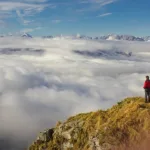
Temperature Inversion Effect
Normally, air temperature decreases as altitude increases. But in mountain valleys, a temperature inversion often occurs: cold air sits below warmer air. This inversion locks moisture in place, allowing fog to thicken and linger until sunlight breaks through.
Why Fog Is Especially Common in Salak Halimun
Volcanic Topography and Deep Valleys
Mount Salak’s volcanic origins have created steep ridges and enclosed valleys. These landforms prevent air circulation, making fog formation more frequent and longer-lasting than in open mountain regions.
Constant Water Sources
Waterfalls, rivers, moss-covered rocks, and damp forest floors continuously feed moisture into the air. Areas like Curug Seribu and Curug Cigamea are natural fog generators, especially during early morning hours.
Minimal Wind Movement
Inside the rainforest valleys, wind is often blocked by thick vegetation and mountain walls. Without wind to disperse moisture, fog remains suspended — creating the mystical atmosphere Salak–Halimun is famous for.
Fog as a Living Part of the Ecosystem
Supporting Biodiversity
Fog is not just beautiful — it sustains life. Epiphytes, mosses, orchids, and fungi depend on fog drip for hydration. Many endemic species of birds and insects thrive in these cool, moist conditions.
Natural Temperature Regulation
Fog acts like a blanket, stabilizing temperature and preventing extreme heat during the day. This balance is crucial for the delicate rainforest ecosystem.
Fog and the Trekking Experience
For trekkers, fog transforms familiar trails into something entirely new. Distances feel shorter, sounds travel farther, and every step feels intimate. That’s why timing matters — early morning treks often offer the most dramatic fog-filled scenery.
This is where experience truly counts. Java Private Tour is not a generalist travel company — we are specialists in Mount Salak and Halimun–Salak National Park. We understand when fog enhances safety and beauty, and when it requires extra caution.
When Is the Best Time to See Valley Fog?
- Early morning (05:30–08:00)
- After rainfall
- Dry season with cool nights (June–September)
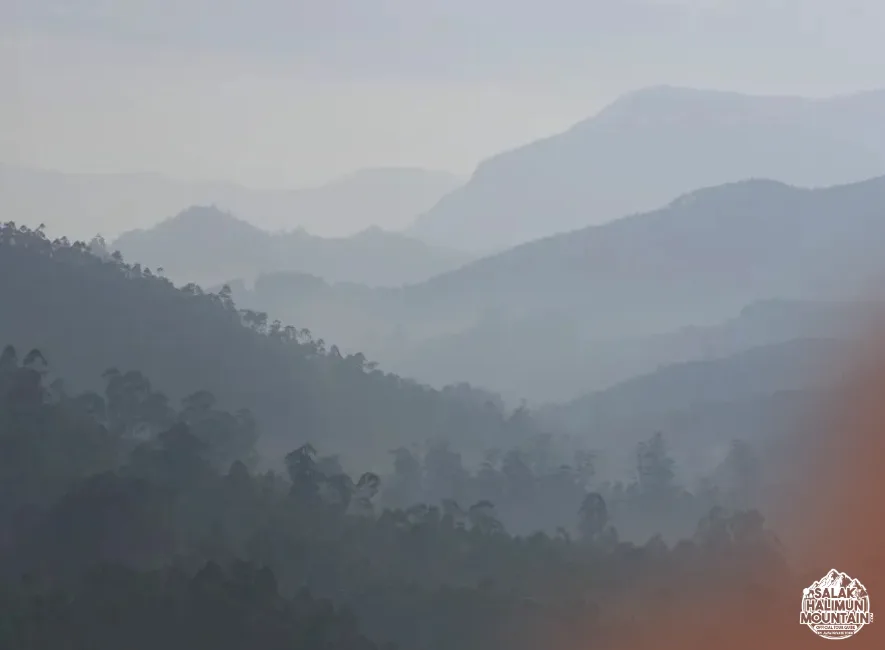
Each season offers a different fog character — from soft drifting mist to thick, cloud-like blankets rolling through the forest.
A Final Thought From the Trail
Fog in mountain valleys isn’t something to rush past. In Salak–Halimun, it’s a reminder to slow down, listen, and feel the mountain breathing around you. Every veil of mist tells a story of water, wind, forest, and time.
So, if you’re ready to explore the wonders of fog-filled mountain valleys, head over to our REQUEST PAGE and let’s start planning your adventure. Or you can simply CLICK THIS LINK to chat with us on WhatsApp. With Java Private Tour, you’re not just getting a guide; you’re gaining a friend who will ensure your trip is nothing short of extraordinary. See you in Java!